
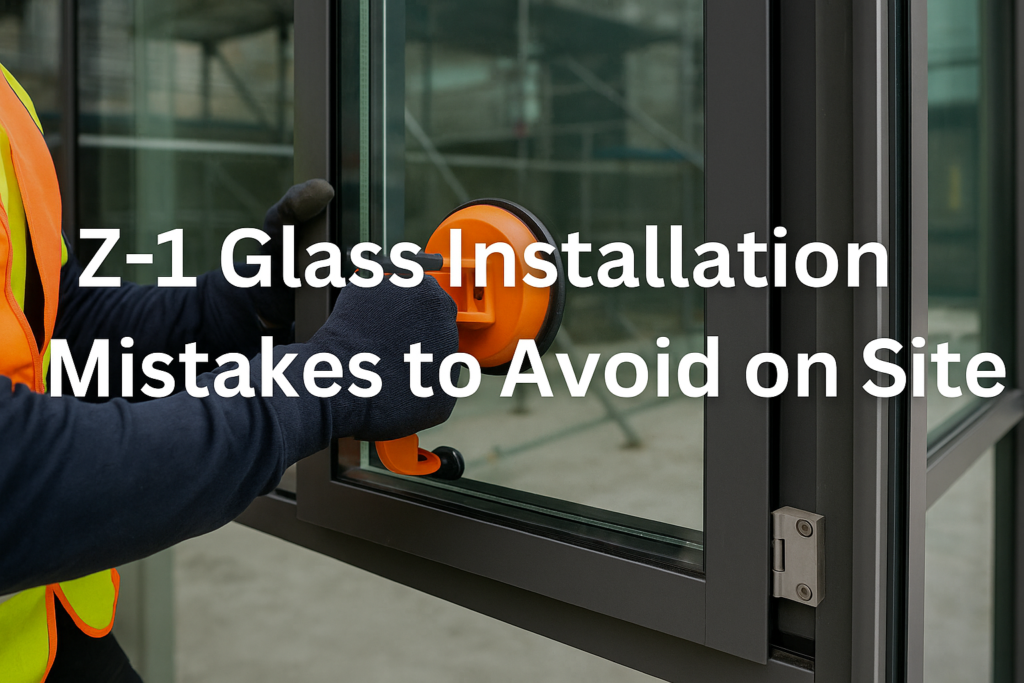
What Is Z-1 Glass and Why Installation Precision Matters
Z-1 Glass is a high-performance laminated glass designed to meet the increasing demands of modern architectural, safety, and environmental requirements. Built to outperform conventional PVB laminated glass and even SGP laminated glass, Z-1 Glass is prized for its superior structural strength, impact resistance, acoustic dampening, and thermal control. However, to unlock its full potential, it must be installed correctly.
Improper Z-1 Glass installation not only compromises safety and durability but also affects its aesthetic finish and long-term performance. Understanding the most common mistakes made on site is critical for contractors, glaziers, and project managers to ensure code compliance, client satisfaction, and warranty protection.
If you’re asking what is Z-1 Glass used for—it’s the ideal choice for structural glazing, facades, curtain walls, high-rise cladding, balustrades, and premium interior partitions. But even this state-of-the-art product is vulnerable to mishandling and misapplication.
Mistake 1: Incorrect Framing or Poor Compatibility
One of the most critical yet commonly overlooked aspects of Z-1 Glass installation is frame compatibility. The glass may be perfect, but if it’s installed in an improperly designed or incompatible frame, structural integrity and safety ratings can be immediately compromised.
Avoid these framing errors:
- Using frames that are too shallow or narrow for laminated glass thickness
- Ignoring required edge bite (minimum of 10mm recommended)
- Skipping thermal breaks, leading to condensation or warping
- Using metallic framing materials that corrode or chemically react with the interlayer
For more on how to get framing right, read Z-1 Glass Framing Requirements for Safety Compliance, which outlines the specifications for edge support, expansion tolerances, and structural load management.
Mistake 2: Inadequate or Incompatible Sealants
Another major installation error is using low-grade or chemically incompatible sealants. Laminated glass, especially when exposed to UV or moisture, requires high-performance bonding agents that won’t degrade or trigger delamination.
Avoid the following:
- Using acetic-cure silicones that corrode interlayers
- Applying sealants without primer or surface prep
- Skipping compatibility tests between sealant and Z-1 interlayer
- Over- or under-applying sealant, leading to uneven curing or adhesion gaps
Sealant choice is mission-critical in structural glazing applications. For a complete list of recommended tools and products, check Z-1 Glass Sealants and Tools for a Perfect Install.
Mistake 3: Mishandling During Transport and Installation
Z-1 Glass is structurally strong—but like all laminated glass, it must be handled with care to avoid edge damage, stress fractures, or interlayer contamination. Unfortunately, mishandling is one of the most frequent causes of site failures.
Here’s what not to do:
- Sliding glass across abrasive surfaces, scratching coatings or edges
- Failing to use suction lifters or proper lifting frames
- Storing glass flat on uneven ground, risking cracking
- Installing panels without fully cleaning glass surfaces and seals
Always transport and store Z-1 Glass vertically on padded A-frames. Avoid placing anything between stacked sheets that could dent or deform the interlayer.
Mistake 4: Ignoring Weatherproofing and Drainage Design
Even the best glass will fail if water gets to the interlayer. Z-1 Glass in architecture needs an effective drainage path around the panel edges to avoid long-term deterioration due to moisture ingress.
Key drainage design errors to avoid:
- No weep holes in frame bottom rails
- Horizontal surfaces without slope
- Pressure plates that trap water against the glass edge
- Sealant joints that fail under UV exposure
Poor drainage causes edge bubbling, delamination, and voids warranty coverage. Design your framing system to include moisture management from the start.
Mistake 5: Failing to Account for Thermal Movement
Z-1 Glass in design reacts to temperature fluctuations, and so do its metal framing systems. If your design doesn’t allow for expansion and contraction, stress fractures or pressure-related glass failures can occur—especially in large-format installations.
Common thermal errors:
- Rigid fixing systems with no movement joints
- Oversized panels installed without sufficient clearance
- Frame materials with higher expansion rates than the glass
Follow engineering guidelines and ensure glass has at least 1.5 mm per meter of length in edge clearance for expansion.
Mistake 6: Improper Cleaning and Finishing
During and after installation, many contractors inadvertently damage Z-1 Glass by using the wrong cleaning tools or chemicals. Because this product may feature low-emissivity (Low-E) or anti-reflective coatings, surface protection is critical.
Avoid:
- Using razor blades or metal scrapers
- Cleaning with acidic or alkaline detergents
- Neglecting to rinse thoroughly, leaving hard water spots
- Spraying solvents directly onto seals and edges
Correct Z-1 Glass care includes wiping with microfiber cloths and diluted pH-neutral solutions, always following manufacturer recommendations.
Mistake 7: Choosing the Wrong Fixing Method
Z-1 Glass manufacturers provide specific guidelines for fixing methods depending on panel size, load conditions, and application. Choosing an inappropriate method—such as point-fixing a panel that should be fully framed—can lead to stress failures and even collapse.
Ensure that:
- Point-fixed glass has treated holes and edge protection
- Structural silicone is tested for the exact interlayer used
- Panels are supported properly and not relying on sealant adhesion alone
For a breakdown of approved fixing systems, read Z-1 Glass Fixing Methods for Structural Glazing.
Mistake 8: Not Following Manufacturer Specs and Local Codes
Z-1 Glass is often used in regulated environments like schools, hospitals, and skyscrapers. That means installation must meet not only the manufacturer’s technical documentation but also local safety, fire, and energy codes.
Avoid:
- Ignoring minimum safety glazing requirements
- Underestimating wind load zones and failing to test accordingly
- Using untested combinations of glass, sealants, and frames
Always involve a structural engineer during the design phase and confirm local compliance with relevant standards.
Mistake 9: Neglecting Post-Installation Inspection and Documentation
After installation, many teams move on without conducting a final inspection or submitting documentation. This oversight can result in warranty rejections or legal issues if the glass fails under pressure.
Post-installation essentials include:
- Verifying sealant cures completely and evenly
- Checking edge bite and frame alignment
- Documenting lot numbers, installation conditions, and methods
- Photographing final condition of all panels
This final step also supports Z-1 Glass maintenance planning and future repairs, should any issues arise.
Mistake 10: Underestimating Z-1 Glass Value and Cost
While the price of Z-1 Glass may be higher than standard laminated glass, so is its performance. Attempting to “cut corners” during installation to save money often leads to glass failures that cost significantly more in remediation.
The Z-1 Glass price includes built-in safety, durability, thermal resistance, and acoustic value—so invest in quality installation that complements these features.
Final Thoughts: Z-1 Glass Is Only as Good as Its Installation
Z-1 Glass offers an impressive combination of structural strength, clarity, energy efficiency, and safety. But without proper on-site handling and installation, even the best laminated glass won’t meet its full potential. Avoiding these common installation mistakes ensures that your investment in Z-1 Glass delivers long-lasting value, compliance, and performance.
Work with certified installers, follow manufacturer instructions, and double-check every step—from framing and sealants to drainage and finishing. That’s how you make Z-1 Glass work as beautifully and reliably as it was designed to.