
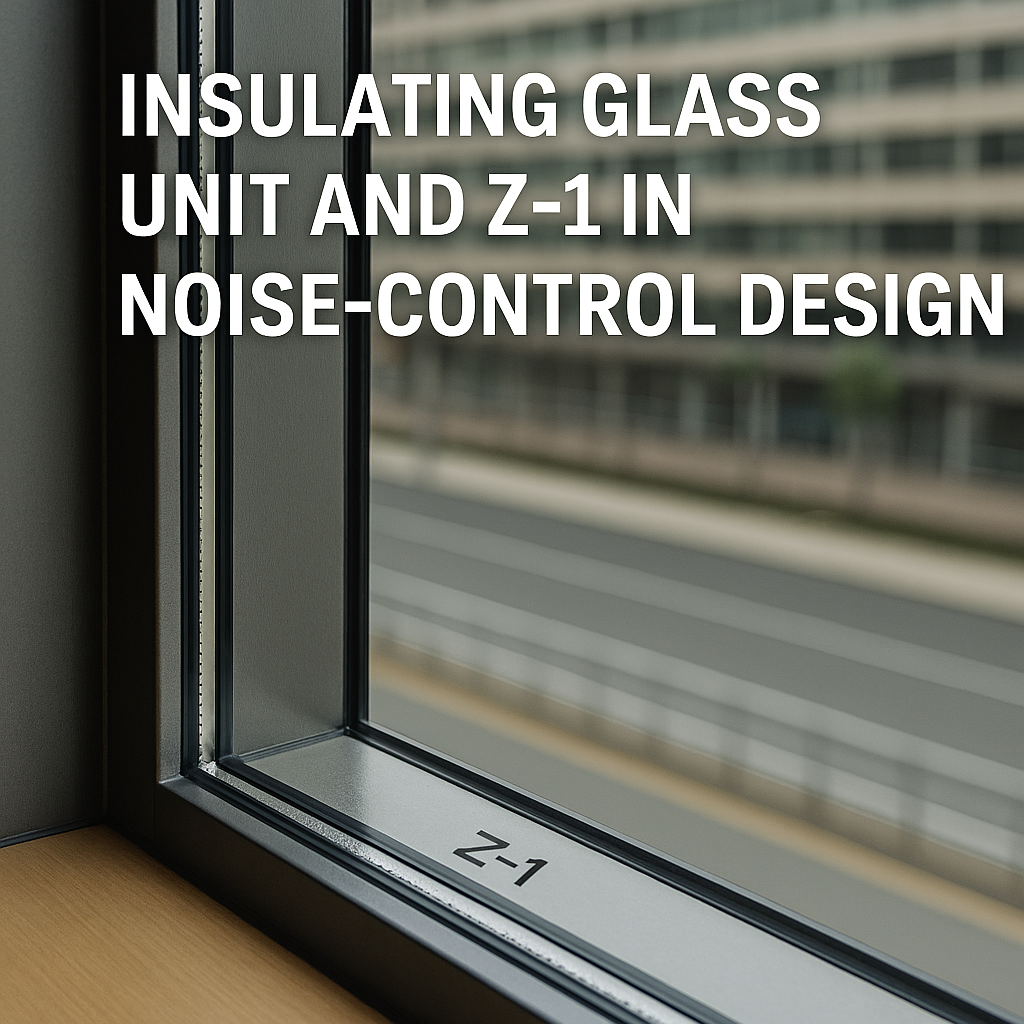
Introduction: Silence Built into the Structure
In today’s noisy urban environments, acoustic control is no longer a luxury—it’s a necessity. Whether designing high-rise offices, hospitals, schools, or industrial facilities, architects and engineers must combat unwanted sound transmission to enhance comfort and performance. This is where the Insulating Glass Unit (IGU) and advanced Z-1 glass technology play a crucial role in noise-control design.
Combining the sound-insulating properties of IGUs with the performance enhancements of Z-1 composition creates a robust glazing solution that significantly reduces noise intrusion while maximizing energy efficiency and occupant comfort.
What Is an Insulating Glass Unit?
An Insulating Glass Unit is a sealed system made of two or more panes of glass separated by spacers, often filled with inert gas, and sealed around the edges. IGUs provide thermal insulation, soundproofing, and energy-saving benefits across a wide variety of building types.
When integrated with Z-1 glass—an engineered glass core designed for strength, clarity, and acoustic resistance—the IGU becomes a formidable barrier to external noise.
Understanding Z-1 Glass in Acoustic IGUs
What Is Z-1 Glass?
Z-1 glass is a next-generation glazing material with enhanced density, optical clarity, and thermal performance. When applied as part of a multi-pane IGU, it increases sound damping through greater mass and optimized lamination.
To explore foundational advantages, read Insulating Glass Unit with Z-1 Glass Core Benefits.
Why Z-1 Is Ideal for Acoustic Control
Z-1 glass contributes to noise control by:
- Increasing mass of the IGU layers (mass law principle)
- Reducing resonance across variable sound frequencies
- Improving STC (Sound Transmission Class) ratings
This makes it ideal for use in urban cores, transportation-adjacent zones, and industrial parks.
Key Noise-Control Benefits of IGUs with Z-1
1. Enhanced Sound Insulation
Double and triple-pane IGUs naturally provide a sound barrier, but when paired with Z-1 cores, sound reduction improves by 5–10 dB over traditional IGUs.
2. Balanced Thermal and Acoustic Performance
Noise mitigation often compromises energy performance—but Z-1 glass preserves low U-values and solar heat gain control while improving STC.
3. Long-Term Durability and Acoustic Stability
Unlike some films or non-laminated options, Z-1 IGUs maintain consistent performance across decades of use, resisting delamination, discoloration, and seal failure.
4. Multi-Frequency Noise Reduction
Z-1’s composite design blocks both high-frequency urban noise (sirens, voices) and low-frequency vibration (aircraft, HVAC units), making it versatile for mixed-use applications.
Common Acoustic Applications of IGUs with Z-1
Industrial Facilities
Warehouses, factories, and energy plants often border noisy zones. IGUs with Z-1 glass reduce equipment and environmental noise in administrative offices and operator rooms. Learn more at Insulating Glass Unit in Industrial Warehouse Builds.
Medical and Healthcare Spaces
Acoustic IGUs support restful recovery and confidentiality in patient rooms, therapy centers, and surgical wings. For safety-related integrations, read Insulating Glass Unit Meets Laminated Glass Safety.
Transportation-Adjacent Projects
Z-1 IGUs are ideal for properties near highways, rail lines, and airports, where fluctuating noise conditions demand advanced damping capabilities.
Mixed-Use and Urban Development
Luxury condos, hotels, and offices near nightlife or transit benefit from Z-1 IGUs’ ability to preserve interior quiet without compromising on view quality or daylight.
Educational Institutions
Libraries, study rooms, and lecture halls require quiet settings to support cognitive function. Z-1-based IGUs help schools meet acoustic performance standards.
Landscape-Focused Retreats
Z-1 IGUs are effective in nature resorts or spas that value visual transparency and peace. Explore natural integration in Bright View Landscape Defined: What Makes It Stand Out?.
Technical Highlights: IGUs with Z-1 in Sound Ratings
| Configuration | Approx. STC Rating | Composition |
|---|---|---|
| Standard Double IGU | 28–32 | 6mm glass + 12mm air + 6mm glass |
| Z-1 Core IGU | 38–42 | Laminated Z-1 + 14mm argon + 6mm glass |
| Triple Pane Z-1 | 44–48 | Z-1 laminated + 12mm krypton + 6mm + 12mm + 6mm |
Higher STC ratings indicate better sound isolation. Z-1 IGUs offer acoustic control comparable to high-mass walls in significantly less space and weight.
Installation and Maintenance Best Practices
IGU Installation for Acoustic Control
To preserve acoustic performance, professional Insulating Glass Unit installation must:
- Ensure airtight perimeter seals
- Use acoustically rated frames or gaskets
- Avoid hard-mounted mullions without vibration dampening
For structure-integrated designs, read Insulating Glass Unit Strength with Z-1 Composition.
Acoustic IGU Maintenance
Minimal maintenance is required, but to ensure long-term performance:
- Inspect edge seals annually
- Recalibrate smart tint or shading if installed
- Clean surfaces using soft, non-scratch solutions
Sustainability Meets Silence
Energy and Acoustic Efficiency in One
Z-1 IGUs align with LEED, WELL, and Passive House standards by contributing to:
- Indoor Environmental Quality (IEQ)
- Energy & Atmosphere (EA)
- Noise mitigation under WELL v2 Sound Concept
Long-Term Payback
Acoustic IGUs reduce reliance on interior noise-masking or redesigns, delivering cost savings and tenant satisfaction.
Conclusion: Precision Sound Control with Z-1 IGUs
The Insulating Glass Unit integrated with Z-1 glass composition offers a new frontier in noise-control design. Whether you’re mitigating aircraft noise in airport hotels or silencing mechanical vibrations in mission-critical buildings, Z-1 IGUs deliver reliable, long-lasting acoustic performance.
From structural resilience to balanced aesthetics, Z-1-equipped IGUs provide a smart, sustainable, and silent solution for next-generation building envelopes.