
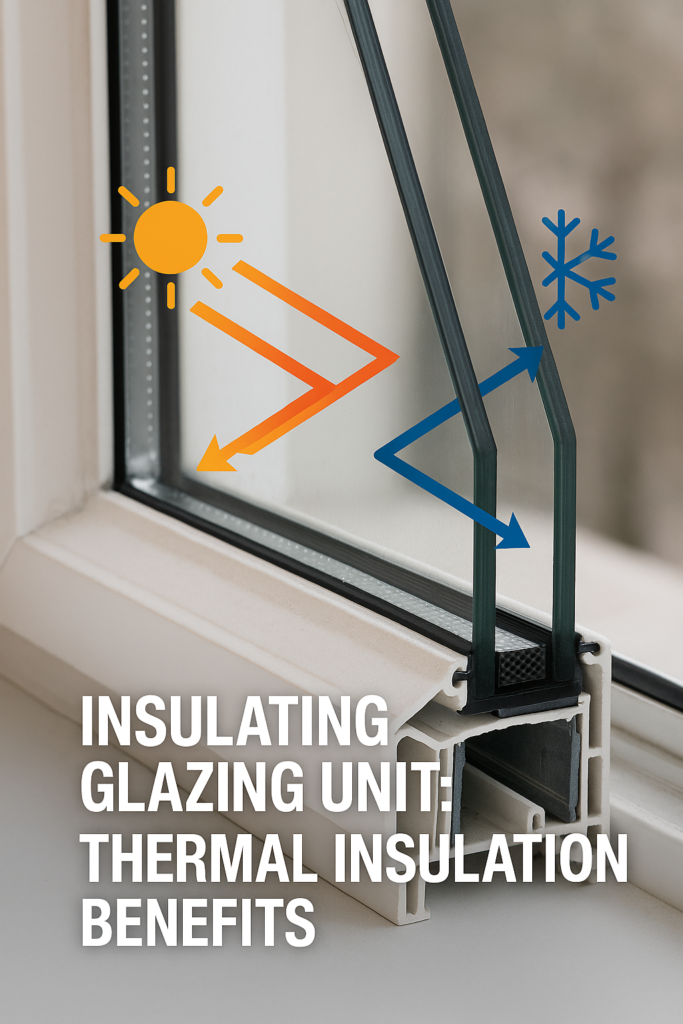
An insulating glazing unit (IGU) is a key element in modern building envelopes, especially in energy-conscious and climate-sensitive architecture. Designed to minimize heat transfer between interior and exterior spaces, IGUs significantly improve a building’s thermal performance, making them indispensable for both residential and commercial construction.
In this article, we examine the thermal insulation benefits of insulating glazing units, explain how they work, and explore how they support sustainable building practices, reduce energy costs, and enhance indoor comfort year-round.
What Is an Insulating Glazing Unit?
An insulating glazing unit is a window unit composed of two or more panes of glass separated by a spacer and sealed to create an insulating air or gas-filled cavity. These units are designed to reduce heat transfer, noise transmission, and condensation.
Each IGU includes:
- Glass Panes: Clear, toughened, or laminated
- Spacer Bar: Maintains uniform distance between glass layers
- Gas Fill: Argon or Krypton gas for added insulation
- Sealants: Dual-layered for durability and moisture resistance
Learn more about the core design and purpose at Insulating Glazing Unit | What’s an Insulating Glazing Unit?
How IGUs Provide Thermal Insulation
Thermal insulation refers to a material’s ability to limit heat transfer. In windows, IGUs slow down the movement of hot air to cold areas, minimizing energy loss.
This occurs via:
- Multiple glass panes that act as barriers
- Spacer bars that reduce heat bridging
- Low-E coatings that reflect radiant heat
- Inert gas fills (e.g., Argon, Krypton) with low thermal conductivity
For technical details on how these units function, see How Does Insulating Glazing Units Work?
Measurable Thermal Performance Metrics
When evaluating the thermal efficiency of an IGU, the following metrics are critical:
- U-Value: Lower values indicate better insulation. Typical IGUs range from 1.0 to 1.8 W/m²K
- SHGC (Solar Heat Gain Coefficient): A lower SHGC means less solar heat enters, ideal for hot climates
- VLT (Visible Light Transmittance): Balances daylight entry with insulation
- VLR (Visible Light Reflectance): Determines how much light is reflected, reducing glare
By understanding these metrics, designers and builders can select the right IGU for each climate zone.
Best IGU Configurations for Thermal Performance
Double Glazed IGU
Configuration: 6mm + 12mm spacer + 6mm
- Suitable for temperate climates
- U-value: ~1.8 W/m²K
Triple Glazed IGU
Configuration: 4mm + 12mm + 4mm + 12mm + 4mm
- Optimal for cold climates
- U-value: ~1.0 W/m²K
Low-E Coated IGU
Benefit: Reflects heat back into the room
- Reduces heating and cooling demand
Gas-Filled IGU
Gas options:
- Argon: Cost-effective, improves thermal resistance
- Krypton: Higher performance, better for thin cavities
For more options, explore Insulating Glazing Unit: Types of Insulating Glazing Units
Real-World Energy Benefits
Thermally insulating glazing units help to:
- Lower energy consumption by up to 30%
- Reduce HVAC load and operational costs
- Maintain consistent interior temperatures
- Improve building envelope performance
These benefits not only reduce electricity bills but also contribute toward LEED and other green building certifications.
IGUs and Seasonal Performance
- Winter: IGUs reduce heat loss, keeping interiors warm
- Summer: They block external heat, preserving cooler indoor air
This dual-season functionality supports year-round comfort, even in extreme climates.
Use in Residential and Commercial Applications
IGUs are widely adopted in:
- Residential windows and doors
- Curtain wall systems
- Modular housing units
- Skylights and facades
In residential interiors, you can complement thermally efficient windows with materials like energy-efficient lighting and eco-friendly surfaces such as those shown in Granite Countertop Installation.
IGU Installation Considerations
IGUs are best installed using precise lifting systems such as a jib crane, which ensure accurate placement of heavy double or triple-pane units during construction.
Proper installation guarantees:
- Airtight seals
- Long-term performance
- Minimization of thermal bridging
Sustainable Synergy: IGUs and Landscaping
Pairing IGUs with intelligent exterior design can elevate thermal performance even more. Thoughtful shading, plant barriers, and passive solar design help buildings adapt to climate changes.
Explore synergistic design tips in Bright View Landscape Key Characteristics Explained
Summary of Key Benefits
| Feature | Benefit |
|---|---|
| Multi-layered glazing | Reduces heat transfer |
| Low-E coating | Reflects infrared radiation |
| Gas-filled cavity | Enhances thermal resistance |
| Warm edge spacer | Limits edge conductivity |
| Improved U-value | Supports green certifications |
| Enhanced comfort | Maintains stable interior temperatures |
Final Thoughts
The thermal insulation benefits of an insulating glazing unit are clear: enhanced energy efficiency, improved indoor climate, and reduced energy expenses. Whether for homes, offices, or modular housing projects, IGUs offer long-term environmental and financial returns.
With multiple configurations and glass technologies available, IGUs can be tailored for any climate or project type. Selecting the right unit contributes to not just comfort, but also to sustainability and intelligent design.