
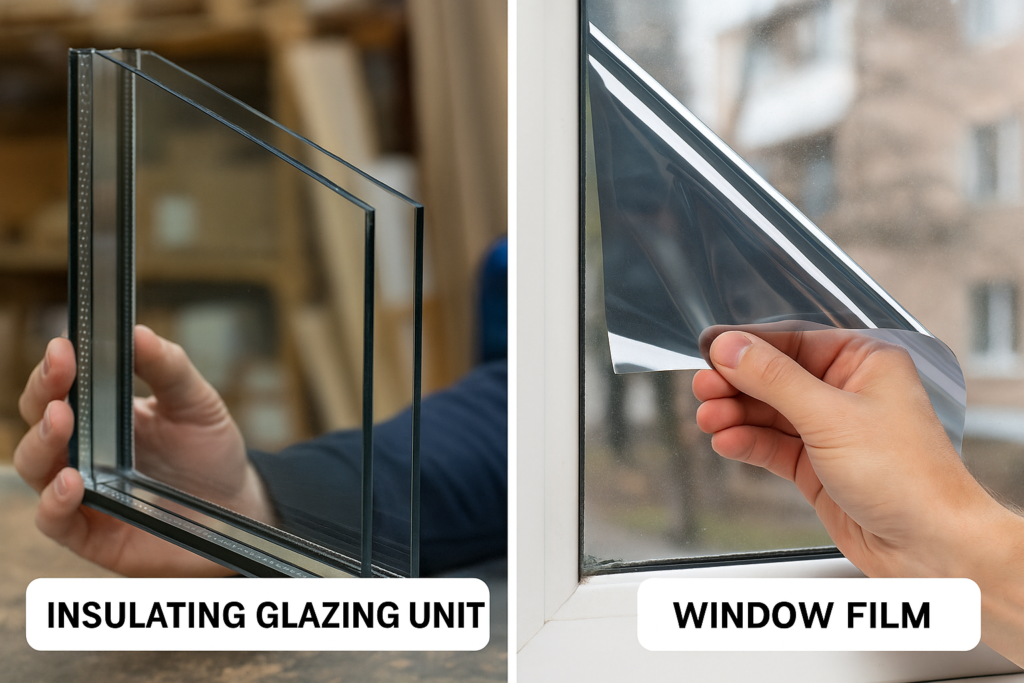
When it comes to improving the efficiency, comfort, and durability of your windows, two popular solutions stand out: the insulating glazing unit (IGU) and window films. Both offer distinct benefits, but they work in very different ways. This guide will compare the two, helping homeowners, architects, and commercial property managers make the right choice depending on performance goals, cost considerations, and long-term value.
What is an Insulating Glazing Unit?
An insulating glazing unit is a sealed system consisting of two or more panes of glass separated by a spacer and filled with insulating gas (argon, krypton) or vacuum. The edges are sealed with primary and secondary sealants to keep the unit airtight. IGUs are also called double or triple glazing, depending on the number of glass panes.
Key features include:
- Thermal efficiency: Multiple panes reduce heat transfer.
- Soundproofing: Air or gas-filled cavities block outside noise.
- Condensation control: IGUs maintain warmer interior glass surfaces.
- Durability: High-quality IGUs can last 20–35 years with proper care.
Learn more in Insulating Glazing Unit | Lifespan and Routine Maintenance.
What Are Window Films?
Window films are thin, adhesive-backed polyester or ceramic coatings applied directly to the surface of existing glass. They are typically retrofitted onto single or double-glazed windows to improve performance without replacing the entire glazing system.
Types of window films:
- Solar control films: Reduce heat gain and glare from sunlight.
- Low-E films: Reflect infrared heat back indoors during winter.
- Safety/security films: Strengthen glass against breakage.
- Decorative films: Provide privacy or aesthetic finishes.
IGUs vs. Window Films: Key Comparisons
1. Energy Efficiency
- IGUs: Provide superior insulation thanks to multiple glass layers, Low-E coatings, and gas-filled cavities. They achieve lower U-values and higher R-values.
- Window Films: Can reduce solar heat gain but don’t offer the same level of insulation as IGUs. They work best as supplementary upgrades.
For a detailed explanation, see Insulating Glazing Unit | U-Value and R-Value Explained.
2. Noise Reduction
- IGUs: Especially effective in noisy urban environments. Triple glazing or laminated IGUs dampen low-frequency traffic and construction noise.
- Window Films: Offer little to no improvement in soundproofing since they don’t alter the glass structure.
Read more at Insulating Glazing Unit | Soundproofing in Urban Areas.
3. Durability and Maintenance
- IGUs: Lifespan of 20–35 years with proper maintenance. Failure usually occurs when edge seals degrade.
- Window Films: Typically last 10–15 years before peeling, bubbling, or discoloring.
4. Cost Considerations
- IGUs: Higher upfront cost since replacement of the window unit is required. Long-term savings from reduced energy bills and improved property value offset the investment.
- Window Films: Lower initial cost and easier installation. Ideal for retrofits when full window replacement isn’t feasible.
5. Environmental Impact
- IGUs: Reduce energy consumption significantly, contributing to sustainable building practices.
- Window Films: Provide some energy savings but are less impactful compared to IGUs.
For inspiration on sustainable design, see Bright View Landscape | Sustainable Landscaping for a Greener Future.
Installation and Handling
- IGUs: Require professional installation. Precision equipment ensures proper sealing and placement. Safe transport of heavy glass units often involves tools like a material handling trolley.
- Window Films: Can often be installed by smaller contractors, though professional installation ensures proper adhesion and long-term durability.
Urban Applications
In busy cities, noise reduction and thermal efficiency are crucial. IGUs, especially when combined with laminated or Low-E glass, provide substantial benefits for high-density residential and commercial projects. Their role in sustainable construction makes them ideal for buildings that must meet stricter energy codes and acoustic comfort standards. Even outdoor design elements such as kerb stone barriers can complement IGUs in reducing urban stressors.
Window films, meanwhile, are best for smaller upgrades in older properties, providing quick wins in reducing glare and modest energy savings.
Which Should You Choose?
- Choose IGUs if: You are constructing a new building, undertaking a major renovation, or seeking long-term energy efficiency and noise reduction. They are ideal for property owners looking for a durable, all-in-one solution.
- Choose Window Films if: You want a cost-effective retrofit to improve comfort in the short term without replacing the glazing.
Conclusion
Both insulating glazing units and window films offer benefits, but they serve different purposes. IGUs excel in long-term performance, thermal insulation, and noise reduction, making them the gold standard for modern construction. Window films, while less comprehensive, are budget-friendly enhancements that work well in retrofit scenarios.
By understanding the strengths and limitations of each option, you can choose the best path toward creating quieter, more comfortable, and energy-efficient spaces.