
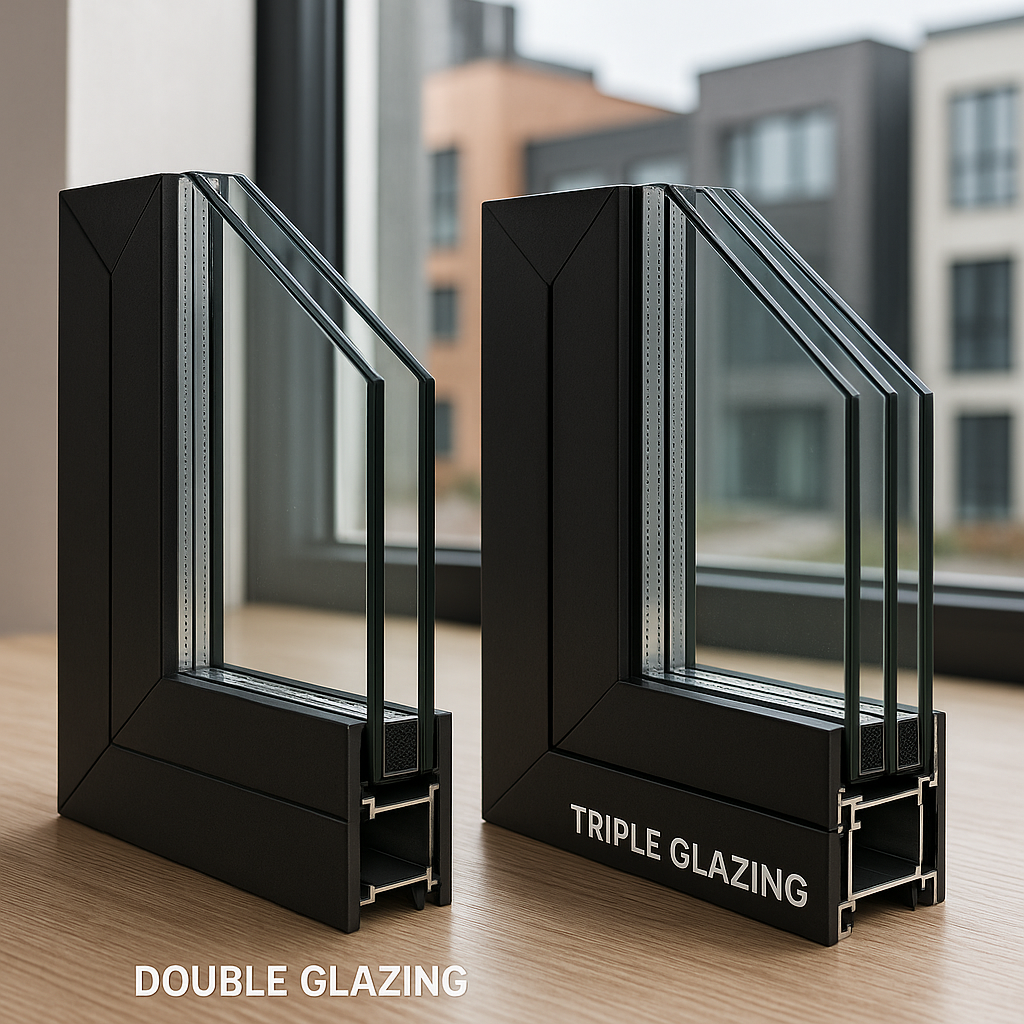
When it comes to energy-efficient windows and modern architectural design, the insulating glazing unit (IGU) is at the heart of performance. Whether in residential or commercial buildings, IGUs enhance thermal insulation, reduce noise, and increase comfort. However, one of the most common questions property owners and builders face is: Should you choose double glazing or triple glazing? This article explores the differences, benefits, and considerations when comparing double vs. triple glazing insulating glazing units.
What is an Insulating Glazing Unit?
An insulating glazing unit (IGU) is a sealed window unit made up of multiple panes of glass separated by a spacer and filled with air or inert gases such as argon or krypton. The space between the panes serves as insulation, reducing heat transfer and improving energy efficiency.
IGUs are categorized by the number of panes:
- Double glazing: Two panes of glass with one insulating cavity.
- Triple glazing: Three panes of glass with two insulating cavities.
Each configuration has its strengths, and choosing between them depends on energy efficiency needs, climate conditions, and budget.
Double Glazing Units
Features
- Two panes of glass separated by a spacer.
- Typically filled with argon gas for enhanced insulation.
- U-values range between 1.2 and 2.8, depending on coatings and gas fill.
Benefits
- Energy Efficiency: Reduces heat loss significantly compared to single glazing.
- Cost-Effective: More affordable than triple glazing while still offering strong insulation.
- Noise Reduction: Provides effective soundproofing for urban areas.
- Condensation Control: Maintains warmer internal glass surfaces to minimize condensation.
Limitations
- Less insulating than triple glazing.
- May not be sufficient for colder climates with high heating demands.
Triple Glazing Units
Features
- Three panes of glass separated by two cavities.
- Usually filled with krypton or argon gas.
- U-values can reach as low as 0.6, offering superior insulation.
Benefits
- Superior Energy Efficiency: Drastically reduces heat transfer, ideal for cold climates.
- Enhanced Comfort: Eliminates cold spots near windows.
- Noise Reduction: Triple glazing performs better against low-frequency urban noise.
- Long-Term Value: Offers durability and reduced energy costs over time.
Limitations
- Higher Cost: Upfront installation expenses are greater than double glazing.
- Weight: Heavier units may require stronger frames and hardware.
- Diminished Returns in Mild Climates: The performance gains may not justify the additional cost.
Key Comparisons: Double vs. Triple Glazing
| Feature | Double Glazing | Triple Glazing |
|---|---|---|
| Number of panes | 2 | 3 |
| Gas fill | Argon (common) | Krypton/Argon |
| U-value (lower is better) | 1.2–2.8 | 0.6–1.1 |
| Cost | Moderate | Higher |
| Noise reduction | Good | Excellent |
| Weight | Lighter | Heavier |
Applications of Double and Triple Glazing
Residential Buildings
In moderate climates, double glazing is often sufficient to meet energy efficiency standards. However, in colder regions, triple glazing provides better performance, making homes warmer and more comfortable.
Commercial and Office Buildings
Many offices are opting for triple glazing due to the demand for energy efficiency, noise control, and sustainability standards. Read more on this in our detailed guide: Insulating Glazing Unit | For Office and Commercial Buildings.
Increasing IGU Performance
Even within double or triple glazing, performance can be boosted through:
- Low-E coatings to reflect heat.
- Gas fills (argon or krypton) for better insulation.
- Thermally broken frames to reduce heat transfer.
- Spacer technology to prevent condensation and improve efficiency.
For more insights into performance metrics, explore: Insulating Glazing Unit | U-Value and R-Value Explained.
Lifespan and Maintenance
Both double and triple glazed IGUs require proper installation and maintenance to ensure durability. Routine checks for seal integrity and regular cleaning are key. Learn more in our guide: Insulating Glazing Unit | Lifespan and Routine Maintenance.
IGUs vs. Alternatives: Window Films
While window films can improve insulation and UV protection, they do not match the full performance of IGUs in energy savings and noise control. For a detailed comparison, read: Insulating Glazing Unit | IGUs vs. Window Films Compared.
Beyond Windows: Materials and Urban Integration
Just as innovations in material handling trolleys and kerb stones are reshaping urban infrastructure, IGUs are revolutionizing building efficiency. From homes to skyscrapers, these units are integral to sustainable city living.
Landscaping also plays a role in energy efficiency. Explore sustainable practices here: Bright View Landscape | Sustainable Landscaping for a Greener Future.
Conclusion
The choice between double and triple glazing insulating glazing units depends on climate, budget, and performance needs. Double glazing provides excellent value and efficiency for most climates, while triple glazing excels in colder regions with high energy demands. With the right installation, coatings, and frame systems, either option can deliver lasting benefits in energy efficiency, noise reduction, and comfort.
Whether you are a homeowner, architect, or builder, investing in the right IGU system ensures a sustainable, comfortable, and future-ready building.
for more: Insulating Glazing Unit | Soundproofing in Urban Areas