
In the world of modern architecture, insulating glazing units (IGUs) are indispensable for creating energy-efficient, comfortable, and sustainable buildings. From homes to high-rise commercial towers, these advanced window systems minimize energy loss, reduce noise, and enhance indoor comfort. However, few people outside the glass industry fully understand the intricate process behind manufacturing IGUs.
This article provides a detailed walkthrough of the step-by-step insulating glazing unit production process, highlighting best practices, quality control methods, and how advanced tools ensure performance and durability. By the end, you’ll have a complete picture of how raw glass sheets are transformed into the highly efficient glazing units that dominate today’s construction landscape.
1. Material Preparation: The Foundation of Quality
The manufacturing process begins with selecting high-quality glass sheets. The performance of an insulating glazing unit is only as good as its raw materials. Depending on project requirements, coatings may be applied, such as low-emissivity (Low-E) coatings, which significantly improve thermal efficiency.
Additives like solar control tints, laminated panes, or reflective films may also be chosen at this stage to enhance UV protection, reduce solar heat gain, or improve acoustic insulation.
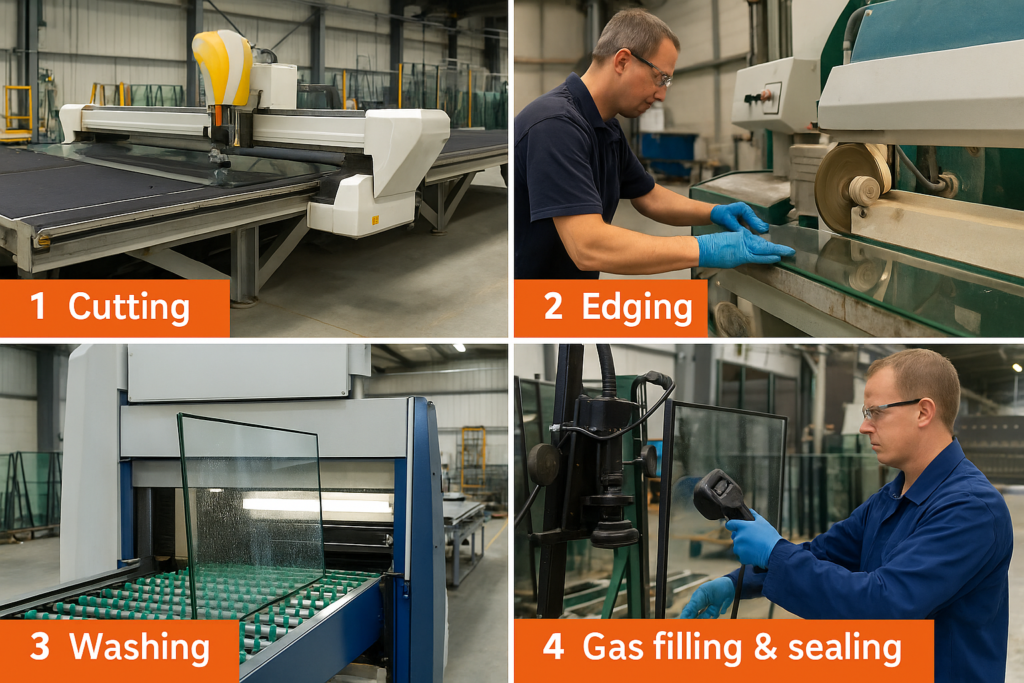
2. Glass Cutting: Precision at Every Edge
Once materials are prepared, the next step is precision cutting. Advanced machinery ensures glass sheets are cut to the exact specifications of the project. Any error in this stage could compromise fitting and sealing, so accuracy is paramount.
Why precision matters:
- Seamless fitting during assembly
- Reduced risk of stress cracks
- Improved sealing performance
3. Glass Edging: Safety and Durability
After cutting, glass edges are polished in a process known as edging. This step is critical for:
- Eliminating sharp, unsafe edges
- Reducing micro-cracks that could expand over time
- Ensuring a smooth surface for effective sealing
A perfectly edged pane ensures the structural integrity of the final insulating glazing unit.
4. Washing and Drying: A Clean Start
Before assembly, the glass undergoes industrial washing using detergents and high-pressure water jets. Drying follows with heated air systems. Any dust, fingerprints, or moisture could compromise the insulating unit by causing fogging or weak seals.
Pro tip: Proper drying is essential to prevent trapped moisture, which leads to condensation between panes.
5. Spacer Assembly: The Heart of an IGU
Spacers maintain the gap between panes, creating the insulating cavity. These components are often made from aluminum or thermoplastic materials. The spacer not only dictates the width of the cavity (typically 6–20 mm) but also reduces edge heat transfer when paired with thermal breaks.
A desiccant inside the spacer absorbs any residual moisture, keeping the unit clear and fog-free for years.
6. Gas Filling: Boosting Insulation Performance
The cavity between the panes is then filled with argon, krypton, or xenon gas, or left under vacuum.
- Argon: Affordable, effective, and the most common choice.
- Krypton: More expensive but delivers higher insulation in smaller cavities.
- Vacuum glazing: Nearly eliminates heat transfer, offering the best performance.
This gas filling is one of the most important factors determining the thermal performance (U-value) of an insulating glazing unit.
7. Sealing: Locking in Performance
Each IGU is sealed with a primary and secondary sealant to lock the spacer and panes together. These sealants prevent air or gas leakage and protect against moisture infiltration.
Sealant integrity is key to durability—a weak seal can shorten the lifespan of the glazing unit dramatically.
8. Quality Control: Precision Meets Technology
Modern manufacturing plants use tools like Sparklike insulating gas measurement devices to ensure the proper gas fill rate and verify seal quality. Non-invasive testing methods allow manufacturers to measure argon or krypton levels without damaging the glass unit.
This ensures every IGU leaving the production line meets international efficiency standards.
9. Role of Automation in Manufacturing
Automated machinery handles cutting, edging, sealing, and alignment with pinpoint accuracy. Automation reduces human error, improves efficiency, and guarantees consistency across large-scale projects.
Much like a vacuum lifter used for handling large panes of glass on-site, automation in factories reduces labor strain and improves safety during production. Vacuum lifter systems are indispensable in both manufacturing plants and installation sites.
10. Add-Ons: Customizing Performance
Clients can request add-ons like:
- Low-E coatings for improved insulation
- Laminated panes for noise control
- Triple glazing for extreme cold climates
- Solar control coatings for reduced heat gain in sunny areas
Each add-on enhances the functionality and ROI of the insulating glazing unit.
Installation and Handling Tools
While this article focuses on manufacturing, it’s worth noting that proper installation is critical. Specialized equipment like a glass lifter ensures safe handling and placement of IGUs on-site, reducing risks of breakage and ensuring a flawless fit.
For more insights into professional installation techniques, explore: Insulating Glazing Unit | Installation Process Best Practices.
Why Quality Control Matters for ROI
A high-quality insulating glazing unit may cost more upfront, but the return on investment (ROI) comes from:
- Lower heating and cooling bills
- Reduced maintenance and replacement costs
- Improved property value
For a detailed analysis of long-term financial benefits, see: Insulating Glazing Unit | Cost Breakdown and ROI Factors.
Replacement and Maintenance
Even the best-manufactured IGUs may eventually require replacement. Seal failures or condensation between panes are common indicators. Proper guidance can be found here: Insulating Glazing Unit | Replacement Considerations Guide.
Sustainable Outlook
Modern glazing technology supports global efforts toward sustainable construction. High-efficiency windows reduce building energy use by up to 40%. Paired with sustainable urban design (see Bright View Landscape | Sustainable Landscaping for a Greener Future), IGUs are a key component of green building practices.
Conclusion
The journey from raw glass sheets to a finished insulating glazing unit is a sophisticated process that balances precision engineering, automation, and strict quality control. Every step—cutting, edging, washing, gas filling, and sealing—plays a critical role in ensuring durability and energy performance.
By understanding the step-by-step manufacturing process, architects, builders, and homeowners can make informed decisions when selecting IGUs, ensuring maximum comfort, efficiency, and return on investment.