
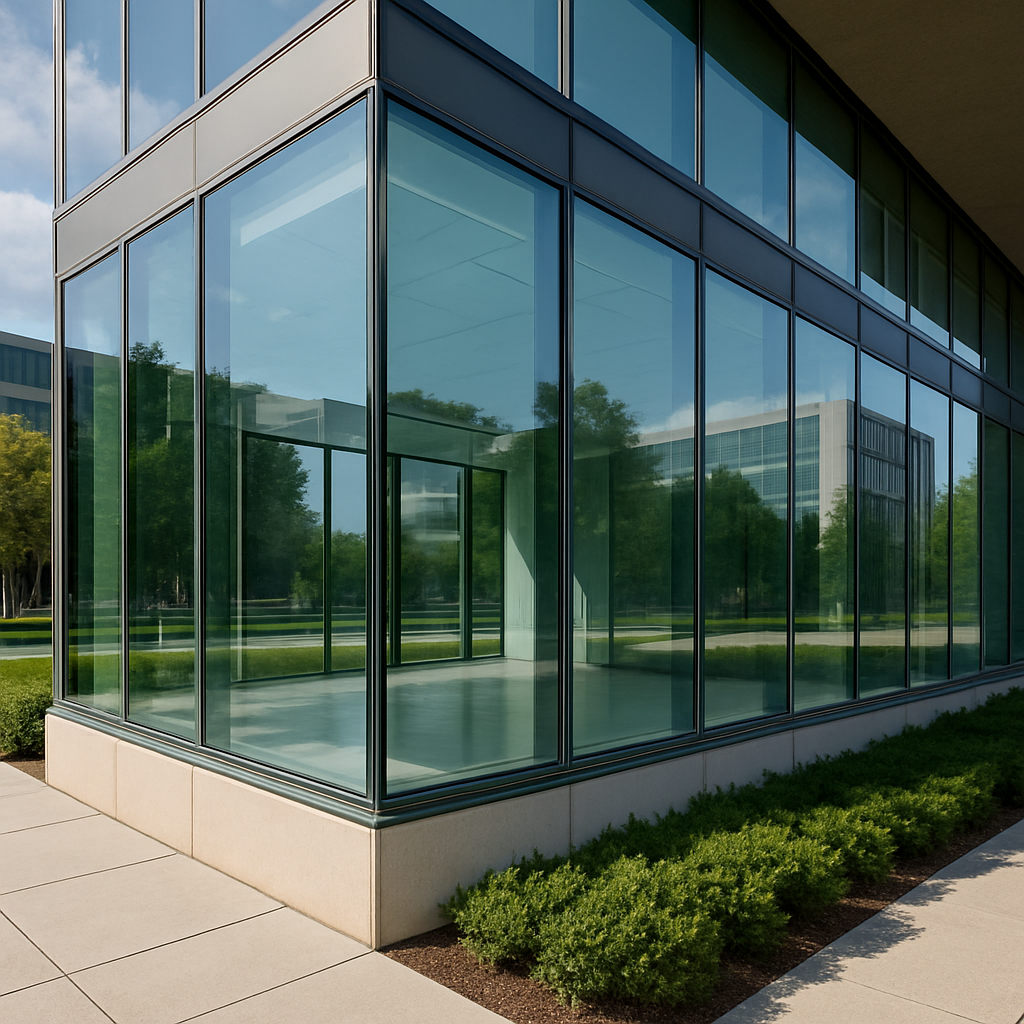
In contemporary architecture, “neutral” glass has become the go-to aesthetic: clear, color-balanced, and visually calm. Clients want facades and windows that look transparent and elegant, not green, bronze, or heavily mirrored. At the same time, they expect high energy performance, year-round comfort, and sustainability credentials.
This is where low e glass benefits become critical. Low-emissivity coatings allow you to keep a neutral look while dramatically improving the building envelope’s performance. Instead of choosing between clarity and efficiency, designers can have both—if the right Low-E products are selected and applied intelligently.
In this article, we’ll explore why Low-E matters so much in neutral glass designs, how it works behind the scenes, and what architects, contractors, and hoteliers should consider to unlock its full potential.
What Do We Mean by “Neutral” Glass Design?
Neutral glass design focuses on:
- Minimal color cast – no strong green, blue, or bronze tones
- High clarity and transparency – clean views, true color rendering
- Balanced reflection – enough to feel sophisticated, not mirror-like
- Consistent appearance – across facades, orientations, and floors
Traditionally, achieving this meant relying on clear or low-iron glass with limited coatings, often sacrificing thermal performance. However, modern Low-E technologies can be engineered to look neutral while still delivering strong insulation and solar control.
The key question becomes: how do you capture all the low e glass benefits without compromising the “invisible” aesthetic your client is paying for?
How Low-E Glass Works in Neutral Designs
Low-E glass is coated with a microscopically thin layer of noble metals—commonly silver—applied to the surface of the glass. This layer:
- Reflects infrared (heat) radiation back toward its source
- Allows visible light to pass through with minimal distortion
- Reduces overall heat transfer through the glazing
Because the coating is so thin and carefully tuned, neutral Low-E options can:
- Maintain high visible light transmission (VT)
- Avoid strong tints or color shifts
- Deliver low U-values and optimized solar factor (g-value)
In other words, you get a visually “plain” facade that performs like a high-tech envelope.
For a facade-oriented deep dive into performance and appearance, see:
👉 What Low E Glass Benefits Mean for Modern Facade Designs
Core Low E Glass Benefits in Neutral Glass Concepts
1. Energy Savings Without Darkening the Building
One of the biggest low e glass benefits is that it cuts heating and cooling loads while keeping interiors bright. Compared to uncoated clear glass, neutral Low-E can:
- Reduce winter heat loss through lower thermal transmittance (Ug)
- Limit unwanted summer heat gain with a tuned g-value/SHGC
- Maintain a high level of daylight penetration
This is essential in neutral designs where the goal is to feel open and light, not shaded or tinted.
2. Comfort for Occupants Near Large Glass Areas
Floor-to-ceiling neutral glass looks stunning in:
- hotel lobbies and guest rooms
- high-end residential living spaces
- office perimeter zones and meeting rooms
Without Low-E, these glass walls can become uncomfortable “hot” or “cold” zones. Low-E coatings help by:
- Keeping the interior pane temperature closer to room temperature
- Cutting radiant cold in winter and radiant heat in summer
- Reducing condensation on interior surfaces
That translates directly into better occupant experience—and fewer complaints about “too hot by the window” or “too cold near the glass.”
3. UV Protection With Clear Views
Neutral designs often showcase natural materials: timber floors, soft furnishings, artwork, and high-end finishes. One subtle but crucial low e glass benefit is UV filtering:
- Low-E glass blocks a large portion of harmful UV radiation
- This reduces fading, discoloration, and degradation over time
- Interiors keep their original appearance longer, protecting the client’s investment
You get the visual openness of clear glass while shielding interiors much more effectively than ordinary glazing.
4. Sustainability and Compliance Without Visual Compromise
Clients increasingly expect:
- Better energy ratings
- Reduced operational carbon
- Compliance with tightening EU and national energy directives
Low-E glass is a central tool in meeting those targets. When you integrate it into a neutral design, the building can:
- Achieve stricter performance requirements
- Qualify for incentives or green certifications
- Communicate sustainability without visually shouting “eco-tech”
The facade still looks “premium” and timeless, but the performance is thoroughly modern.
Why Specification Is Critical for Neutral Low-E Designs
Achieving neutral aesthetics with strong performance isn’t automatic. Architects must define Low-E parameters precisely—not just request “low-E glass” and hope for the best.
Key items to specify:
- Desired Ug range (insulation level)
- Target g-value/SHGC depending on climate and orientation
- Visible light transmittance (VT) to avoid overly dark glazing
- Color neutrality and reflectance limits to control appearance
- Glass build-up: soft-coat vs hard-coat, selective Low-E, substrate choice
Poorly defined specs can result in:
- Glass that’s too reflective for a neutral concept
- A green or smoky color cast in certain lighting
- Mismatched units across phases or suppliers
For a closer look at how and why to get this right, see:
👉 Why Low E Glass Types Be Specified Carefully by Architects
Installation Quality: Protecting Both Performance and Appearance
Even the best neutral Low-E product can underperform—or look inconsistent—if it’s not installed correctly.
On site, teams must respect:
- Orientation of coated surfaces (e.g., surface #2 vs #3 in IGUs)
- Handling and storage rules to avoid edge damage and seal failure
- Compatible sealants and gaskets to protect IGU integrity
- Correct tolerances and setting blocks in frames and curtain wall systems
If IGUs are reversed, performance changes; if seals or gas fills fail, you may see:
- Fogging or haze between panes
- Patchy appearance across the facade
- Loss of the promised energy performance
For contractors and facade installers, detailed guidance is here:
👉 What Ensures Low E Glass Types Install Correctly On-Site?
In neutral designs, where everything is clean and minimal, any inconsistency becomes immediately visible—making careful installation especially important.
Neutral Low-E Glass and Its Relationship With Surrounding Landscape
Neutral glass doesn’t live in isolation. The way it performs and looks is influenced by:
- Adjacent buildings
- Street trees and planting
- Paving, water features, and outdoor seating
- Orientation and daily sun path
Integrating low e glass benefits with thoughtful landscape architecture can:
- Reduce glare on pavements and outdoor terraces
- Improve comfort in courtyards and external seating areas
- Shape reflections so the facade subtly mirrors greenery and sky instead of hard paving only
A holistic design approach treats glazing and landscape as part of a single environmental system, not as separate disciplines. For broader context on that integration, see:
👉 Define Landscape Architecture for Modern Design Work
Choosing the Right Low-E Strategy for Neutral Glass Projects
When you’re selecting Low-E glass for a neutral design, these steps help keep both performance and aesthetics aligned.
1. Start With Climate and Orientation
- In cold climates, prioritize low Ug (high insulation) and moderate g-values to retain heat.
- In hot or Mediterranean climates, focus on a lower g-value to limit solar gain while maintaining good VT.
- For mixed climates, aim for a balanced solution that avoids extremes in either direction.
2. Evaluate Selectivity, Not Just Single Numbers
Selectivity (roughly VT ÷ g-value) is a useful way to understand how much daylight you get per unit of solar gain:
- High selectivity = bright interiors with controlled heat
- Low selectivity = darker or more tinted glass to gain control over heat
Neutral Low-E products typically target high selectivity so that facades remain bright and “color-honest.”
3. Match Glass Type to Project Use
- Hotels and luxury villas – prioritize comfort, quiet, and UV protection; consider laminated Low-E in noisier or safety-critical areas.
- Apartment buildings – focus on energy bills, condensation risk, and occupant comfort at windows.
- Offices and hospitality venues – ensure glare control and thermal comfort support long-term productivity and guest satisfaction.
4. Mock Up and Review Under Real Light
Before committing to a full facade package:
- Build full-size mockups with the chosen Low-E glass
- Review them at different times of day and in various weather conditions
- Compare interior views and exterior appearance
In neutral designs, subtle differences in color or reflection can become important; mockups help avoid surprises after installation.
Conclusion: Why Low E Glass Benefits Are Central to Neutral Design
Neutral glass designs promise clarity, elegance, and visual calm—but without the right technology they can also mean energy waste, glare, and discomfort. That’s why low e glass benefits matter so much:
- They allow facades and windows to stay visually neutral while performing like high-efficiency building components.
- They support energy savings, stable indoor temperatures, and UV protection.
- They help projects meet modern sustainability goals without sacrificing architectural intent.
When architects specify Low-E carefully, facade teams install it correctly, and the glazing strategy is integrated with the wider building and landscape, neutral glass becomes more than an aesthetic—it becomes a high-performance, future-ready envelope solution.