
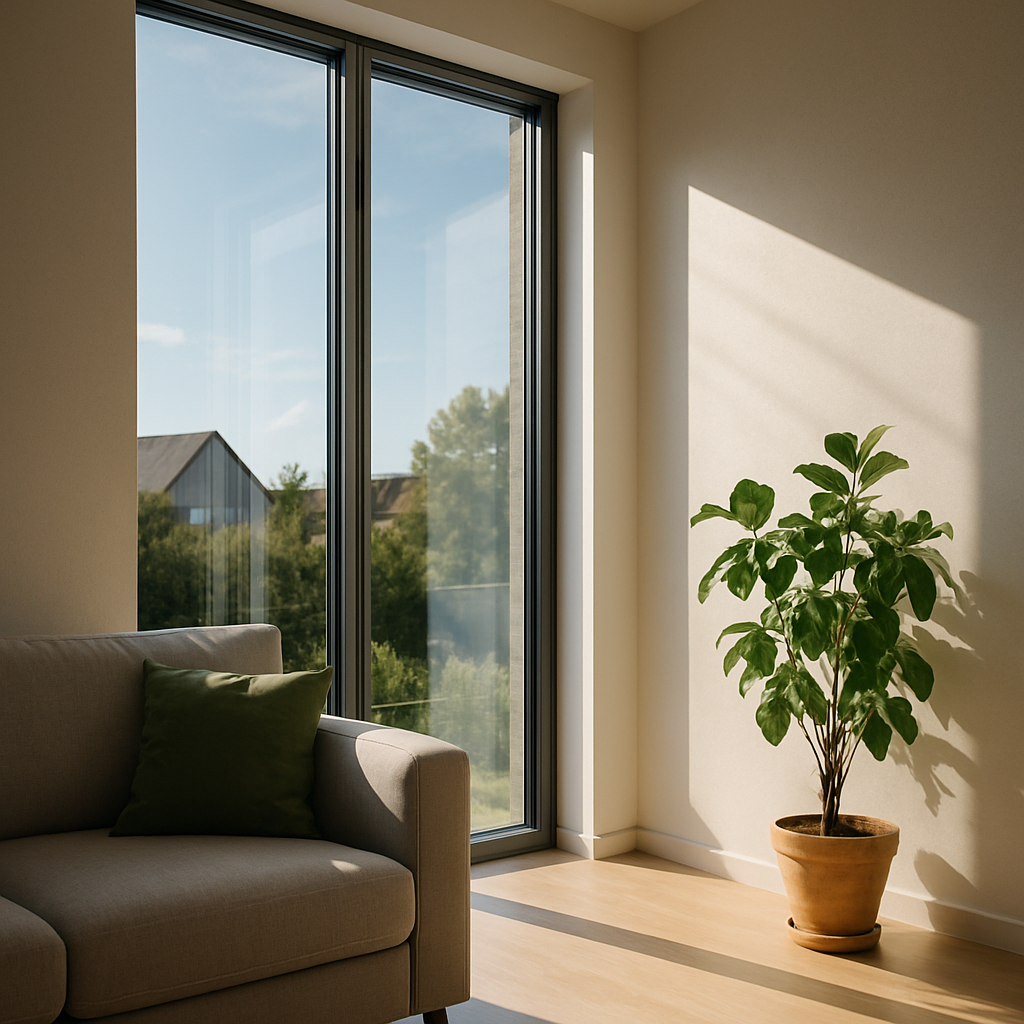
Daylight-driven design is no longer a niche sustainability strategy—it’s a core expectation in modern homes, offices, hotels, and schools. Clients want bright, naturally lit interiors that feel open and connected to the outside, without suffering from glare, overheating, or heat loss.
That’s where low e glass benefits really start to shine.
Low-emissivity (Low-E) glass makes it possible to design large, light-filled spaces while keeping energy use under control and maintaining comfort at the window wall. Instead of choosing between “more daylight” and “more performance,” good Low-E glazing lets you do both.
In this article, we’ll zoom in on which low E glass benefits enhance daylight-driven designs and how architects, facade designers, and owners can use them intelligently.
Daylight-Driven Design: What It Really Needs From Glass
A daylight-first strategy isn’t just “add more windows.” To work well, a space needs:
- High visible light transmission (VT) – so daylight can reach deep into the floorplate.
- Controlled solar heat gain (SHGC / g-value) – to avoid turning that daylight into excessive heat.
- Comfortable surface temperatures – so occupants can sit near glass without feeling too hot or too cold.
- Limited glare – especially on screens, work surfaces, and teaching walls.
- Neutral color – so daylight renders paint, materials, and skin tones accurately.
Ordinary clear glass can deliver brightness, but it fails on almost all the other items as windows get larger. Low-E coatings let you keep the light while tuning the rest.
For a facade-scale perspective on that balance, see
👉 What Low E Glass Benefits Mean for Modern Facade Designs.
How Low-E Glass Works in Daylit Spaces
Low-E (low emissivity) glass is standard float glass with an ultra-thin metallic or metal-oxide coating applied to one surface. This coating:
- Reflects infrared (heat) radiation back toward its source
- Passes visible light, so spaces stay bright
- Lowers the U-value (better insulation) and allows fine control of solar factor / SHGC
In double- or triple-glazed units, the coating is placed on an internal surface (typically #2 or #3), protected from damage and tuned to the building’s climate and orientation.
For daylight-driven design, the magic is that you can choose Low-E options that:
- Maintain high VT (clear, bright interiors)
- Reduce solar gain on exposed facades
- Improve insulation so perimeter zones feel similar to the core
That’s the engine behind most of the low e glass benefits we care about for daylighting.
1. Brighter Interiors With Controlled Heat Gain
One of the most important low e glass benefits for daylight-driven projects is the ability to decouple light from heat.
With conventional tinted or reflective glass, you often have to:
- Darken the glass to control solar gain, reducing daylight
- Accept high heat gain if you want more light
Modern Low-E glass offers high selectivity: a high ratio of visible light transmission to solar heat gain. In practice, that means:
- Plenty of daylight penetration into living rooms, classrooms, or open-plan offices
- Reduced cooling loads, even with big south- or west-facing openings
- Less need for blinds to stay permanently down “because it gets too hot,” which kills daylighting in real use
Designers can push larger glazing percentages without automatically blowing the energy budget.
2. Glare Reduction Without Losing the View
Glare is the silent killer of good daylight design. If visual comfort is poor, occupants will:
- Close blinds and curtains
- Turn lights on all day
- Avoid using areas near the window wall
Low-E coatings help here in two subtle but important ways:
- Lower solar gain reduces high contrast zones near glass, especially on bright summer days.
- Some Low-E products offer mild reflectance and controlled light diffusion, softening the harshness of direct sun without visibly tinting the glass.
Used together with good orientation, internal finishes, and occasional exterior shading, Low-E makes it easier to keep blinds open and daylight doing the work it was designed to do.
3. Stable Indoor Temperatures at the Perimeter
Daylight-driven designs often feature:
- Floor-to-ceiling glazing
- Window seats and deep reveals
- Workstations or lounge areas right against the facade
These spaces only work if occupants are comfortable sitting near the glass. Another key low e glass benefit is improved thermal comfort:
- In winter, Low-E keeps interior surface temperatures higher, reducing radiant cold and downdrafts.
- In summer, it cuts radiant heat from the sun, so occupants don’t feel baked near large panes.
Because people experience comfort not just through air temperature but also through radiant exchange with surfaces, better glass makes daylit zones actually usable—not just pretty in the renderings.
This is especially important in clean, neutral glazing concepts. For more on the visual side of that, see
👉 Why Low E Glass Benefits Matter in Neutral Glass Designs.
4. Protecting Daylit Interiors From UV Damage
Daylight is wonderful for wellbeing and visual comfort—but ultraviolet radiation is hard on materials:
- Timber and engineered flooring can fade or yellow
- Fabrics and leathers lose color
- Artwork and branding elements degrade
Low-E glass provides UV protection as part of its spectral control. By filtering out a large portion of UV while still delivering high visible light transmission, it lets you:
- Use large daylit surfaces without rapidly aging interior finishes
- Design pale, minimalist schemes that stay visually consistent over time
- Reduce the need for additional UV films or heavy curtains
In museums, hotels, showrooms, and high-end residential projects, this is a major long-term benefit.
5. Supporting Minimalist, Daylight-First Window Details
Minimalist window design and daylight-driven planning go hand in hand: slim frames, large openings, and unobstructed glass. But these same features increase heat exchange and glare risk.
Low-E glazing supports minimalist windows by:
- Providing high performance in a thin visual profile
- Allowing larger openings without massive external shading structures
- Keeping the glass clear and neutral, in line with minimal aesthetics
If your project leans heavily on clean lines, frameless corners, or wall-to-wall glazing, the synergy between minimalism and Low-E performance is explored further in
👉 Where Low E Glass Benefits Support Minimalist Window Designs.
6. Lower Energy Bills and Stronger Sustainability Story
Daylight-driven designs already reduce dependence on artificial lighting. Add Low-E glass and you can also reduce:
- Cooling loads by limiting solar heat gain
- Heating loads through better insulation
- Overall operational carbon emissions
This aligns perfectly with:
- Green building certifications
- Corporate ESG goals
- Residential buyers who value lower running costs and comfort
When you can show that big windows don’t mean big bills, it becomes easier to justify generous glazing ratios to both clients and code officials.
7. Connecting Daylight, Glass, and Landscape
The experience of daylight isn’t just about the window—it’s also about what you see through it and how the exterior environment interacts with the glass.
Thoughtful landscape architecture can amplify low e glass benefits in daylight-driven projects by:
- Providing filtered light via trees and planting in front of facades
- Reducing reflected glare from hard paving near large windows
- Creating visually rich views that make natural light more enjoyable
- Helping modulate microclimate around glazed areas (shade, evapotranspiration, wind buffering)
Coordinating glazing strategy with the external environment is part of a holistic approach to light, comfort, and energy. For a broader design lens on that, see
👉 Define Landscape Architecture for Modern Design Work.
Design Tips: Using Low-E Glass Effectively in Daylight-Driven Projects
To make the most of low e glass benefits in daylight-centric buildings, keep these principles in mind:
1. Specify Performance, Not Just “Low-E”
Different Low-E products vary widely. In your specifications, define:
- Target U-value range (insulation)
- Target g-value/SHGC for each orientation
- Minimum VT to support daylighting goals
- Acceptable exterior reflectance and color neutrality
This prevents substitutions that might maintain the label “Low-E” but degrade daylight or aesthetics.
2. Use Different Glass on Different Facades
Daylight access and solar exposure vary by orientation. Consider:
- Higher g-value (more solar gain) on cooler north facades in colder climates
- Lower g-value on east/west facades prone to overheating
- Harmonized appearance via similar color and reflectance, even if performance differs
3. Combine With Smart Shading, Don’t Replace It
Low-E is powerful, but it’s not a magic shield. For truly daylight-driven design:
- Use external shading where sun angles are predictable (brise-soleil, fins, overhangs)
- Integrate internal blinds for user control, but design so they don’t stay down all day
- Consider light-reflecting ceilings and surfaces to bounce daylight deeper in
4. Prioritize Quality Installation
Even excellent glazing will underperform if:
- IGUs are installed with the coated surface facing the wrong cavity
- Seals are damaged, causing condensation or gas loss
- Frames aren’t properly aligned, creating stress or air leakage
On minimalist, glass-heavy buildings these mistakes are both visible and expensive. A concise site-focused guide is available at
👉 What Ensures Low E Glass Types Install Correctly On-Site?
Conclusion: Low E Glass as a Core Tool for Daylight-First Architecture
Daylight-driven design aims to create spaces that are bright, comfortable, efficient, and emotionally uplifting. But without the right glazing, big windows can quickly become an energy liability and a comfort problem.
That’s why low e glass benefits matter so much:
- They let designers admit generous daylight while keeping heat and glare in check.
- They protect interiors and occupants while preserving clarity and color neutrality.
- They support minimalist details and strong sustainability performance at the same time.
Used thoughtfully—with climate, orientation, facade design, and landscape all in view—Low-E glass turns daylight from a risk into a powerful, predictable asset in modern architecture.