
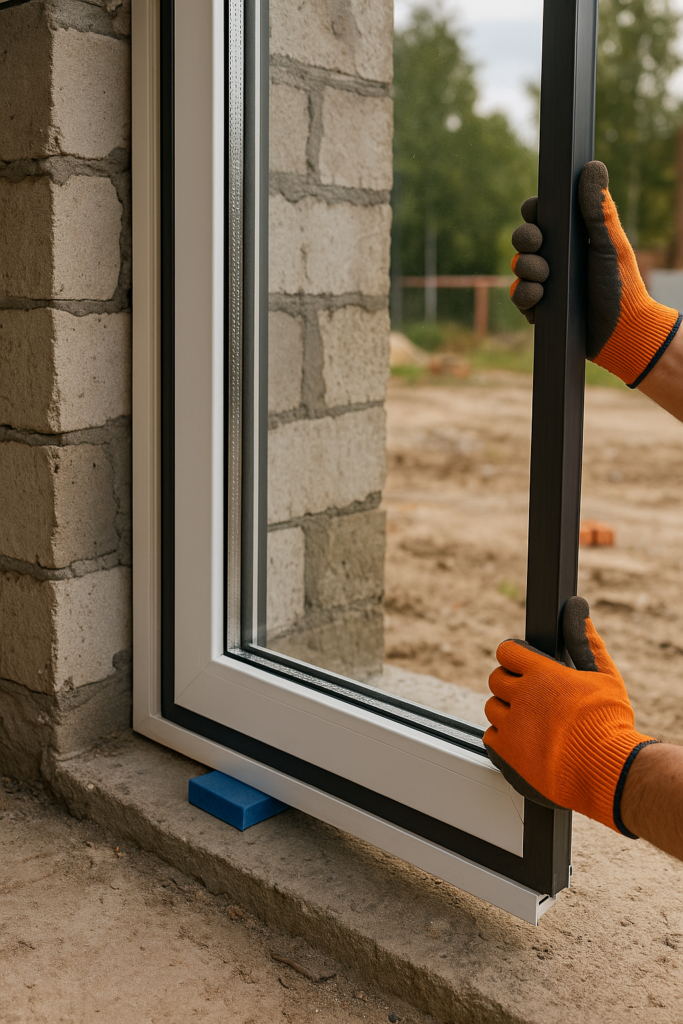
Low-E glass looks like ordinary glass, but it behaves more like a high-performance building system. A microscopically thin metallic coating quietly reflects heat, filters UV, and helps tame glare—all while letting in generous daylight.
Those low e glass benefits are the reason owners are happy to pay a premium. But there’s a catch: much of that performance can be weakened or lost long before the building is occupied, simply through poor jobsite handling. Scratches, warped frames, broken seals, or rough cleaning can turn a high-performance window into an underperforming weak spot in the envelope.
This article explains which specific low e glass benefits depend on careful handling on site, where the risks are highest, and how installers, GCs, and even homeowners can protect performance from delivery through to final clean.
A quick refresher: what low-E glass is designed to do
Before we talk about handling, it helps to recap the value you’re trying to protect.
Low-E (low-emissivity) glass has a near-invisible coating of silver or other metal oxides that changes how the glass exchanges heat and light:
- Reflects interior heat back indoors in winter, cutting heat loss through the glass.
- Blocks a large share of solar infrared in summer, lowering cooling loads.
- Reduces UV transmission, slowing the fading of flooring, fabrics, and artwork.
- Improves comfort by reducing cold downdrafts and hot spots near windows.
- Supports better glare control while still allowing high visible light transmission.
Installed correctly, these properties translate into:
- 25–40% lower heating and cooling costs (vs. standard single-pane glass).
- More stable temperatures and fewer complaints about “drafty windows.”
- Longer life for interior finishes.
- Real estate and resale value boosts thanks to energy-efficient specs.
All of that depends on the coating, edge seals, and frame connection staying intact—which is why jobsite handling is not just a logistics issue but a performance issue.
Low E glass benefits most at risk on the jobsite
Not every benefit is equally fragile. These key low e glass benefits are especially dependent on how glass is handled, stored, and installed.
1. Thermal performance and energy savings
Low-E units rely on:
- An intact low-E coating
- A properly sealed insulating glass unit (IGU)
- A tight, well-insulated frame connection
Poor handling can harm all three:
- Edge impacts and twisting can stress or break IGU seals, allowing argon gas to escape and moisture to enter. Once the unit fogs, U-factor and SHGC performance deteriorate.
- Scratches or scuffs on the coated surface reduce reflectivity and raise emissivity—essentially eroding the “E” in low-E.
- Bent frames or out-of-square openings create gaps that leak air, wiping out theoretical lab-tested performance.
Result: the expected energy savings shrink, and homeowners may never see the 3–5 year payback they were promised.
2. Comfort: temperature consistency and condensation resistance
The “comfort story” is a major selling point:
- Warmer interior glass surfaces in winter reduce cold radiation and downdrafts.
- Better edge performance reduces interior condensation and mold risk around frames.
But if units are racked, twisted, or shimmed incorrectly, you can get:
- Localized seal failure, creating cold corners or edges.
- Condensation bands where the IGU performance has been compromised.
- Noticeable temperature differences near some windows, undermining client trust in the product.
3. UV protection and interior preservation
Low-E coating is responsible for much of the UV filtering that slows fading of flooring and furnishings.
Deep scratches, harsh chemicals, or abrasive cleaning tools can damage that coating. Once compromised, UV can punch straight through, and the low e glass benefits related to interior preservation quietly disappear—even though the window still “looks fine” from a distance.
4. Long-term ROI and warranty coverage
Manufacturers design Low-E coatings to last 20–30 years inside a sealed IGU. However:
- Mis-handling, incompatible sealants, or poor frame integration can void warranties.
- Owners may end up paying for premature replacements or repairs that should have been covered—if only the installation had followed manufacturer guidelines.
Protecting ROI starts with protecting the glass, edges, and coatings the moment the pallet hits the jobsite.
Risk points: where Low-E performance is lost on site
From truck to final clean, there are several “danger zones” where poor practice can strip away low e glass benefits.
Delivery, unloading, and staging
- Impact damage: Dropping a unit even a short distance can crack edges or micro-fracture seals.
- Stacking flat instead of vertical: This stresses IGUs and increases breakage risk.
- Unprotected corners: Missing corner blocks lead to chipping where sealants are most critical.
Best practice: Use A-frames or vertical racks, padded contact points, proper strapping, and corner protectors. Keep glass inspected and documented upon arrival.
On-site storage
- Exposure to moisture or chemicals: Storing units on wet slabs or near masonry wash-down areas can introduce contaminants that attack seals.
- Direct sun on stacked units: Prolonged heating of the glass and frame can create thermal stresses that show up later as cracks or distortion.
- Dust and grit: Abrasive dust between lites and frames becomes sandpaper when units are moved.
Store Low-E glass indoors or under cover, upright, dry, and clean, with good airflow and away from active wet trades.
Opening preparation and frame installation
You can’t keep low e glass benefits if the opening itself is wrong:
- Out-of-square or twisted openings force the IGU to rack, stressing the glass and seals.
- Poor flashing, missing pan flashing, or sloppy air-barrier tie-ins invite moisture into frame pockets, attacking sealants and edge materials.
- Wrong shims or over-shimming bend the frame and distort the IGU.
This is exactly where Where Low E Glass Benefits Improve If Frames Install Well becomes reality—the frame is the foundation for the glass performance.
Glazing, sealing, and orientation
The glazing step is where coatings, seals, and structural support must all work together:
- Using acetic-cure silicones or incompatible sealants can chemically attack IGU edge seals.
- Setting blocks in the wrong locations can lead to point loads and stress cracks.
- Failing to align the coated surface on the correct lite (#2, #3, or #4) undermines the balance between winter heat retention and summer heat rejection—one of the most important low e glass benefits.
For a deeper look at orientation strategy, see Why Low E Glass Benefits Need Right Orientation at Install and how different surfaces support different climate goals.
Handling practices that protect Low E glass benefits
To keep the specified performance in the finished building, crews should treat Low-E glazing like high-end mechanical equipment, not commodity glass.
1. Train crews on “do and don’t” rules
Simple toolbox-talk guidelines go a long way:
Do:
- Keep lites vertical and braced.
- Lift using appropriate suction cups or glass lifters—never by the spacers or corner keys.
- Check labels for coating position and orientation before setting.
- Use non-metallic tools and soft pads where anything touches the coated surface.
Don’t:
- Drag glass units across concrete or masonry.
- Lean units unprotected against rebar, scaffolding, or brick edges.
- Use razor blades, steel wool, or abrasive pads on the glass.
- Expose edges unnecessarily to mortar, concrete slurry, or aggressive cleaners.
2. Coordinate with other trades
Many Low-E failures are “collateral damage” from other work:
- Stucco or masonry crews overspray cementitious materials onto glass.
- Painters use solvents that attack gaskets and sealants.
- Interior cleaners use ammonia-based products that can compromise films or gasket materials.
Pre-construction meetings should make it clear who protects the glass, who cleans it, and what products are allowed. This is a key theme in How Proper Installation Protects Low E Glass Benefits, where envelope coordination is treated as a team sport.
3. Document, mock-up, and inspect
- Build a mock-up bay that demonstrates correct frame prep, shimming, sealant, and cleaning.
- Have the manufacturer or supplier review and sign off on the mock-up.
- Use that mock-up as the standard for jobsite QA/QC.
Regular inspections should check:
- Frame plumb, level, and twist.
- Condition of spacers and corner keys.
- Evidence of edge seal damage, scratches, or surface contamination.
- Proper sealant type, joint dimensions, and tooling.
Catching problems early is far cheaper than replacing fogged IGUs after handover.
Communicating handling requirements to owners and designers
Owners and architects often specify Low-E glass for its energy and comfort performance—then assume the jobsite will automatically protect that performance. Educating the team helps align expectations.
You can:
- Include handling and storage requirements directly in the spec.
- Flag orientation and frame requirements in shop drawings.
- Talk through how low e glass benefits interact with building orientation, shading, and even exterior surroundings such as planting or outdoor structures—topics that connect well with broader envelope and site design thinking in resources like What Defines a Natural Landscape and Its Core Features.
When everyone understands that mishandling a pallet can wipe out thousands in lifetime savings, they’re more likely to respect the glass.
What happens if handling goes wrong?
Even with good training, mistakes happen. Recognizing early warning signs lets you respond before performance is lost:
- Fogging or condensation inside the IGU → likely seal failure; replacement usually required.
- Persistent streaking or rainbow patches that don’t clean off → possible coating damage.
- Cracks from corners or edges with no impact point → may indicate installation-induced stress.
- Uneven comfort complaints near specific windows → check those units for frame distortion, seal issues, or mis-orientation.
Sometimes a localized issue can be solved with re-sealing or sash replacement; other times, full IGU replacement is the only way to restore the original low e glass benefits.
Key takeaways: jobsite care is part of the performance spec
Low-E glass is one of the best value upgrades in the building envelope. It offers:
- Major reductions in heating and cooling loads
- Improved thermal and visual comfort
- UV protection for finishes and furnishings
- Strong long-term ROI and resale value
But those low e glass benefits are not guaranteed just because Low-E was specified on the plans. They depend on:
- Careful transport, storage, and staging
- Correct frame preparation and installation
- Proper orientation of coated surfaces
- Compatible sealants and meticulous edge sealing
- Gentle cleaning and ongoing maintenance
Treating Low-E glazing as a high-performance system rather than a standard product is what keeps its promises intact—from the first energy bill to the day the building is eventually sold.