
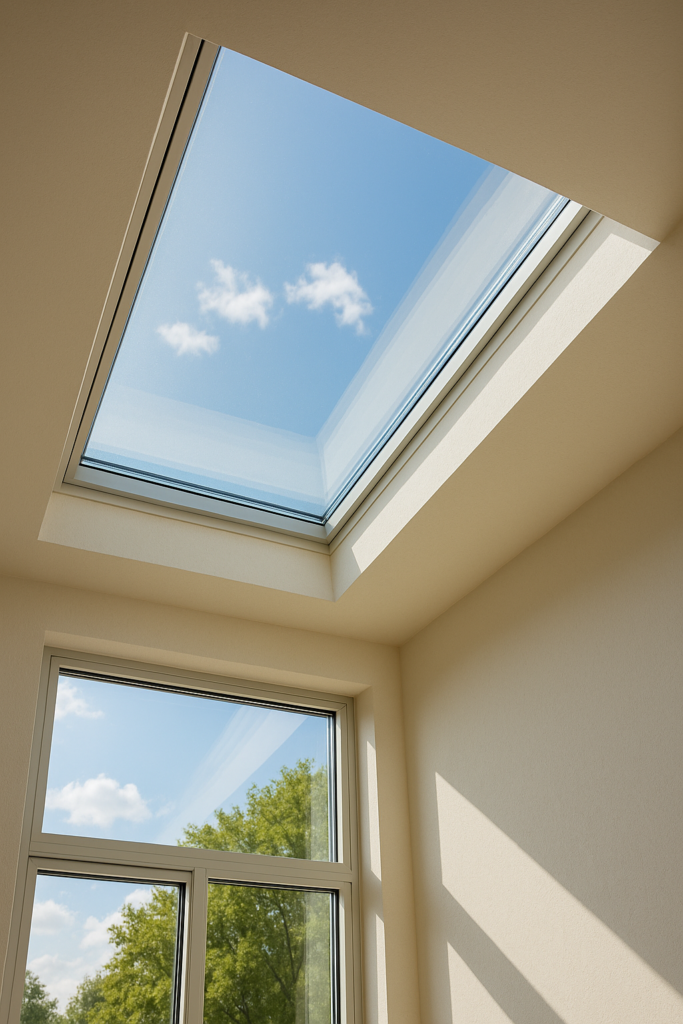
Skylights can completely change the feel of a home or building—flooding spaces with daylight, opening up dark corners, and creating that “wow” factor architects love. But they also sit in the harshest part of the envelope: the roof. That means more sun, more heat, more UV, and more potential for energy loss than vertical windows.
That’s exactly why low emissivity glass has become such an important part of modern skylight design.
Used well, it gives you all the drama of overhead glass without turning rooms into ovens in summer or chilly voids in winter. Used poorly—or not at all—and you’ll be fighting glare, overheating, condensation, and high energy bills.
In this guide, we’ll look at where low emissivity glass works best in skylight designs, how to match it to climate and orientation, and how to combine it with framing, shading and IGU layout for maximum comfort.
What Makes Low Emissivity Glass Ideal for Skylights?
Before we talk about “where”, it’s worth revisiting what low emissivity glass actually does.
Low emissivity glass is standard float glass upgraded with an almost invisible metallic or metal-oxide coating. This coating:
- Reflects long-wave infrared (heat) radiation
- Allows high levels of visible daylight to pass through
- Can significantly reduce UV transmission
For skylights, this matters because the roof:
- Receives more direct solar radiation than most vertical glazing
- Is a major pathway for both heat gain in summer and heat loss in winter
- Is often hard to shade with conventional overhangs or awnings
Using low emissivity glass in skylights means you can still enjoy dramatic daylight from above while keeping temperatures and glare under control.
For a façade-focused view of why designers lean on Low-E coatings, it’s worth reading
Why Do Facades Prefer Low Emissivity Glass Solutions?.
Where Low Emissivity Glass Works Best in Skylight Projects
1. South- or West-Facing Roofs (Northern Hemisphere)
(North- or West-Facing in the Southern Hemisphere)
Skylights positioned on sun-exposed roof slopes see intense solar radiation for large parts of the day. Without control, that can mean:
- Overheating of rooms beneath
- Harsh glare on floors and work surfaces
- Rapid fading of finishes and furnishings
Here, solar-control low emissivity glass is particularly valuable. It:
- Reduces Solar Heat Gain Coefficient (SHGC) so less heat enters
- Maintains high Visible Light Transmittance (VLT), so rooms stay bright
- Cuts UV, protecting interior surfaces from fading
These skylight locations are some of the highest-impact use cases for Low-E coatings, especially in hot or mixed climates.
2. Large Central Atriums and Double-Height Spaces
Atrium skylights are often the visual centrepiece in homes, hotels, malls and offices—but they can also be huge thermal liabilities.
Using low emissivity glass in these big overhead spans is essential to:
- Keep the atrium from becoming a heat trap in summer
- Prevent large volumes of warm air from escaping in winter
- Maintain comfortable temperatures for occupants on upper balconies and circulation walkways
In large-volume spaces, even small improvements to U-value and SHGC translate into noticeable differences in comfort and energy use.
If these skylights use double or triple glazing, you can further fine-tune comfort by choosing the right IGU layout. A good next step is
Where Low Emissivity Glass Be Positioned Inside an IGU
which explains how coating position affects performance.
3. Skylights Above Living Zones and Home Offices
In residential design, skylights are most commonly used to brighten:
- Open-plan living/kitchen areas
- Home offices and work-from-home nooks
- Internal bathrooms and corridors
These are precisely the spaces where comfort and usability matter most day-to-day. Low emissivity glass improves:
- Thermal comfort, so people can sit beneath skylights without feeling roasted or chilled
- Glare control, especially important for screens in home offices and media rooms
- UV protection, preserving flooring, timber, and furnishings
If you’re designing a comfort-driven home, the broader residential benefits of Low-E are covered in
How Low Emissivity Glass Improve Comfort in Residential Homes?.
4. Skylights in Extreme Climate Zones
In climates with very hot summers, very cold winters, or both, roof glazing must work extra hard.
Here, double- or triple-glazed skylights with low emissivity glass really shine:
- In cold climates, passive Low-E lets in useful winter sun while reflecting heat back indoors.
- In hot climates, solar-control Low-E strongly limits solar gain while still admitting daylight.
- In severe climates, pairing Low-E with triple glazing can deliver Passive-House-level thermal performance at the roof.
Because skylights in these regions are working against strong temperature differentials, getting the IGU build-up and coating type right is critical—something that’s explored in more depth in triple-glazing contexts in
Low Emissivity Glass Performs in Triple-Glazed Systems?.
5. Skylights Over High-Value Interiors
Low emissivity glass also works best where UV damage would be particularly costly or upsetting, such as:
- Timber feature floors and staircases
- Art walls, galleries or curated displays
- Premium furnishings and textiles
- Kitchen joinery and stone benchtops exposed to shafts of sun
Because Low-E coatings can dramatically reduce UV transmission, these skylights:
- Protect finishes from fading and discoloration
- Reduce cracking and drying of timbers and leathers
- Help maintain the “new” look of carefully designed interiors for longer
In these scenarios, the combination of UV protection + controlled daylight + thermal stability makes Low-E glass a clear winner.
Choosing the Right Type of Low Emissivity Glass for Skylights
Not all low emissivity glass is created equal. For skylights, you’ll usually be choosing between:
- Passive Low-E – optimised for colder or heating-dominated climates
- Solar-Control Low-E – optimised for warmer or cooling-dominated climates
And between coating technologies:
- Hard-coat Low-E (pyrolytic) – very durable, can sometimes be used closer to exposed locations
- Soft-coat Low-E (sputtered) – more delicate during processing but delivers better U-values and SHGC control
For most high-performance skylight units, soft-coat Low-E in a double or triple IGU gives the best combination of clarity, insulation and solar control—provided it’s safely encapsulated within the unit.
To understand the trade-offs between these coating types,
Low Emissivity Glass Hard-Coat and Soft-Coat
is a useful deep dive.
IGU Layout: Where the Coating Belongs in a Skylight
In overhead glazing, the surface position of the Low-E coating inside an IGU influences:
- How much solar heat is blocked before it enters
- How well internal heat is retained
- Condensation resistance and surface temperatures
Common strategies include:
- Solar-control Low-E on the exterior cavity side (e.g., Surface 2 in double glazing) to reflect solar heat early.
- Additional Low-E layers on inner surfaces (e.g., Surface 3 or 4, or multiple surfaces in triple glazing) to improve insulation.
Because skylights face unique loading and exposure compared to vertical glazing, it’s important to follow manufacturer recommendations—and use the guidance in
Where Low Emissivity Glass Be Positioned Inside an IGU
to ensure you’re placing coatings on the most effective surfaces.
Integrating Low Emissivity Skylights into Whole-Home Design
Even the best skylight glass performs better when it’s part of a wider comfort strategy.
Combine Low-E with Smart Shading
You can further control heat and glare by pairing low emissivity glass with:
- Internal blinds or shades designed for sloped glazing
- External shading elements like pergolas, louvers or roof overhangs
- Dynamic solutions like motorised blinds or electrochromic glass (in premium projects)
Work with Roof Geometry and Landscaping
Roof form and outdoor design affect how much direct sun hits skylights:
- North/south orientation (depending on hemisphere) might suit fixed shading or deeper light shafts.
- Green roofs or rooftop gardens can reduce ambient roof temperature around skylight openings.
- Climbing plants on pergolas or trellises can soften light over adjacent roof glazing.
For inspiration on outdoor strategies that complement glazed openings,
Designers Define Landscape Trends in Modern Gardens
offers useful ideas on how planting and structure can support thermal comfort and aesthetics.
Practical Tips When Specifying Low Emissivity Skylights
To get the best from low emissivity glass in skylight designs, keep these points in mind:
- Match the coating to the climate and roof orientation.
- Hot climate + sun-exposed slope → solar-control Low-E.
- Cold climate + limited cooling load → passive Low-E that allows winter gain.
- Prefer insulated glass units (IGUs) over single glazing.
- Double glazing with Low-E is a minimum for most climates; triple glazing for extreme zones or high-performance envelopes.
- Check structural and safety requirements.
- Overhead glazing usually needs laminated or toughened glass, or both. Make sure the Low-E build-up is compatible with these requirements.
- Consider access and maintenance.
- Skylights are hard to reach. Choose glass and coatings that are durable and, if possible, specify self-cleaning or easy-clean surfaces on the exterior pane.
- Coordinate with HVAC and lighting design.
- Better skylight performance can allow smaller HVAC capacity and smarter daylight-linked lighting controls.
Conclusion: Where Low Emissivity Glass Makes the Biggest Difference
So, where does low emissivity glass work best in skylight designs?
In short:
- On sun-exposed roof slopes where overheating is a risk
- In large atriums and double-height spaces where thermal loads are high
- Above living areas, home offices and high-value interiors where comfort and UV protection matter
- In extreme climate zones, especially when combined with double or triple glazing
- Anywhere skylights play a major role in the building’s energy balance and occupant experience
Used intelligently—with the right coating type, IGU layout, orientation, and supporting shading—low emissivity glass lets you enjoy the beauty and drama of skylights while keeping spaces comfortable, efficient and long-lasting.