
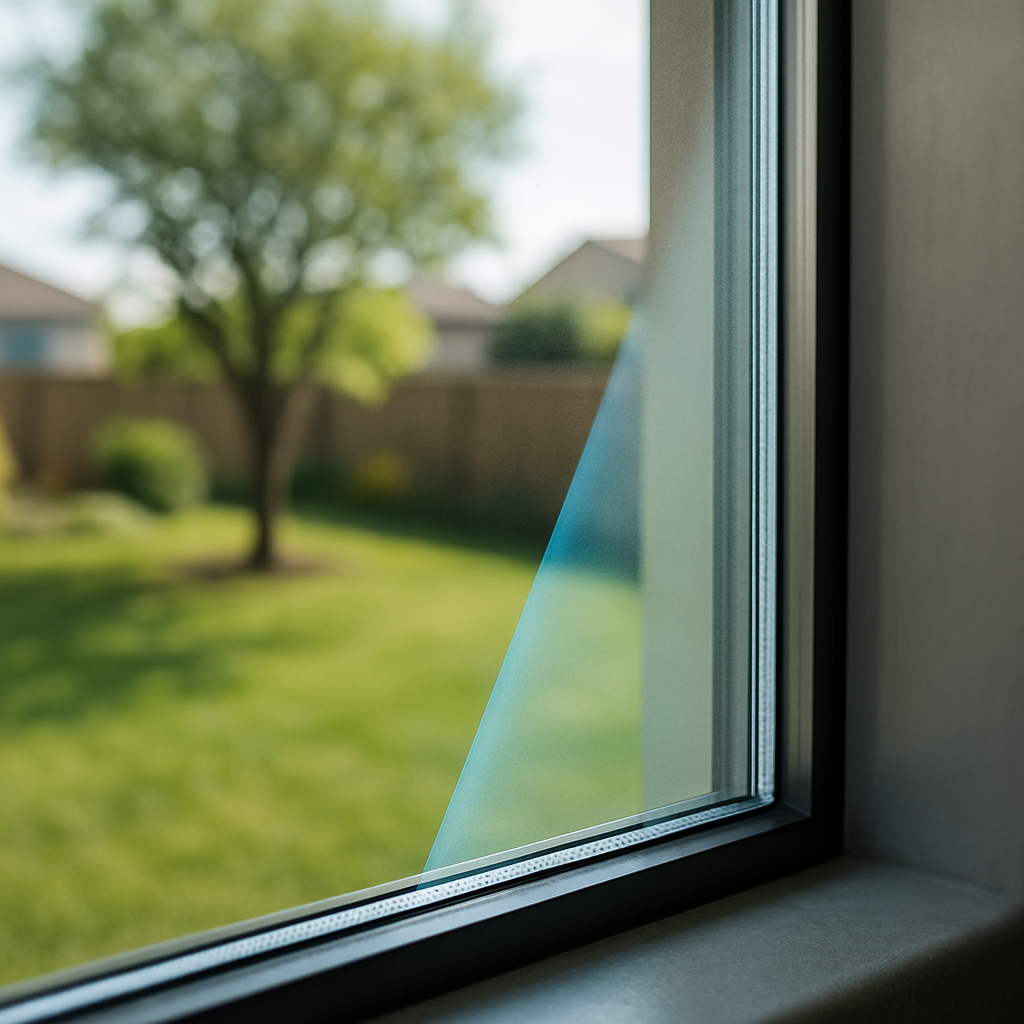
Windows are one of the biggest weak points in the thermal envelope of a home. They’re essential for light and views, but they also provide a pathway for heat to escape in winter, for solar heat to flood in during summer, and for damaging UV rays to fade everything from timber floors to sofas.
That’s why low emissivity glass has become such an important innovation in modern residential design. With a nearly invisible high-tech coating, it can dramatically cut heat loss and UV damage without sacrificing natural light or views.
In this guide, we’ll look at how low emissivity glass works, how it reduces heat loss and UV damage, and what you should consider when specifying it for your home.
What Is Low Emissivity Glass?
Low emissivity glass (often shortened to low-e glass) is standard float glass that has been upgraded with a microscopically thin metallic coating. This coating is:
- Around 500 times thinner than a human hair
- Transparent to the eye
- Highly reflective to long-wave infrared energy (heat)
“Emissivity” is a measure of how efficiently a material radiates heat. A high-emissivity surface absorbs and radiates a lot of heat; a low-emissivity surface reflects most of it. By giving the glass a low emissivity, the coating turns the window into a selective mirror for heat while allowing daylight to pass through.
The result? A window that looks almost like ordinary glass—but behaves like an energy-saving barrier.
The Solar Spectrum: Why Heat and UV Are a Problem
To understand how low emissivity glass reduces heat loss and UV damage, it helps to look at the three main parts of the solar spectrum that hit your windows.
Ultraviolet (UV) Light – The Material Fader
- Roughly 310–380 nanometres
- Invisible but highly energetic
UV light is responsible for:
- Fading of timber floors, textiles and artwork
- Degradation of plastics and finishes
- Long-term skin damage
Standard glass blocks only part of this UV band, so interiors still take a slow but constant beating.
Visible Light – The Daylight You Want
- 380–780 nanometres
- The light our eyes see
Visible light provides:
- Natural illumination
- Psychological and health benefits
- A connection with the outdoors
Good window design aims to keep visible light levels high while controlling heat and glare.
Infrared (IR) Light – The Heat You Feel
- 780+ nanometres
- Experienced primarily as heat
Infrared is responsible for:
- Overheating near sun-exposed windows
- Heat loss through radiation on cold nights
- High heating and cooling loads
The challenge is to block and reflect IR and UV while still letting visible light through. That’s exactly what low-e coatings are engineered to do.
How Low Emissivity Glass Reduces Heat Loss
Reflecting Indoor Heat Back into the Room
In winter, warm interior surfaces and air radiate heat toward colder window glass. With standard glass (emissivity around 0.9), most of this energy is absorbed by the glass and then lost to the outside.
With low emissivity glass (emissivity as low as 0.1):
- A large portion of this radiant heat is reflected back into the room.
- The inner glass surface stays warmer.
- Radiant comfort improves—sitting near a window no longer feels like sitting next to a cold panel.
This reduces the amount of energy your heating system needs to supply, especially at night and in colder climates.
Cutting Heat Transfer Through the Window
The performance of a window is often described with three key metrics:
- U-Value – Measures how easily heat flows through the entire window assembly.
- Lower U-value = better insulation.
- Low-e coatings can significantly reduce U-values in double or triple glazing compared with clear glass.
- Solar Heat Gain Coefficient (SHGC) – Measures how much solar heat gets through.
- In cold climates, a moderate SHGC allows useful winter sun.
- In warm climates, a lower SHGC from solar-control low-e coatings reduces unwanted heat gain.
- Visible Light Transmittance (VLT) – Measures how much visible light passes through.
- Quality low-e glass maintains high VLT, so rooms stay bright while still improving insulation.
By improving U-value and optimising SHGC without sacrificing VLT, low emissivity glass turns the window into a high-performance thermal element rather than a weak spot in the building envelope.
Passive vs Solar-Control Low-E Coatings
How much low-e helps with heat loss depends partly on the type of coating:
- Passive low-e coatings
- Allow more solar heat in while resisting heat loss.
- Suited to colder climates (or cool orientations) where winter warmth is welcome.
- Solar-control low-e coatings
- Strongly limit solar heat gain while still reducing heat loss.
- Ideal for warm or mixed climates and sun-exposed façades.
For a deeper look at the energy-saving side of this technology, see How Does Low Emissivity Glass Improve Energy Efficiency in Homes?.
How Low Emissivity Glass Reduces UV Damage
While heat loss is a major concern for energy bills, UV damage quietly destroys interior finishes over time.
Why UV Is So Destructive Indoors
UV radiation:
- Breaks down dyes and pigments, causing fading of fabrics, rugs, and artwork
- Degrades polymers in plastics, sealants, and coatings
- Contributes to skin damage when you sit near windows for long periods
Even if your home doesn’t feel hot, years of UV exposure can leave one side of the room significantly more faded than the other.
UV Blocking Power of Low-E Coatings
The metallic layers in low emissivity glass are tuned to:
- Reflect or absorb a large portion of UV light
- Still allow visible light to pass through with minimal tinting
Depending on the exact product and configuration, low-e glazing can block up to around 99% of UV radiation, dramatically slowing fading and material degradation.
This brings three major benefits:
- Longer life for furnishings and finishes – carpets, timber floors, sofas, and artwork look newer for longer.
- Better value for fit-out investments – premium materials aren’t sacrificed to sun damage.
- More comfortable, usable spaces – you can position furniture near windows without worrying about rapid fading.
For an overview of why low-e isn’t just a luxury but a critical part of modern residential design, explore What Makes Low Emissivity Glass Essential for Homes Today?.
Types of Low Emissivity Coatings and How They’re Made
Pyrolytic (Hard Coat) Low-E
- Applied at high temperature during the float glass manufacturing process.
- Coating bonds permanently to the hot glass surface.
- Very durable and robust—suitable for some single-glazed and exposed applications.
However, hard coats usually offer moderate performance compared to modern soft-coat options and may introduce a slight tint or haze.
MSVD (Soft Coat) Low-E
- Applied in a vacuum chamber at room temperature after the glass is manufactured.
- Produces very low emissivity and excellent solar control.
- Typically used inside sealed double or triple-glazed units to protect the delicate layers.
Soft-coat low emissivity glass is common in high-performance residential windows because it combines crystal clarity with strong thermal performance and UV control.
Practical Considerations for Homeowners and Designers
Matching Low-E Glass to Climate and Orientation
To get the best reduction in heat loss and UV damage:
- In cold climates, favour passive low-e setups that capture winter sun while minimising heat loss.
- In hot or mixed climates, use solar-control low-e on sun-exposed façades to reduce cooling loads and UV exposure.
- Consider each window’s orientation—north/south vs east/west—and surrounding shading.
Glazing Type: Single, Double, or Triple?
Low-e coatings are most effective when combined with double or triple glazing:
- Double and triple glazing create insulating air or gas spaces that work with the low-e coating.
- Single glazing, even with a low-e layer, cannot match the thermal performance of a well-designed IGU (insulating glass unit).
Installation Quality and Long-Term Integrity
Even the best low emissivity glass can underperform if:
- Seals are compromised
- Units are mishandled during installation
- Frames allow air leakage or thermal bridging
Understanding how failures occur can help you avoid them. For details on the risks and warning signs, read When Does Glass Low E Fail If Not Well Maintained?.
Maintenance: Protecting the Coating and Performance
Low-e coatings in modern IGUs are usually protected between panes, but the glass and edge seals still need appropriate care:
- Avoid abrasive cleaners or tools that can scratch glass or damage seals.
- Use manufacturer-approved cleaning products and methods.
- Inspect frames and sealant regularly, especially in harsh climates.
Because cleaning practices can affect long-term performance and clarity, it’s worth following expert guidance. For practical tips, see How Does Low Emissivity Glass Improve Energy Efficiency in Homes? and consider how maintenance fits into your overall energy strategy.
Integrating Low Emissivity Glass with Whole-Home Design
Windows don’t work in isolation. The best results come when low emissivity glass is combined with:
- Effective insulation in walls and roof
- Airtight construction and controlled ventilation
- External shading devices and thoughtful building orientation
Landscaping also plays a powerful supporting role. Well-placed trees, pergolas and garden features can:
- Shade western or northern windows in summer
- Filter low morning or afternoon sun
- Reduce glare on large glazed areas
If you’re planning an outdoor environment to complement your glazing strategy, Designers Define Landscape Trends in Modern Gardens is a useful source of inspiration for integrating shading, greenery and outdoor living areas.
Environmental Benefits and Carbon Reduction
By reducing heat loss in winter and limiting excessive solar gain in summer, low emissivity glass:
- Cuts the energy demand of heating and cooling systems
- Decreases reliance on fossil fuel-generated electricity or gas
- Helps lower greenhouse gas emissions from residential buildings
Across a neighbourhood or city, widespread adoption of low-e glazing can contribute to:
- Reduced peak loads on energy networks
- Lower urban heat island effects (buildings absorb and re-radiate less heat)
- More comfortable, energy-efficient housing stock overall
Conclusion: A Small Change with Big Impacts
From the outside, a window with low emissivity glass looks like any other. But at a microscopic level, its advanced coating is quietly:
- Reflecting interior heat back into your rooms in winter
- Blocking much of the sun’s infrared and UV energy in summer
- Protecting furnishings from fading
- Reducing strain on your HVAC system
- Supporting a more sustainable, low-carbon home
When considered alongside framing, orientation, shading and landscaping, low-e glazing becomes one of the most powerful tools you have for reducing heat loss and UV damage without giving up light, views or architectural freedom.
If you’re designing or upgrading a home, making low emissivity glass a standard, not an upgrade, is one of the smartest moves you can make for comfort, efficiency and long-term value.