
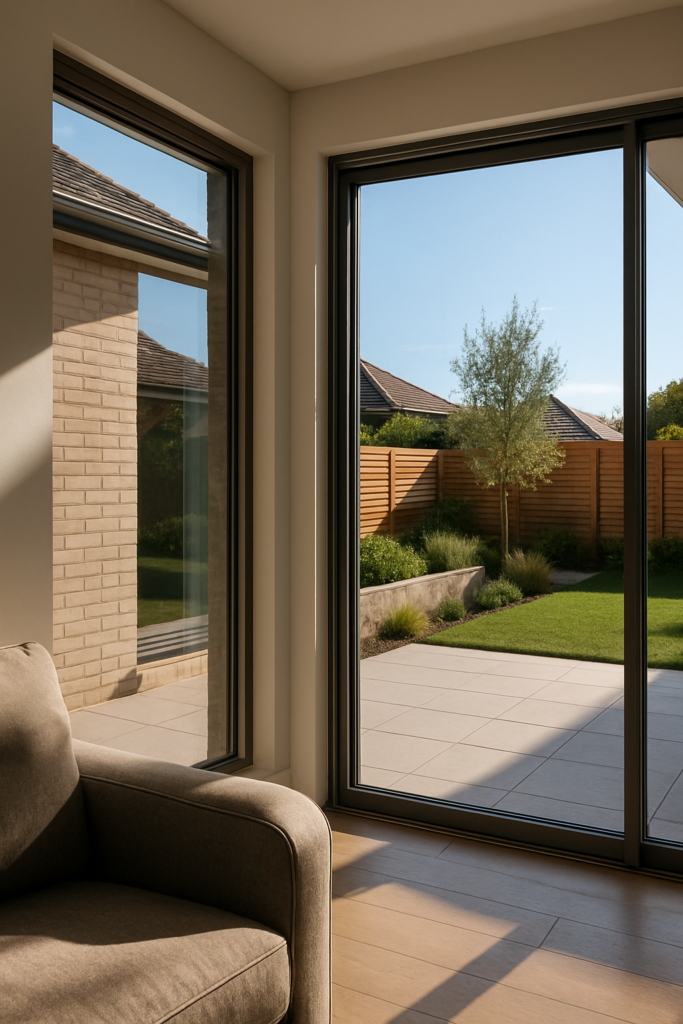
When you live in a hot climate, glass can feel like your worst enemy. Big windows and sliding doors look amazing, but they also let in intense sunlight, harsh glare, and a lot of heat. Air conditioners work overtime, energy bills climb, and some rooms become almost unusable in the afternoon.
That’s where low emissivity glass comes in.
Low emissivity (Low-E) glass is designed to keep the benefits of glass—views, light, aesthetics—while dramatically reducing how much heat enters your home. In hot climates, it’s one of the most powerful tools for keeping interiors cool, comfortable, and energy-efficient.
In this guide, we’ll break down how low emissivity glass helps control heat in hot climates, how it works with the solar spectrum, and where it should be used for the biggest impact.
Understanding How Sunlight Heats Your Home
Before we talk about low emissivity glass, it helps to understand what is actually coming through your windows.
Sunlight is made up of three main components:
1. Ultraviolet (UV) Light – The Fader
- Roughly 310–380 nanometres
- Invisible but highly energetic
- Causes fading of timber floors, fabrics, and artwork
- Contributes to skin aging and long-term damage
2. Visible Light – The Daylight You Want
- About 380–780 nanometres
- The light your eyes see
- Essential for mood, productivity, and wellbeing
3. Infrared (IR) Light – The Heat You Feel
- 780+ nanometres
- Experienced as radiant heat when you stand near a sunny window
- Major contributor to overheating in hot climates
Standard clear glass lets most of this energy pass through, especially visible and infrared light. That’s why west-facing rooms can feel like ovens by late afternoon.
Low emissivity glass is engineered to be selective: it keeps most of the visible light, while strongly reducing infrared and UV.
What Is Low Emissivity Glass?
Every material has an emissivity rating—a measure of how effectively it absorbs and emits radiant heat. On this scale:
- A high-emissivity surface (like a dark brick wall) absorbs heat and radiates it out.
- A low-emissivity surface (like a shiny metal) reflects most heat instead of absorbing it.
Low emissivity glass uses an ultra-thin metallic or metal-oxide coating—around 500 times thinner than a human hair—to turn the glass surface into a low-emissivity surface.
This coating:
- Reflects long-wave infrared heat
- Allows a high percentage of visible light to pass
- Blocks much of the UV that causes fading
In hot climates, that means:
- Less heat enters your home from the sun.
- Less of your cooled indoor air escapes as radiant heat through the glass.
- You keep your views and daylight without the punishing heat load.
For large commercial façades, these same principles are the reason many designers rely on Low-E solutions, as covered in
Why Do Facades Prefer Low Emissivity Glass Solutions?.
Solar-Control Low Emissivity Glass vs Passive Low-E
Not all low emissivity glass is the same. There are two broad families:
Passive Low-E
- Designed mainly for cold or heating-dominated climates
- Allows more solar heat gain to help warm interiors in winter
- Still reduces heat loss compared with clear glass
Solar-Control Low-E
- Designed for hot or cooling-dominated climates
- Strongly reduces solar heat gain, especially from infrared
- Maintains good light levels while keeping interiors much cooler
In hot climates, solar-control low emissivity glass is usually the best choice. It delivers:
- Lower Solar Heat Gain Coefficient (SHGC) – less heat coming in
- Lower U-value in IGUs – reduced overall heat transfer
- High Visible Light Transmittance (VLT) – bright interiors without the roast
How Low Emissivity Glass Controls Heat in Hot Climates
Let’s look at the specific ways Low-E helps keep your home or building cool.
1. Reflecting Infrared Heat Before It Enters
The metallic coating on low emissivity glass is tuned to bounce a large portion of infrared energy back toward its source:
- Solar-control Low-E on the exterior side of an IGU reflects sun-side heat back outdoors.
- Additional Low-E layers inside the unit help keep internal surfaces cooler.
This means less of the sun’s heat actually makes it into the room, even when the sun is high and direct—critical in tropical and desert climates.
2. Reducing Heat Transfer Through the Glass
In hot climates, heat doesn’t just come from direct sun—it also moves through glass wherever there’s a temperature difference.
With Low-E coatings inside double or triple glazing, the U-value of the window drops. That means:
- Less heat flows from the hot exterior into the cooler interior.
- Your air-conditioning system doesn’t have to work as hard or as long.
- Perimeter zones near windows are more comfortable.
3. Keeping Indoor Surfaces Cooler
By reflecting radiant heat rather than absorbing and re-radiating it, low emissivity glass helps:
- Keep interior glass surfaces closer to room temperature
- Reduce that “radiant heat” effect you feel near hot windows
- Minimise hot spots on floors and furnishings in sun-exposed areas
In practical terms, you can sit closer to windows or glass doors without feeling like you’re in direct sun.
Key Performance Metrics to Watch
When you’re comparing window options for a hot climate, look closely at these three metrics.
Solar Heat Gain Coefficient (SHGC)
- Measures how much solar energy (heat) passes through the glass.
- Lower SHGC = less heat gain.
- Solar-control Low-E products are specifically designed to deliver low SHGC values.
U-Value
- Measures overall heat transfer through the window assembly.
- In hot climates, a low U-value helps resist external heat entering and also supports comfort if nights are cooler.
Visible Light Transmittance (VLT)
- Measures how much visible light passes through.
- The goal is high VLT with low SHGC: bright interiors without the corresponding heat.
Modern low emissivity glass is carefully engineered to keep VLT high while pushing SHGC and U-values down.
Where Low Emissivity Glass Makes the Biggest Difference in Hot Climates
Large Glazed Façades and Curtain Walls
The more glass you have, the more critical its performance becomes. On large façades:
- Solar-control Low-E dramatically cuts the cooling load.
- Interiors stay cooler and more usable right up to the glass line.
This is exactly why façade designers and commercial projects increasingly treat Low-E as standard rather than optional—explored in more detail in
Why Do Facades Prefer Low Emissivity Glass Solutions?.
Skylights and Roof Windows
In hot climates, overhead glass is one of the most intense sources of heat gain because:
- Roofs see the most direct sun.
- Skylights can be hard to shade with standard overhangs.
Using low emissivity glass in double- or triple-glazed skylights:
- Reduces heat pouring in from above
- Controls glare while still bringing in daylight
- Protects internal finishes from UV damage
For overhead applications specifically, it’s worth checking
Does Low Emissivity Glass Work Best in Skylight Designs?.
Sliding Doors and Large Openings Facing Strong Sun
In hot climates, big stacker doors and floor-to-ceiling glazing on sun-exposed elevations can be brutal without Low-E:
- Rooms overheat in the afternoon
- Furniture and flooring fade quickly
- Air-con struggles to keep up
Solar-control low emissivity glass, especially when used in insulated glass units and paired with external shading, keeps those rooms bright but much cooler and more comfortable.
Low Emissivity Glass in Residential Homes
In homes, comfort is just as important as energy performance. Low-E helps by:
- Stabilising indoor temperatures from morning to evening
- Reducing glare and improving visual comfort
- Lowering energy use for cooling systems
- Protecting furniture and finishes from UV
For a more homeowner-focused breakdown, including room-by-room considerations, see
How Low Emissivity Glass Improve Comfort in Residential Homes?.
Getting the Most from Low Emissivity Glass in Hot Climates
1. Use It in Insulated Glass Units (IGUs)
Single glazing, even with a Low-E coating, can only go so far. In hot climates, Low-E performs best in:
- Double glazing with argon fill
- Triple glazing in extreme or high-performance builds
IGUs add insulating air or gas layers, while low emissivity glass controls radiant heat.
2. Place the Coating on the Right Surface
Inside an IGU, the surface position of the Low-E coating matters. For example:
- Solar-control Low-E often belongs on the inside face of the outer pane (Surface 2) to block heat earlier.
- Additional Low-E on other surfaces can further improve insulation.
Getting this wrong won’t “break” the window, but it can reduce performance. For a clear explanation of surface numbering and placement principles, see
Where Low Emissivity Glass Be Positioned Inside an IGU.
3. Combine Glass with Shading and Landscape
Even the best low emissivity glass benefits from smart shading and landscape design:
- Eaves, fins and external screens cut direct sun while letting in ambient light.
- Pergolas and verandas protect large glazed doors.
- Trees and planting reduce glare and heat around façades.
Landscaping in particular can soften harsh western sun and create cooler microclimates around your home. For ideas on integrating planting, structures and views,
Designers Define Landscape Trends in Modern Gardens
is a great source of inspiration.
Final Thoughts: A Cooler Home Without Losing the View
In hot climates, glass doesn’t have to be the enemy of comfort. With low emissivity glass, you can:
- Enjoy large windows, doors and skylights
- Keep interiors bright without oppressive heat
- Lower cooling bills and reduce strain on your air-conditioning
- Protect your finishes from UV and your family from excessive glare
By choosing the right Low-E type, using it in well-designed IGUs, and combining it with shading and smart landscaping, you get the best of both worlds: modern, light-filled spaces that stay cool, calm and comfortable—even when the sun is at its strongest.