
For many years, double glazing has been the go-to upgrade for improving window performance. Two panes of glass with an air or gas-filled cavity between them are undeniably better than single glazing at reducing heat loss and noise.
But today, building envelopes are expected to do more: cut cooling loads, stabilise indoor temperatures, protect interiors from UV damage and support net-zero energy goals. That’s where low emissivity glass pulls ahead of non-coated double glazing.
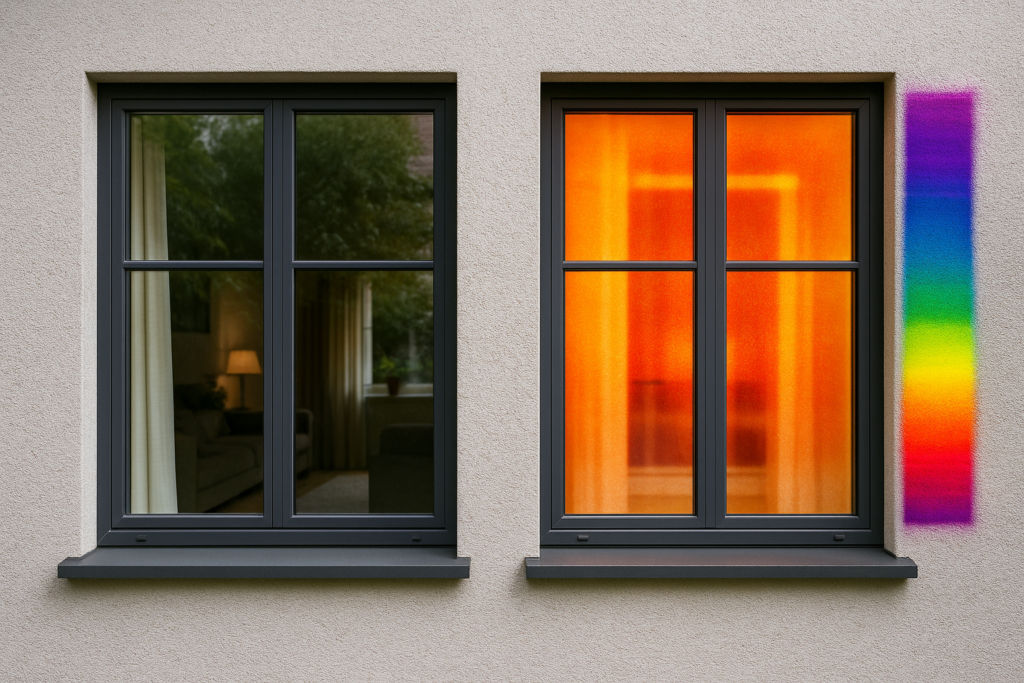
Even when both units look identical from the street, the science happening on the glass surface is very different—and it shows up in real energy savings and comfort.
In this article, we’ll explore how low emissivity glass works inside insulated glass units (IGUs), why it outperforms standard clear double glazing, and when upgrading to Low-E delivers the biggest benefits.
Double Glazing Basics: What Non-Coated IGUs Can (and Can’t) Do
A standard non-coated double-glazed unit normally consists of:
- Two panes of clear float glass
- A sealed cavity filled with air or inert gas (often argon)
- A spacer around the edge to maintain the gap
This configuration:
- Reduces conduction and convection of heat compared to single glazing
- Improves sound insulation
- Helps limit condensation on the inner pane in many climates
However, clear double glazing still has a problem: each glass surface behaves like a high-emissivity radiator. It readily absorbs heat and re-radiates it, whether that heat is coming from the sun outside or the conditioned air inside.
So while non-coated double glazing is a step up from single glass, it still:
- Loses a significant amount of internal heat on cold days
- Allows a lot of solar heat into rooms on hot days
- Has relatively high U-values and Solar Heat Gain Coefficients (SHGC) compared to modern Low-E systems
To move beyond “better than nothing” and towards genuine high performance, you need to change not just the number of panes, but the behaviour of the glass surface—and that’s exactly what low emissivity glass does.
How Low Emissivity Glass Works Inside an IGU
Low emissivity glass (Low-E glass) starts with standard float glass but adds a microscopically thin metallic coating to one or more surfaces inside the IGU. This coating is usually applied during manufacturing either by:
- Hard-coat (pyrolytic) methods, where the coating fuses to the hot glass and becomes very durable, or
- Soft-coat (sputtered) methods, where multiple ultra-thin layers are deposited in a vacuum chamber for superior performance.
Regardless of the process, the aim is the same: lower the emissivity of the glass surface.
- Standard clear glass has an emissivity of around 0.84, meaning it radiates most of the heat it absorbs.
- Low-E coatings can drop this dramatically—down into the 0.3 range for hard coats and even lower for premium soft-coat products in double glazing.
By lowering emissivity, Low-E glass:
- Reflects a large portion of long-wave infrared (heat) radiation
- Allows a high proportion of visible light to enter, so rooms remain bright
- Blocks much of the UV spectrum, protecting interiors from fading
The result is a piece of glass that looks almost the same as standard clear double glazing—but behaves completely differently when exposed to sun and temperature differences.
If you’re still comparing Low-E to basic float glass, you may also find
Is Low Emissivity Glass Superior to Standard Clear Glass?
a useful primer.
Key Performance Metrics: Where Low-E Pulls Ahead
Three metrics highlight why low emissivity glass outperforms non-coated double glazing.
1. U-Value (Overall Insulation)
- Non-coated double glazing lowers U-value versus single glass by adding an insulating air/gas layer—but each pane still radiates heat efficiently.
- Low-E double glazing further reduces U-value by cutting radiant heat transfer across the cavity. The coated surface reflects heat back towards its source rather than letting it jump across to the other pane.
This means:
- Less winter heat escapes from the indoor side to the outdoors.
- Less outdoor heat radiates into the conditioned space in summer.
The improvement is significant enough that, in many climates, Low-E glazing is now considered a minimum standard for efficient envelopes.
2. Solar Heat Gain Coefficient (SHGC)
Many hot and mixed climates are cooling-dominated for large parts of the year. Here, controlling solar gain is crucial.
- Clear double glazing still allows a large fraction of solar energy to pass into the room, especially near east and west façades or large windows.
- Solar-control Low-E glass is engineered to reduce SHGC by selectively blocking infrared and UV, while still admitting visible daylight.
Energy modelling studies regularly show that Low-E IGUs can almost halve annual solar heat gain compared to non-coated windows of similar visible light transmittance. That translates into noticeably lower air-conditioning run times and costs.
For a climate-specific look at this effect, see
How Does Low Emissivity Glass Help Control Heat in Hot Climates?.
3. Radiant Comfort and Surface Temperature
Thermographic images of side-by-side windows—one Low-E, one non-coated—tell a powerful story: the non-coated pane runs much hotter under sun.
When the interior face of the glass gets hot:
- It radiates heat towards the occupant, even if the air temperature in the room is controlled.
- People sitting near the window feel “toasted” on one side, a classic case of radiant asymmetry.
By lowering emissivity and reducing absorbed heat, low emissivity glass keeps interior surfaces cooler and more comfortable, significantly improving predicted comfort metrics like PMV (Predicted Mean Vote) and PPD (Predicted Percentage of Dissatisfied) compared to non-coated double glazing.
Real-World Impacts: Comfort, Energy and Thermal Stability
Less Overheating, Especially at Midday
Simulation studies in hot cities—like high-rise apartments in tropical climates—show that Low-E windows:
- Cut midday solar gains dramatically compared to non-coated IGUs
- Reduce the peak temperature spikes that normally occur when sun hits east- or west-facing glazing
- Help air-conditioning systems cycle less frequently and respond more smoothly to loads
Occupants experience fewer hours of “slightly too warm” conditions, especially around the middle of the day and early afternoon.
Reduced Thermal Discomfort from Radiant Asymmetry
Imagine sitting in a 26°C room with a large non-coated double-glazed window that’s reached a surface temperature close to 35°C under the sun. Even if the air temperature is fine, the hot radiant surface makes you feel uncomfortable.
Low-E units keep that interior glass surface significantly cooler, reducing the temperature difference between you and the glass. In comfort models, this shows up as:
- Lower PPD – fewer people reporting discomfort
- Lower PMV – occupants feel closer to “neutral” rather than “slightly warm”
The same principle applies in reverse for cold climates, where a cold non-coated window can make sitting near it unpleasant even when the thermostat says the room is “warm enough”.
Better Year-Round Efficiency
Because low emissivity glass simultaneously:
- Reduces winter heat loss, and
- Limits summer solar gain
…it provides year-round efficiency, not just seasonal benefits. Non-coated double glazing helps mainly with conduction; Low-E addresses both conduction and radiation.
Low-E Coatings vs Simple Tints and Films
Some homeowners wonder if they can get similar performance by using tinted or reflective glass instead of Low-E. In reality, these technologies solve different problems.
- Tinted glass darkens the glass and absorbs solar energy, reducing glare but also cutting daylight.
- Reflective glass adds a metallic layer that mirrors part of the light and changes the façade appearance.
Neither approach provides the same level of low-emissivity control over long-wave infrared radiation as a proper Low-E coating inside an IGU.
If you’re weighing these options, a deeper comparison is available in
What Makes Low Emissivity Glass Different from Tinted Glass?.
In many projects, designers combine a low emissivity glass base with mild tints, internal blinds and external shading to fine-tune glare without sacrificing performance.
Design Flexibility: Skylights, Façades and Smart City Envelopes
Because Low-E coatings are spectrally selective rather than simply dark, they are particularly valuable anywhere you want lots of daylight without lots of heat, such as:
- Full-height glazing and curtain walls
- Large sliding and folding doors
- Conservatories and sunrooms
- Roof windows and skylights
In overhead uses especially, non-coated double glazing can quickly turn spaces into hot zones under intense solar exposure. Low-E units significantly reduce this risk while keeping rooms bright—something explored in more detail in
Does Low Emissivity Glass Work Best in Skylight Designs?.
On a larger scale, low emissivity glass is a key tool in shaping the performance of building skins in smart cities, where energy use, comfort, urban heat islands and daylight access all need to be balanced. Glazing strategies integrate with shading devices, green roofs, and urban landscape planning—topics that sit alongside ideas like those in
Define Landscape Solutions in Smart Cities.
When Is Non-Coated Double Glazing Still Acceptable?
Despite its limitations, non-coated double glazing isn’t obsolete. It can still be appropriate when:
- Climate is very mild and energy loads are low.
- Windows are small, deeply shaded, or not sun-exposed.
- The glazing is used internally, where thermal performance is less critical.
- Budget is extremely constrained and energy prices are low.
However, for most modern homes and commercial buildings with meaningful heating or cooling demands, the performance gap between clear double glazing and low emissivity glass is simply too large to ignore.
Conclusion: Why Low Emissivity Glass Clearly Outperforms Non-Coated Double Glazing
Both non-coated double glazing and Low-E IGUs improve on single glazing—but only one truly meets contemporary expectations for comfort and efficiency.
Low emissivity glass:
- Slashes radiant heat transfer compared to non-coated double glazing
- Delivers lower U-values and SHGC without sacrificing daylight
- Reduces solar gains and cooling loads, especially in hot and tropical climates
- Improves thermal comfort by limiting radiant asymmetry and glass surface temperatures
- Protects interiors from UV damage and helps create more stable, enjoyable indoor environments
Non-coated double glazing gives you two pieces of glass. Low-E glazing gives you a carefully engineered thermal filter inside that glass.
If you’re designing or upgrading windows today, especially in a world of rising energy costs and tighter performance standards, that extra layer of intelligence is what makes low emissivity glass the clear winner over non-coated double glazing.