
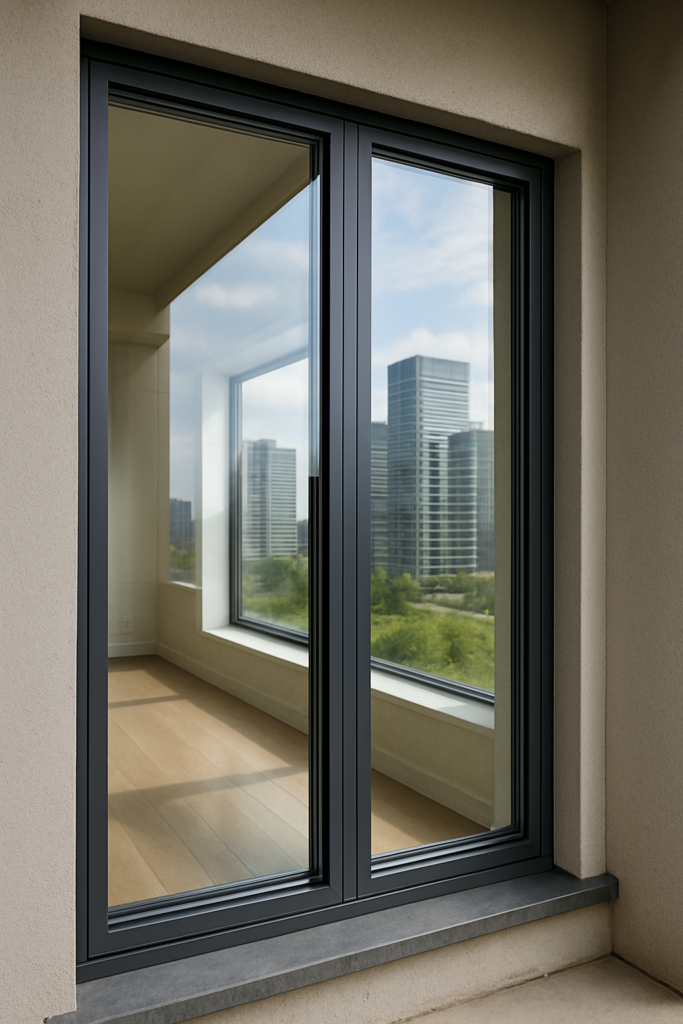
As cities grow denser and energy prices climb, the way buildings use – and waste – energy has become a major climate concern. Windows are one of the biggest culprits: they’re beautiful for daylight and views, but they’re also weak points in the thermal envelope.
Low emissivity glass changes that equation. By quietly upgrading the way glass handles heat and sunlight, it helps buildings consume less energy, cut carbon emissions, and create healthier interiors. And when you zoom out to a full life-cycle view, the environmental benefits become even clearer.
This guide breaks down exactly how low emissivity glass reduces environmental impact overall – from day-to-day energy use, to long-term carbon savings, to the way it fits into greener cities and smart building design.
1. What Is Low Emissivity Glass – and Why It Matters for the Planet
Low emissivity glass is standard float glass with a microscopically thin metallic or metal-oxide coating. This layer is nearly invisible, but it radically changes how the glass behaves thermally:
- It lets in visible daylight, so interiors remain bright.
- It reflects infrared (heat) radiation back toward its source.
- It blocks much of the UV spectrum, which can damage materials indoors.
In other words, low emissivity glass doesn’t just act as a transparent barrier; it behaves more like a thermal filter, controlling how energy moves between indoors and outdoors.
From an environmental perspective, that’s crucial. Buildings are responsible for a large share of global energy use and operational CO₂. Every kilowatt-hour saved by better glazing reduces emissions from heating and cooling – often for decades.
To understand why low emissivity glass performs so differently from “ordinary” units, it’s useful to compare it directly with basic insulating glass. A more detailed technical comparison is covered in
How Does Low Emissivity Glass Outperform Non-Coated Double Glazing?
2. Cutting Operational Energy Use: The Biggest Sustainability Win
Most of a window’s lifetime environmental impact comes not from manufacturing, but from the energy that leaks through it over 20–40 years of use. This is where low emissivity glass delivers the largest benefit.
2.1 Improved insulation and reduced heat loss
Standard clear glass – even in double-glazed units – has a relatively high emissivity, meaning it readily radiates heat. Low emissivity glass lowers this dramatically, so:
- In cold weather, indoor heat is reflected back into the room instead of escaping through the glass.
- In warm climates, the hotter outdoor side is less able to radiate heat inward.
Modern triple-glazed Low-E units can push U-values down to a small fraction of single glass, meaning vastly improved thermal resistance. That translates directly into fewer hours of heating and cooling equipment running – and fewer emissions from power plants or boilers.
2.2 Lower solar heat gain where it matters
In cooling-dominated climates, the bigger problem isn’t heat loss – it’s too much sun.
Solar-control low emissivity glass is designed to be spectrally selective: it filters the solar spectrum so that most visible light still enters, but a large portion of the infrared (heat) and UV is reflected or blocked.
The result:
- Less unwanted solar heat entering through façades and skylights
- Smaller cooling loads
- Less need for oversizing chillers or air-conditioning systems
In building simulations and field projects, low emissivity glass often reduces annual solar heat gain by large margins compared to non-coated units – which means substantially less electricity consumption and associated CO₂.
3. Enhancing Thermal Comfort and Health with Less Energy
Energy efficiency is only half the story. Low emissivity glass also improves thermal comfort, which allows buildings to operate efficiently without sacrificing wellbeing.
3.1 Cooler interior surfaces
With non-coated glazing, sun-exposed panes can become very hot. These hot surfaces radiate energy into the room, making occupants feel warmer even if the air temperature is controlled. This “radiant asymmetry” often leads to complaints – and to people turning down thermostats, which raises energy use.
Low emissivity glass keeps interior surfaces significantly cooler in summer (and warmer in winter), which:
- Reduces the sensation of being “baked” near windows
- Decreases the percentage of occupants who feel thermally dissatisfied
- Allows HVAC setpoints to stay at more efficient levels without comfort trade-offs
3.2 Better daylight with less glare
Because low emissivity glass is clear and high in visible light transmission, it supports daylighting strategies much better than heavy tints or blinds alone. Good daylighting reduces reliance on artificial lighting – another energy saving – while maintaining views and psychological benefits.
If you’re comparing Low-E to heavily tinted alternatives for glare control, it helps to understand the difference in physics and performance. That’s explored further in
What Makes Low Emissivity Glass Different from Tinted Glass?
4. Life-Cycle Perspective: Balancing Embodied and Operational Impacts
A common sustainability question is: does making low emissivity glass cost more energy and carbon than it saves?
The short answer in most cases: no – not even close.
4.1 Embodied impacts of Low-E manufacturing
There’s no denying that glass production is energy intensive. Melting raw materials, applying coatings, tempering and laminating all require heat and electricity. Low-E coatings add extra processing steps, so their embodied carbon is higher than that of plain float glass.
However, manufacturers are steadily reducing this impact by:
- Increasing the share of recycled cullet in the glass batch
- Improving furnace efficiency
- Switching to renewable energy for part of the power supply
- Recovering waste heat and optimising logistics
When you spread that embodied energy over a typical service life of 30+ years, the incremental impact of the Low-E coating itself is small relative to the operational savings it unlocks.
4.2 Payback in carbon terms
Because low emissivity glass significantly reduces heating and cooling demand, many high-performance IGUs “pay back” their extra embodied carbon within a few years of operation, after which they continue delivering net emissions reductions.
This is particularly true in:
- Harsh climates (very hot or very cold)
- Highly glazed buildings such as offices, hotels, and high-rise residential towers
- Projects aiming for net-zero or renewable-powered operation, where lowering loads is essential to sizing solar and storage systems efficiently.
So while Low-E adds complexity at the production stage, it is usually a net environmental win over the building’s full lifecycle.
5. Regulatory Drivers and Smarter Urban Envelopes
As efficiency standards tighten, many jurisdictions now require or strongly encourage coated double or triple glazing in new buildings. This has two key environmental benefits:
- It raises the baseline performance of entire building stocks over time, not just showcase projects.
- It drives economies of scale in Low-E production, which helps reduce cost and encourages further adoption.
If you’re trying to understand why pricing can vary so much between regions and project types – from basic residential upgrades to advanced façades – it’s worth reviewing
What Affects Low Emissivity Glass Pricing Across Projects Today?
At the scale of districts and cities, widespread use of low emissivity glass in conjunction with shading, green roofs and climate-sensitive planning can:
- Reduce urban heat island effects
- Lower peak electricity demand on hot days
- Make dense, glassy neighbourhoods more liveable and less resource-intensive
These ideas connect naturally to broader strategies like those discussed in
Define Landscape Solutions in Smart Cities,
where building envelopes, vegetation, and public spaces all work together to moderate climate impacts.
6. Recycling, Reuse and End-of-Life Considerations
The environmental performance of low emissivity glass doesn’t end when a building is demolished or refurbished.
6.1 Recyclability of coated glass
Float glass is highly recyclable, and many plants already incorporate substantial levels of cullet to cut raw material use and furnace energy. Coated glass introduces some additional challenges, but:
- Modern processing lines can handle Low-E cullet with proper separation and cleaning.
- Research is ongoing into ways to strip or accommodate coatings without contamination.
Improving closed-loop recycling of coated glass is one of the next frontiers in reducing the embodied carbon and resource intensity of glazing.
6.2 Designing for disassembly
From a sustainability perspective, it’s also important to think about how IGUs are:
- Installed
- Supported in frames
- Sealed and connected to the structure
Designing systems so glass units can be replaced without destroying frames – and so frames can be reused or easily recycled – amplifies the environmental gains of high-performance glazing.
7. Low Emissivity Glass as Part of a Larger Sustainability Strategy
No single material or technology will “solve” the building sector’s climate challenge. But low emissivity glass is a particularly powerful lever because it:
- Works with both old and new building stock (through retrofits as well as new builds)
- Integrates well with other solutions: insulation, shading, efficient HVAC, solar PV, and smart controls
- Improves comfort and health, making sustainable buildings more attractive to owners and occupants alike
When combined with strategies such as:
- Intelligent orientation and massing
- External shading devices and green facades
- High-performance frames and airtight detailing
- Local renewable generation and storage
…low emissivity glass helps transform windows from weak spots into active contributors to low-carbon performance.
Conclusion: A Small Coating with a Big Climate Impact
At a glance, low emissivity glass looks almost identical to standard glazing. The difference lies in a nanometre-scale coating – but its environmental impact is anything but small.
By:
- Reducing heating and cooling loads
- Cutting operational CO₂ emissions year after year
- Improving comfort so efficient setpoints can actually be used
- Supporting daylighting without the penalty of overheating
- Enabling higher-performing, denser and smarter urban buildings
Low emissivity glass plays a central role in making the built environment more sustainable.
Yes, it carries a slightly higher embodied impact and a higher upfront cost than clear glass. But over a building’s lifetime, it typically delivers far greater savings – in energy, emissions and operating costs – than it consumes in production.
Viewed across the full lifecycle, low emissivity glass isn’t just a nicer window upgrade. It’s a practical, proven tool for reducing the environmental footprint of buildings and moving the construction sector closer to a truly low-carbon future.