
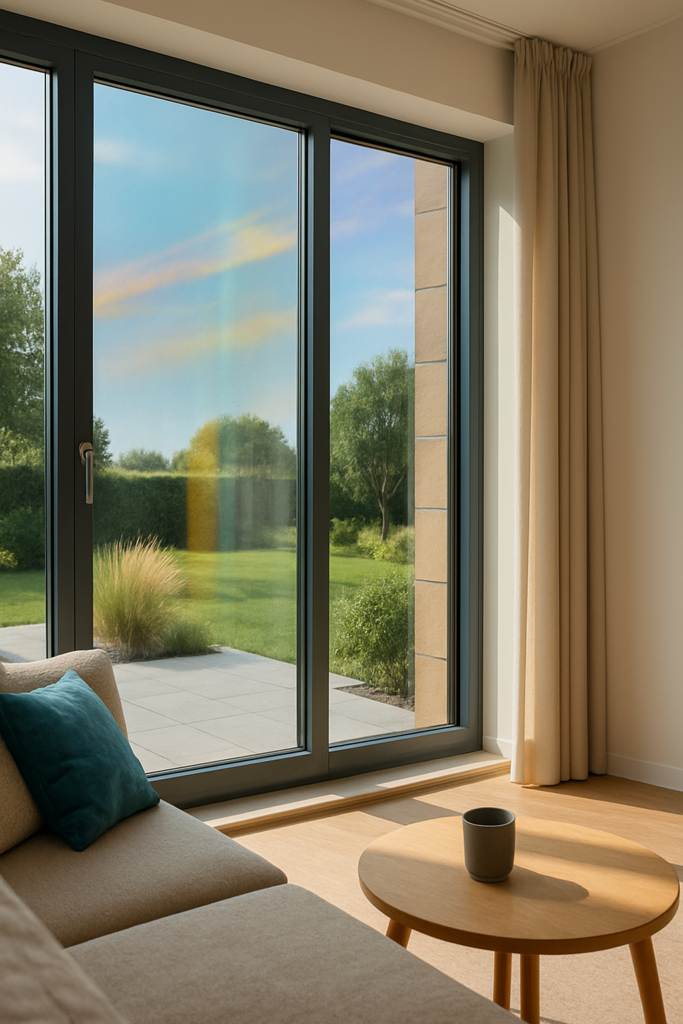
Walk into a modern home on a hot afternoon and you can often feel the difference long before you notice the finishes. The air is cooler, there’s less glare, and you don’t get that blast of heat standing near the windows. In many cases, the quiet hero behind that comfort is low emissivity glass.
It looks just like regular glass, but it behaves very differently. Thanks to a microscopic metallic coating, low emissivity glass (often shortened to Low-E glass) reshapes how heat and light move through your windows – and that has a huge impact on how your home feels day to day.
This guide breaks down how low emissivity glass improves comfort in residential homes, from temperature and glare to noise, condensation and even the way you use your spaces.
What Is Low Emissivity Glass?
Low emissivity glass is standard float glass with an ultra-thin, almost invisible metallic or metal-oxide coating. This coating is designed to:
- Reflect long-wave infrared heat (radiant energy)
- Allow visible daylight to pass through with minimal tinting
- Block a large portion of UV radiation
“Emissivity” is a measure of how efficiently a surface emits heat. Regular clear glass has a high emissivity – it absorbs and re-radiates heat easily. Low-E coatings give the glass a low emissivity, so instead of acting like a warm panel leaking heat, the glass behaves like a selective mirror:
- In winter, it reflects indoor heat back into the room.
- In summer, it helps keep much of the sun’s heat out.
The result is a window that looks normal but works very hard behind the scenes to keep your home comfortable.
1. More Stable Temperatures All Year Round
Reducing Winter Heat Loss
In winter, standard clear glazing lets warm indoor air radiate its heat straight to the cold outdoors. That’s why sitting next to old windows can feel chilly even when the thermostat says the room is “warm enough”.
With low emissivity glass, the coating reflects a large part of that radiant heat back into the room. This:
- Keeps the inner pane warmer to the touch
- Reduces cold drafts and “cold wall” sensations
- Helps your heating system work less hard to maintain the same temperature
You’ll notice that you can sit closer to windows comfortably, and rooms feel more uniformly warm instead of having cold zones near the glass.
Blocking Excess Summer Heat
In summer, sunlight brings in a lot of infrared (heat) energy along with visible light. Low-E coatings are tuned to reduce how much of that heat gets through, especially when paired with the right placement in double or triple glazing.
That means:
- Less heat build-up in sun-exposed rooms
- Reduced reliance on air-conditioning
- Fewer “hot spots” on floors and furniture near windows
If you’re using high-performance double or triple glazing, the way the Low-E layers are arranged also matters. For a deeper look at that, see
Low Emissivity Glass Performs in Triple-Glazed Systems? and
Where Low Emissivity Glass Be Positioned Inside an IGU.
2. Reduced Glare with Plenty of Natural Light
Comfort isn’t just about temperature – it’s also about how bright a space feels.
Poorly selected glass can create:
- Harsh glare on screens and work surfaces
- Over-bright areas that make you pull the blinds down all day
- Eyestrain and headaches, especially in home offices
Low emissivity glass is engineered to balance Visible Light Transmittance (VLT) with heat control. Modern coatings:
- Let in generous amounts of daylight
- Subtly cut the harshest parts of the solar spectrum
- Reduce the need for artificial lighting during the day
You get bright, usable rooms for reading, working or relaxing, without constantly fighting with blinds or curtains.
3. Better Protection from UV Damage
UV radiation doesn’t just cause sunburn – it also steadily damages surfaces inside your home. Prolonged exposure fades:
- Timber floors
- Upholstery fabrics
- Rugs and carpets
- Artwork and photographs
Standard clear glass lets most UV pass through. Low emissivity glass, by contrast, can block a very high proportion of UV, depending on the exact product.
That means:
- Longer life for finishes and furniture
- Less colour shift in timber and textiles
- Greater freedom to position furniture near windows
Between the thermal stability and UV protection, low-E windows help preserve both the comfort and the appearance of your interiors over time.
4. More Comfortable Surfaces and Less Condensation
Warmer Interior Glass Surfaces
Because low emissivity glass reflects radiant heat back inside, the inner pane stays closer to room temperature in winter. This provides two comfort advantages:
- Less radiant chill: Your body loses less heat to the cold surface, so you don’t feel that uncomfortable “cold radiating from the window” effect.
- Reduced condensation: Warm inner surfaces are less likely to drop below the dew point, so you see less condensation forming on the glass.
Why Less Condensation Matters
Persistent condensation can lead to:
- Mold growth around frames and sills
- Damage to timber linings and finishes
- A colder, damp feel in the room
Using Low-E glazing – especially in well-designed double or triple IGUs – helps minimise these issues, particularly in bedrooms and living spaces where humidity can be higher.
5. Acoustic Comfort in Combination with Advanced IGUs
Low-E coatings themselves don’t block sound, but they’re almost always used inside insulated glass units (IGUs) – double or triple glazing.
When you combine low emissivity glass with:
- Multiple panes of different thicknesses
- Gas-filled cavities
- Well-sealed frames
…you can significantly cut external noise. That matters for:
- Homes near busy roads, rail lines or airports
- Townhouses in lively urban areas
- Bedrooms and home offices that need quiet
If noise and thermal comfort are both priorities, looking at Low-E within triple glazing is particularly worthwhile. You can explore those benefits in more detail in
Low Emissivity Glass Performs in Triple-Glazed Systems?.
6. Comfort Through Design Flexibility
Not all low emissivity glass is the same. You can choose products tuned for different climates and design goals, which lets you shape comfort room by room.
Hard-Coat vs Soft-Coat Low-E
Two main technologies are used for Low-E coatings:
- Hard-coat (pyrolytic) – tough, durable, often used where glass may be more exposed
- Soft-coat (sputtered) – more delicate but capable of much better insulation and solar control
Each has different strengths in terms of:
- Durability
- U-value (insulation)
- Solar Heat Gain Coefficient (SHGC)
- Appearance (tint and reflectivity)
Understanding which to use in which part of the house helps you fine-tune comfort without sacrificing aesthetics. For a deeper comparison, see
Low Emissivity Glass Hard-Coat and Soft-Coat.
Room-by-Room Strategies
You can also mix glass types around the home:
- Living areas with big views: High-clarity soft-coat Low-E to keep spaces bright and comfortable.
- Bedrooms: Stronger insulation (and possibly triple-glazed Low-E) for quiet, stable temperatures overnight.
- North or west façades (or south/west in the northern hemisphere): Solar-control Low-E to reduce overheating.
- Less critical spaces (laundries, garages): Simpler glazing where comfort demands are lower.
This targeted approach means you get maximum comfort where you spend the most time, without over-specifying areas that don’t need it.
7. Comfort Beyond the Glass: Working with Shading and Landscape
Windows are only one piece of the comfort puzzle. Low emissivity glass works best when paired with smart building design:
- Roof overhangs and eaves
- External blinds or screens
- Pergolas and deep balconies
- Orientation of living spaces and glazing
Landscaping can also play a powerful role in comfort:
- Deciduous trees provide shade in summer and let sunlight through in winter.
- Hedges and planting can reduce wind around façades and outdoor living zones.
- Pergolas with climbers can soften harsh light over large glazed doors.
To see how outdoor design trends can support thermal comfort and visual appeal, explore
Designers Define Landscape Trends in Modern Gardens.
When glazing strategy, shading and landscaping all work together, you get homes that feel naturally comfortable rather than dependent on constant mechanical heating or cooling.
8. Everyday Comfort You Can Feel – and Measure
Homeowners often notice the comfort improvements from low emissivity glass before they notice the energy bill savings:
- You can sit next to large windows without feeling chilled.
- Summer afternoons in west-facing rooms are more bearable.
- There’s less glare on screens and workspaces.
- Furniture and floors look newer for longer.
- Bedrooms feel more stable overnight, even when outdoor temperatures swing.
On top of that, Low-E glazing helps:
- Reduce heating and cooling loads
- Support better indoor air quality (less need to “overheat” or overcool)
- Meet stricter energy codes and ratings for modern homes
And as you move into higher-performance double or triple IGUs, the placement of the coatings and the IGU build-up matter even more – something covered in depth in
Where Low Emissivity Glass Be Positioned Inside an IGU.
Is Low Emissivity Glass Worth It for Residential Homes?
For most modern houses, the answer is a strong yes:
- Comfort improves immediately and noticeably.
- Energy bills decrease over the life of the home.
- Interiors stay brighter and more vibrant for longer.
- You move closer to future-ready, sustainable performance standards.
When combined with good insulation, airtight construction, smart shading and thoughtful landscape design, low emissivity glass transforms windows from weak points into high-performing components of a comfortable, resilient home.
Whether you’re renovating or building new, putting Low-E glazing high on your specification list is one of the most reliable ways to create a home that feels good to live in – not just in one season, but all year round.