
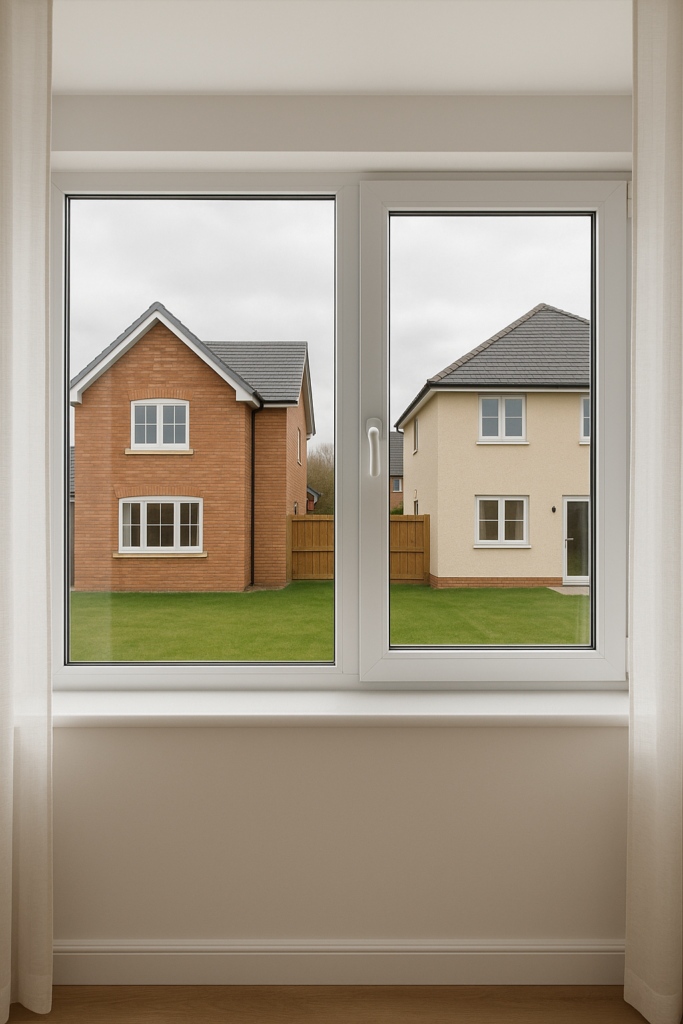
Low emissivity glass has become a must-have upgrade for energy-efficient homes. Most people know it for cutting heat loss, lowering bills, and blocking UV. But there’s another benefit that often gets overlooked: indoor acoustics.
While low emissivity glass (low-E glass) is not a dedicated “soundproof” product on its own, it plays a surprisingly important role in how quiet and comfortable your interiors feel—especially when it’s combined with modern insulating and acoustic glazing systems.
In this guide, we’ll break down how low emissivity glass works, how sound behaves around windows, and how the right glass specification can give you better thermal comfort and a calmer, quieter home.
What Is Low Emissivity Glass?
Low emissivity glass is standard float glass with a microscopically thin metallic or metal-oxide coating. This coating:
- Reflects long-wave infrared heat back toward its source
- Allows visible light to pass through with minimal tint
- Blocks a large portion of harmful UV radiation
In winter, low emissivity glass reflects indoor heat back into the room. In summer, it helps reject solar heat before it overwhelms your interiors. That’s why it features prominently in discussions like Why Does Low Emissivity Glass Improve Indoor Comfort?
From an acoustics point of view, low-E coatings don’t directly “block” noise. However, they enable better window designs—double and triple glazing, heavier glass, laminated panes—without sacrificing daylight or overheating a room. Those design changes are what dramatically improve sound insulation.
How Sound Enters Your Home Through Glass
Before looking at how low emissivity glass helps, it’s useful to understand how noise travels through windows.
1. Airborne sound transmission
Traffic, aircraft, neighbours, barking dogs—these are all airborne sound sources. Noise reaches the window, causes the glass to vibrate, and that vibration transfers into the room as sound.
The main factors that affect this transmission are:
- Mass: Heavier (thicker) glass vibrates less and transmits less sound.
- Stiffness: Different thickness combinations in IGUs (insulating glass units) reduce resonance.
- Air or gas gaps: Wider, well-sealed cavities between panes add damping.
- Laminated interlayers: PVB or acoustic interlayers absorb vibration energy.
2. Flanking paths and frames
Even the best glass will perform poorly acoustically if:
- Frames are hollow and poorly insulated
- There are gaps around the sash
- Seals are old, damaged, or missing
That’s why acoustic performance is always about the full window system, not just the pane.
Where Low Emissivity Glass Fits Into Acoustic Performance
So if low emissivity glass is really about heat and light, how does it help with sound?
1. It makes high-performance IGUs viable
Good acoustic performance almost always means:
- Double or triple glazing
- Asymmetric pane thicknesses (e.g., 4 mm + 6 mm)
- Large, gas-filled cavities
- Sometimes laminated acoustic glass
All of those increase the weight and cost of the unit. Without low-E, a heavy triple-glazed unit can trap too much solar heat, leading to overheating, uncomfortable glare, and higher cooling bills.
Low emissivity glass solves this by:
- Controlling solar gain even with large glazed areas
- Retaining winter warmth so you can invest in thicker, acoustic-grade glass without penalty
- Keeping U-values low while you focus the glass build-up on improving sound insulation
In short, low-E lets you design thick, acoustically effective glazing that still behaves like a premium energy-efficient window.
2. It stabilises indoor temperature – which affects perceived noise
Thermal comfort and acoustic comfort are linked. A space that’s too hot or too cold tends to feel more “stressful”, and people become more sensitive to noise.
Because low emissivity glass:
- Reduces cold downdrafts and hot spots near windows
- Minimises temperature swings throughout the day
…occupants often perceive the environment as calmer, even if the measured sound level is the same. You get a more “relaxed” room where external noise feels less intrusive.
3. It supports quieter mechanical systems
Low-E glazing cuts heating and cooling loads, allowing:
- Smaller HVAC systems
- Shorter run times
- Lower fan speeds
That reduces background mechanical noise—the hum of A/C, ducts, and fans—which is a major contributor to overall indoor sound levels. Better energy performance translates into a quieter building.
Low Emissivity Glass in Acoustic and Hybrid Glazing Systems
To really improve indoor acoustics, low emissivity glass is usually specified in combination with other technologies.
1. Low-E + double glazing
A typical configuration might look like:
- 4–6 mm glass (outer)
- 12–16 mm argon-filled cavity
- 4 mm low emissivity glass (inner)
Benefits:
- Good STC/OITC ratings compared with single glass
- Strong thermal performance (low U-value)
- Fewer cold surfaces → less convection noise and drafts
This setup suits most suburban homes with moderate road noise.
2. Low-E + laminated acoustic glass
For noisier environments—busy roads, train lines, commercial zones—you’ll often see:
- 6 mm glass (outer)
- 12–16 mm argon cavity
- 6.4–8.8 mm laminated low-E glass (inner) with acoustic PVB
Here, the low emissivity glass is part of the laminated pane. The acoustic interlayer absorbs vibration, while the low-E coating:
- Maintains energy efficiency
- Controls solar gain on larger windows
- Protects furnishings from UV while you leave blinds open for light
This is similar in spirit to hybrid acoustic solutions described earlier: you’re getting both noise reduction and thermal control from the same unit.
3. Low-E in triple glazing
Triple glazing with one or more low-E coatings and gas-filled cavities can reach:
- Very low U-values
- Excellent sound insulation, especially with mixed thicknesses or laminated layers
Triple units are heavier and more expensive but ideal for:
- Homes near airports or freeways
- High-performance builds (Passivhaus, net-zero homes)
- Cold climates with high energy costs
For a deeper dive into configuration choices, see how Low Emissivity Glass and Its Daylight–Solar Control Balance plays into orientation, glass build-ups, and comfort.
Acoustic Performance Metrics: What to Look For
When you’re comparing window options that include low emissivity glass, you’ll often see two key acoustic ratings:
- STC (Sound Transmission Class) – rates sound reduction for typical indoor noises (voices, TV, general activity).
- OITC (Outdoor–Indoor Transmission Class) – more relevant for external noise (traffic, aircraft, low-frequency rumble).
As a rough guide:
- STC 28–32 – typical basic double glazing
- STC 34–38 – good residential acoustic performance
- STC 40+ – high-performance acoustic glazing
Low emissivity glass can be used in any of these ranges. The jump in acoustic performance comes from:
- Pane thickness
- Asymmetry
- Laminated interlayers
- Cavity width and gas type
The role of low-E is to maintain excellent thermal and solar control while you push the glass build-up toward better sound ratings.
Design Tips: Using Low Emissivity Glass for Better Indoor Acoustics
1. Match glass strategy to noise source
- Light traffic / quiet suburb
– Double glazing with one low-E pane usually suffices. - Busy road / urban infill
– Asymmetric double glazing (e.g., 4 mm + 6 mm) with low-E on the inner pane. - High noise (highway, trains, nightlife districts)
– Laminated acoustic glass with low emissivity coating + generous cavity.
2. Don’t forget frames, seals, and installation
Even with the perfect low-E acoustic glass, you will lose performance if:
- Frames aren’t airtight
- Installers leave gaps or weak sealant joints
- Trickle vents or old hardware leak sound
Professional installation and good frame design are as important as the glass itself.
3. Use shading and orientation with low-E for a calmer space
External shading—eaves, fins, vertical gardens, even surrounding urban greenery designed along the lines of Define Landscape Solutions in Smart Cities—works beautifully with low emissivity glass. Shading:
- Reduces glare and reflected light
- Cuts solar heat load (so HVAC is quieter)
- Softens the overall soundscape around the building
Low-E glass then ensures that, whatever light does enter, it doesn’t bring excessive heat with it.
4. Consider aesthetics and reflectivity
Modern low emissivity glass comes in neutral, blue-green, grey, and slightly reflective variants. You can choose:
- Neutral low-E for minimal color shift and clear views
- Slightly tinted or more reflective low-E for privacy and additional solar control
These visual choices don’t just affect appearance—they can influence how bright and calm a room feels. For façade design inspiration, it’s worth exploring What Low Emissivity Glass Colors and Reflective Options Exist?.
When Is Low Emissivity Glass Enough—and When Do You Need More?
Low-E alone is usually enough if…
- Your area noise level is moderate.
- You’re upgrading from old single-pane windows.
- Your main priorities are energy savings and comfort, with only mild concern about noise.
In these cases, simply moving to a well-sealed low-E double-glazed unit will feel like a big improvement in both warmth and quietness.
You should add acoustic features if…
- You struggle to sleep due to traffic or aircraft noise.
- You’re near schools, stadiums, or other noisy facilities.
- You work from home and need low background noise.
Here, look for low emissivity glass combined with:
- Laminated acoustic interlayers
- Asymmetrical pane thicknesses
- Wider cavities and possibly triple glazing
This layered approach uses low-E as the thermal engine, while the rest of the build-up delivers serious acoustic performance.
Bringing It All Together
Low emissivity glass is not marketed as a soundproofing miracle, but it is a cornerstone material in modern acoustic window design:
- It enables thicker, multi-pane, laminated systems that truly reduce noise.
- It stabilises indoor temperatures, making spaces feel more comfortable and calm.
- It supports quieter mechanical systems and protects interiors from UV damage.
By combining low emissivity glass with smart acoustic glazing strategies, you can create interiors that are:
- Quieter – less traffic, aircraft, and neighbourhood noise
- More comfortable – no cold drafts or hot spots near windows
- More efficient – lower heating and cooling bills, smaller carbon footprint
If you’re planning a window upgrade or a new build, think of low-E as your baseline: start with it for thermal and solar control, then layer acoustic features on top depending on how noisy your surroundings are.
For a broader perspective on performance, cost, and sustainability, you can explore related topics like What Affects Low Emissivity Glass Pricing Across Projects Today?, How Does Low Emissivity Glass Reduce Environmental Impact?, and the detailed breakdown in Low Emissivity Glass and Its Daylight–Solar Control Balance.
When all of these design considerations come together, low emissivity glass becomes more than just an energy upgrade—it becomes a key tool for shaping the sound, light, and comfort of your home.