
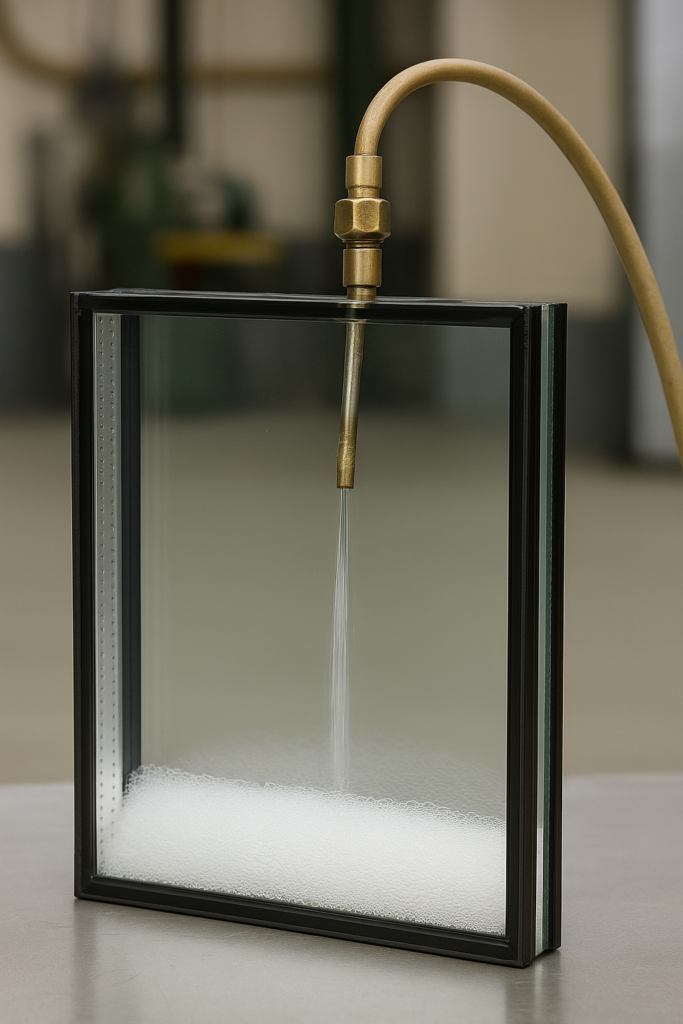
Introduction to Insulating Glass Units and Gas Fills
An Insulating Glass Unit (IGU) is a multi-pane glazing system designed to improve thermal performance, reduce energy loss, and enhance indoor comfort. One of the most important variables influencing IGU efficiency is the type of gas fill between the glass panes. Choosing the appropriate gas filling enhances insulation, improves condensation resistance, and supports long-term energy savings.
In this article, we will explore and compare the most common gas filling options in IGUs, offering an expert-level guide to help builders, architects, and homeowners make informed choices based on performance, cost, and sustainability.
The Role of Gas Fill in IGUs
Gas fills are inert gases injected between panes in an IGU during Insulating Glass Unit installation. These gases improve insulation by minimizing convective heat transfer and reducing conduction.
Without proper gas fill, an IGU would function like a basic double-pane window, lacking the thermal resistance required for energy-efficient buildings. The inclusion of gas fills elevates IGU performance to modern environmental and comfort standards.
Common Gas Fill Types
1. Argon Gas Fill
Argon is the most commonly used gas in IGUs. It’s an odorless, non-toxic, inert gas that offers excellent thermal insulation at a reasonable cost.
Pros:
- Affordable
- Significantly reduces thermal conductivity compared to air
- Readily available and easy to install
Cons:
- Slightly less effective than other gases like krypton
- Can escape over time if seals fail
Best for: Standard residential and commercial applications seeking a cost-effective solution. Argon pairs well with low-E coatings to enhance overall energy performance.
2. Krypton Gas Fill
Krypton is a denser inert gas with superior insulating properties. It’s typically used in high-performance or narrow-cavity IGUs.
Pros:
- Higher thermal resistance than argon
- Effective in thin-glass IGUs
Cons:
- More expensive
- Less widely available
Best for: Premium windows, high-efficiency buildings, and applications where maximum thermal insulation is required in smaller gaps.
3. Xenon Gas Fill
Xenon is rarely used but offers the highest performance among the standard IGU gas fills.
Pros:
- Excellent insulation properties
- Performs well in extreme climates
Cons:
- Extremely costly
- Minimal availability
Best for: Niche, high-end architectural projects with strict energy performance demands.
4. Air (Unfilled IGU)
In some cases, IGUs are filled with dry air or left unfilled. While this is economical, it offers the least insulation value.
Pros:
- Cost-effective
- Simplified manufacturing
Cons:
- Higher heat transfer rate
- Poor insulation performance
Best for: Low-budget projects or non-climate-controlled buildings.
Performance Comparison Chart
| Gas Type | Thermal Conductivity | Cost | Ideal Gap Width | Energy Efficiency |
|---|---|---|---|---|
| Argon | Medium | Low | 12-20mm | High |
| Krypton | Low | High | 6-12mm | Very High |
| Xenon | Very Low | Very High | 6-12mm | Exceptional |
| Air | High | Low | Any | Low |
How Gas Fills Enhance IGU Benefits
Gas-filled IGUs significantly contribute to overall Insulating Glass Unit benefits:
- Improved indoor comfort: By limiting temperature fluctuations and drafts.
- Energy efficiency: Lower HVAC usage reduces energy bills.
- Sound insulation: When paired with proper glass thickness and sealants, IGUs also reduce noise.
For comfort-focused solutions, visit Insulating Glass Unit for Comfortable Indoor Spaces.
Compatibility with Spacer and Sealant Materials
The choice of gas must align with other IGU components for optimal performance. Compatibility with spacer and sealant materials is crucial for long-term gas retention.
Read more about Insulating Glass Unit Materials: Spacer & Sealant Types.
Installation and Maintenance Considerations
Insulating Glass Unit Installation
Professional installation is critical to preserve gas integrity. High-quality manufacturing and sealing methods prevent premature gas leakage. Installers should:
- Verify seal performance
- Avoid thermal bridging
- Use compatible glazing frames
Insulating Glass Unit Maintenance
Gas-filled IGUs require little maintenance but should be periodically inspected for:
- Fogging or condensation (indicates gas leakage)
- Seal degradation
Proper Insulating Glass Unit maintenance ensures performance longevity and avoids costly replacements.
Application Versatility
Residential and Commercial Use
Gas-filled IGUs are ideal for a range of building types. Argon suits most home and office applications. Krypton is preferred for high-rise or passive house standards.
IGUs in Landscape Designs
Gas-filled IGUs used in landscape-integrated structures, such as conservatories, garden rooms, and sunspaces, create year-round usability while blending energy efficiency with natural beauty. For related context, explore Bright View Landscape Defined: What Makes It Stand Out?.
Sustainability Impact
Energy Conservation
Gas-filled IGUs directly contribute to lower carbon emissions by minimizing the need for heating and cooling. This supports green certifications like LEED and BREEAM.
Lifecycle Efficiency
High-performing IGUs reduce building operation costs and frequency of replacements, aligning with Insulating Glass Unit sustainability principles.
Final Thoughts: Choosing the Right Gas Fill
Selecting the ideal gas fill for your Insulating Glass Unit depends on several factors:
- Budget constraints
- Desired thermal efficiency
- Window or structure dimensions
- Environmental conditions
Argon provides excellent value, Krypton delivers top-tier performance in limited spaces, and Xenon is best for cutting-edge green building projects. Each gas contributes to elevating the performance, comfort, and energy profile of buildings across applications.
By understanding gas fill options and aligning them with project goals and materials, property owners and specifiers can ensure that their IGUs deliver lasting value and sustainability.