
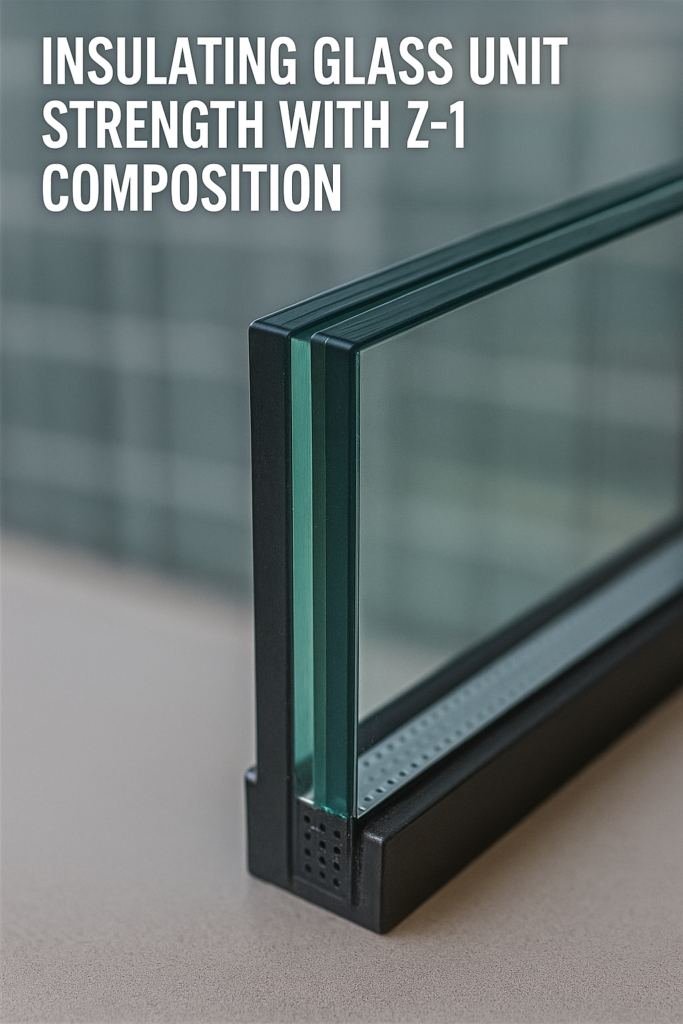
Introduction: The Power of Next-Generation IGU Materials
In the ever-evolving world of architectural glazing, the demand for durability, thermal performance, and visual clarity has led to major advancements in insulating glass systems. Among these innovations, the Insulating Glass Unit (IGU) with Z-1 composition stands out as a powerful solution. Fused with advanced structural integrity and high-end energy performance, Z-1 composition enhances the strength and resilience of IGUs across a broad range of commercial, residential, and public applications.
This article explores the structural strength, performance benefits, and design versatility of IGUs incorporating Z-1 glass composition, including real-world use cases and best practices for implementation.
What Is Z-1 Composition in Insulating Glass Units?
Z-1 composition refers to a proprietary high-strength glass formulation used in the core or pane of an Insulating Glass Unit. This composition enhances the unit’s:
- Structural integrity
- Impact resistance
- Energy performance
- Long-term optical clarity
Z-1 glass typically includes reinforced interlayers or specially engineered substrates that outperform standard annealed or tempered glass in key performance metrics.
For foundational context, explore the structural and energy benefits of Z-1 technology in Insulating Glass Unit with Z-1 Glass Core Benefits.
The Structural Strength of Z-1 IGUs
Superior Load Resistance
Z-1 IGUs handle higher wind loads and structural pressure compared to traditional insulated glazing. This makes them ideal for high-rise buildings, coastal zones, and exposed façades.
Impact Protection
In environments subject to heavy public traffic, high winds, or security risks, Z-1 glass offers reliable protection against forced entry, debris impact, and accidental breakage.
Thermal Stress Resistance
Z-1’s low thermal expansion and high temperature tolerance reduce the risk of thermal breakage, even under extreme solar exposure or HVAC fluctuations.
Longer Lifespan
With lower degradation rates and resistance to edge seal stress, IGUs with Z-1 composition typically last longer than conventional systems—reducing replacement costs over time.
Energy Performance and Comfort Benefits
Thermal Efficiency
Z-1 IGUs provide enhanced insulation values, reducing heating and cooling demands year-round. They support net-zero energy targets and green building certification goals.
UV and Solar Control
Z-1 glass filters infrared and ultraviolet rays while maintaining high visible light transmission. The result: improved daylighting, reduced glare, and lower solar heat gain.
Acoustic Insulation
Thanks to the density and lamination properties of Z-1 glass, these IGUs contribute to better sound attenuation. This is particularly important in urban, hospitality, and educational settings.
Read more about acoustic-safe applications in Insulating Glass Unit Meets Laminated Glass Safety.
Applications of Z-1 IGUs Across Building Types
Hospitality and Resort Projects
Z-1 IGUs are ideal for guest-facing façades, spa enclosures, and high-exposure luxury settings where visual clarity, performance, and durability must coexist. Learn more in Insulating Glass Unit for Hospitality & Resort Design.
High-Rise Commercial Towers
Z-1’s superior wind resistance and structural strength make it suitable for curtain walls and expansive glazed elevations in tall buildings and mixed-use developments.
Educational Facilities and Auditoriums
IGUs with Z-1 cores deliver comfortable, well-lit spaces with acoustic control, safety assurance, and long-term performance—perfect for lecture halls and libraries.
Industrial Complexes
Warehouses, labs, and industrial campuses benefit from Z-1 IGUs in loading docks, office partitions, and skylights. These units resist stress, debris impact, and temperature shifts.
Landscape-Focused Architecture
Z-1 IGUs help frame scenic views while standing up to wind, rain, and debris. Ideal for botanical centers, atriums, and visitor pavilions. For landscape-integrated design, explore Bright View Landscape Defined: What Makes It Stand Out?.
Installation and Maintenance Considerations
Best Practices for IGU Installation with Z-1 Composition
Professional Insulating Glass Unit installation is crucial to preserve the integrity of Z-1 systems. Considerations include:
- Proper edge support and setting blocks
- Sealant compatibility with Z-1 materials
- Structural glazing reinforcement for larger panels
Maintenance Guidelines
Though Z-1 IGUs are low-maintenance, care is key to longevity:
- Clean with pH-neutral, non-abrasive solutions
- Inspect edge seals annually
- Monitor visible clarity and gas fill performance
Sustainability and Certification Alignment
Energy Efficiency Compliance
Z-1 IGUs support:
- LEED (Energy Optimization, Indoor Environmental Quality)
- BREEAM (Thermal Performance)
- WELL Building Standard (Visual Comfort and Noise Control)
Reduced Environmental Impact
With longer service life and lower maintenance demands, Z-1 units minimize resource consumption and waste.
Material Responsibility
Z-1 units often use recyclable components—aluminum spacers, eco-safe sealants, and high-transparency glass—all aligned with Insulating Glass Unit sustainability goals.
Conclusion: A Stronger, Smarter Future for Glazing
The Insulating Glass Unit with Z-1 composition represents a major leap forward in performance glass technology. By combining advanced strength, clarity, energy efficiency, and acoustic control, Z-1 IGUs serve the needs of today’s most demanding architectural projects.
Whether used in luxury resorts, educational centers, high-rises, or landscape-forward buildings, Z-1 IGUs provide a competitive edge in comfort, compliance, and long-term durability—empowering smarter, safer, and more sustainable design.