
When it comes to improving energy efficiency, indoor comfort, and long-term value for residential or commercial buildings, few upgrades are as impactful as installing an insulating glazing unit (IGU). Choosing the right insulating glazing unit requires understanding its components, performance factors, and the range of options available today. This article provides a step-by-step explanation of IGUs, from their core design and features to practical considerations when selecting the right solution for your needs.
What Is an Insulating Glazing Unit?
An insulating glazing unit (often abbreviated as IGU) consists of two or more panes of glass separated by a spacer and sealed around the edges to form an airtight cavity. This cavity can be filled with air, argon, krypton, or other gases to improve insulation. By reducing heat transfer, IGUs significantly outperform traditional single-pane windows in thermal efficiency, sound reduction, and condensation resistance.
Modern IGUs are available in multiple configurations—double-pane, triple-pane, and even specialized units with low-emissivity coatings or laminated glass layers. The choice depends on climate, budget, and performance requirements.
Why Choosing the Right IGU Matters
The decision to install IGUs is not just about aesthetics—it’s about maximizing return on investment and ensuring long-term comfort. The right IGU can:
- Reduce energy bills by limiting heat transfer through windows.
- Improve acoustic comfort by dampening outside noise.
- Minimize condensation and prevent window fogging.
- Enhance property value by meeting modern building standards.
With so many options available, selecting the right IGU can be overwhelming. Below, we break down the main factors to consider.
Key Factors to Consider When Choosing an Insulating Glazing Unit
1. R-Value and U-Value
The R-value measures thermal resistance (higher is better), while the U-value measures thermal conductivity (lower is better).
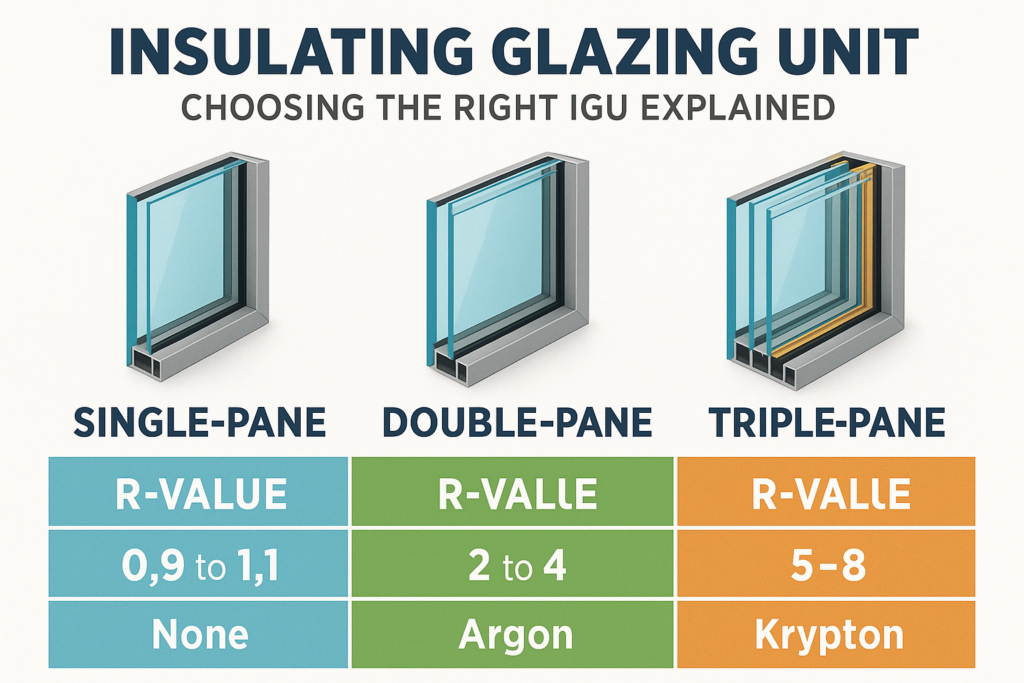
- Double-pane IGUs typically have R-values of 2–4.
- Triple-pane IGUs can reach R-values of 5–8, making them ideal for extreme climates.
- Adding low-emissivity (Low-E) coatings improves insulation further without reducing natural light.
For deeper insight into thermal performance, see: Insulating Glazing Unit | The Complete Guide to Energy-Efficient Windows.
2. Gas Fills
The insulating cavity can be filled with different gases:
- Air – The most affordable, but least efficient.
- Argon – The most common choice, cost-effective and highly efficient for double-pane IGUs.
- Krypton – Denser than argon, provides superior insulation in narrow cavities, often used in triple-pane IGUs.
Gas type directly impacts both energy efficiency and cost.
3. Spacer Materials
Spacers separate panes of glass and prevent moisture infiltration. The material matters:
- Aluminum spacers – Durable but conduct heat.
- Foam spacers – Minimize heat transfer and improve energy efficiency.
- Stainless steel spacers – Balance durability and insulation.
4. Pane Configurations
- Double-pane IGUs – The standard choice for most climates, providing efficiency at an affordable price.
- Triple-pane IGUs – Designed for extreme climates, offering the best insulation and noise reduction.
- Custom options – Laminated or Low-E glass can be added to further enhance performance.
For a closer look at IGU construction, read: Insulating Glazing Unit | Manufacturing Process.
Benefits of Installing an Insulating Glazing Unit
Energy Efficiency
By reducing heat transfer, IGUs lower heating and cooling costs year-round.
Noise Reduction
Multi-pane construction and gas filling create a strong acoustic barrier against urban noise.
Comfort and Health
IGUs reduce drafts and cold spots, while controlling condensation helps prevent mold growth.
Long-Term Value
Though the upfront investment is higher, IGUs provide long-term energy savings and increase property value.
Practical Tools and Equipment for IGU Installation
Installing IGUs requires specialized tools to handle heavy glass safely and accurately:
- Vacuum lifter – Ensures secure handling of large panes during transport and installation.
- Glass lifter – Provides stability and safety when positioning IGUs in frames.
- Forklift boom – Assists in lifting and transporting IGUs on construction sites.
By using the correct equipment, contractors can ensure both safety and precision in IGU installation.
For a detailed overview of installation methods, explore: Insulating Glazing Unit | Installation Process Best Practices.
Choosing the Right IGU for Your Climate
- Mild climates – Double-pane IGUs with argon gas are usually sufficient.
- Extreme hot or cold climates – Triple-pane IGUs with krypton gas offer the best performance.
- High-noise urban areas – Triple-pane or laminated IGUs for maximum acoustic insulation.
- Historic retrofits – Custom IGUs that maintain the appearance of older windows while improving performance.
Cost vs. Return on Investment
While IGUs cost more upfront compared to single-pane windows, their ROI is undeniable:
- Reduced energy bills (up to 30% lower).
- Increased property resale value.
- Long-term durability with lifespans of 20–30 years.
For a detailed financial perspective, see: Insulating Glazing Unit | Cost Breakdown and ROI Factors.
Sustainability and IGUs
Modern construction prioritizes sustainable solutions. IGUs align with this trend by reducing energy consumption and carbon emissions. Pairing IGUs with eco-friendly landscaping choices such as Bright View Landscape | Sustainable Landscaping for a Greener Future can maximize both comfort and sustainability.
Replacement and Maintenance Considerations
Over time, IGUs may fail due to seal degradation, leading to condensation between panes. When this occurs, replacing the IGU is essential to restore performance.
Learn more about replacement factors here: Insulating Glazing Unit | Replacement Considerations Guide.
Conclusion
An insulating glazing unit is more than just a window upgrade—it’s an investment in comfort, energy efficiency, and long-term savings. From selecting the right gas fill and spacer to choosing between double or triple-pane configurations, every decision influences performance and ROI.
By consulting professionals, using the right tools like a vacuum lifter and forklift boom, and understanding both technical and practical considerations, property owners can make informed choices that maximize value.
If you are planning to upgrade your windows, now is the time to consider which IGU option best fits your climate, budget, and performance goals. The right choice will deliver energy savings, enhance comfort, and contribute to a more sustainable future.