
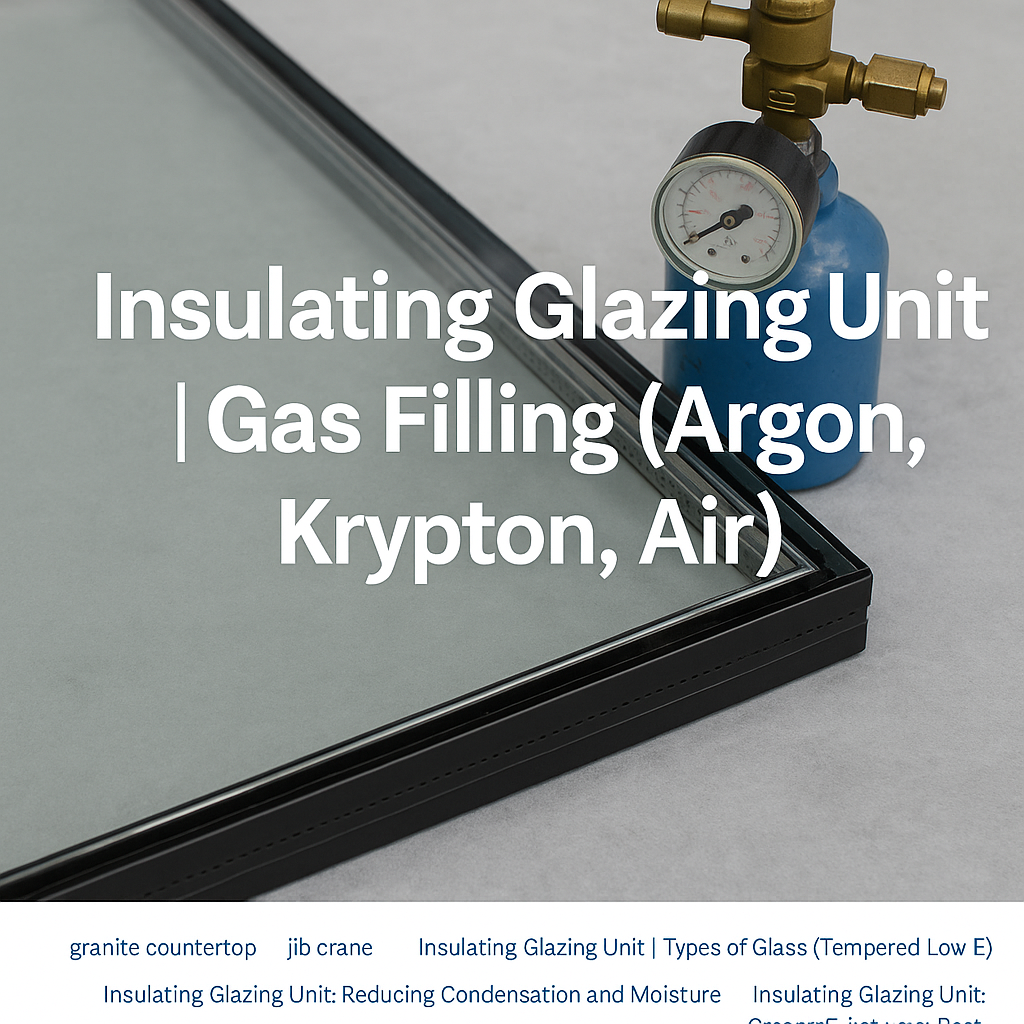
As global standards for energy-efficient building design evolve, one essential component continues to lead the way: the insulating glazing unit (IGU). Known for enhancing thermal performance, acoustic control, and condensation resistance, the IGU achieves its effectiveness not only through the type of glass or spacer used, but also through the gas fill within its cavity.
In this guide, we explore the science and strategy behind filling an IGU with argon, krypton, or air, how each impacts performance, and why gas fills are a key factor in modern sustainable construction.
What Is an Insulating Glazing Unit?
An insulating glazing unit is composed of two or more panes of glass separated by a spacer and sealed around the edges to create an airtight cavity. This cavity is typically filled with a gas to reduce heat transfer between the interior and exterior environments.
While glass and spacer selection are vital, the choice of cavity gas greatly affects thermal conductivity, condensation resistance, and overall energy performance.
For insight into IGU glass types, check out Insulating Glazing Unit | Types of Glass (Tempered, Low-E).
Why Gas Filling Matters
The purpose of filling the IGU cavity with gas is to enhance thermal insulation by reducing the rate of heat transfer. Gases have lower thermal conductivity than air, especially when using denser or noble gases like argon and krypton.
Key benefits of gas filling:
- Improved U-value (lower = better insulation)
- Enhanced condensation resistance
- Reduced energy costs
- Better climate control inside buildings
For more on condensation performance, visit Insulating Glazing Unit: Reducing Condensation and Moisture.
Gas Filling Options in IGUs
1. Air-Filled IGUs
Air is the simplest and most economical fill used in IGUs. It provides modest thermal performance and is often used in:
- Entry-level double glazing
- Non-critical applications (e.g., garages, sheds)
Pros:
- No additional cost
- Readily available
Cons:
- Poor thermal insulation
- Higher chance of condensation
- Not suitable for energy-efficient building codes
2. Argon-Filled IGUs
Argon is the most commonly used gas in modern IGUs. It is 34% denser than air and significantly reduces thermal conductivity between panes.
Pros:
- Affordable
- Widely available
- Compatible with Low-E coatings
Cons:
- Moderate insulation improvement compared to krypton
Best for:
- Residential buildings
- Standard double and triple-glazing systems
3. Krypton-Filled IGUs
Krypton is denser than argon and offers better thermal performance, especially when used in thinner cavities.
Pros:
- High insulation
- Ideal for narrow gaps (e.g., triple glazing with slim profiles)
Cons:
- More expensive than argon
- Less widely available
Best for:
- Passive houses
- High-end commercial projects
Performance Comparison Table
| Gas Type | Thermal Conductivity (W/m·K) | Cost Level | Common Usage |
|---|---|---|---|
| Air | ~0.026 | Low | Entry-level double glazing |
| Argon | ~0.016 | Moderate | Residential/Commercial applications |
| Krypton | ~0.009 | High | Premium, space-restricted systems |
For a detailed look at spacer technology and gas retention, see Insulating Glazing Unit: Spacer Types and Their Importance.
How Gas Fillings Are Sealed
To ensure performance, gas fillings must remain sealed over the lifespan of the IGU. This is achieved using:
- Primary sealant (Butyl): Creates airtight barrier
- Secondary sealant (Silicone/Polyurethane): Provides structural support
- Warm-edge spacers: Reduce edge conduction and hold the gas in place
Failure in the seal can cause gas leakage and moisture ingress, drastically reducing IGU efficiency. That’s why quality materials and installation are essential.
Signs of Gas Leakage or Cavity Failure
- Fogging or moisture between panes
- Condensation around glass edges
- Drop in energy performance
Regular inspection and professional installation using appropriate tools like:
…can prevent damage during handling and reduce stress on sealed edges.
Matching Gas Fillings with Building Needs
| Building Type | Recommended Gas | Glazing Layers | Rationale |
|---|---|---|---|
| Residential Homes | Argon | 2-3 | Balance of cost and performance |
| Commercial Offices | Krypton | 2-3 | Enhanced climate control |
| Heritage Buildings | Krypton/Air | 2 | Retrofit-friendly, slim IGU design |
| Budget Renovations | Air | 2 | Cost-saving with basic insulation |
Environmental Impact and Energy Savings
Choosing the right gas fill can reduce your building’s carbon footprint and help meet international standards for:
- Energy efficiency (U-value)
- Thermal comfort (indoor regulation)
- Sustainability (longer IGU life)
Pair this approach with sustainable landscaping from Bright View Landscape with Green Waste Reduction Tips to achieve a holistic environmental strategy.
Conclusion
The insulating glazing unit is only as effective as its components. While glass and spacers are important, the gas filling within the cavity often makes the critical difference between standard and high-performance windows.
Whether you choose argon for cost-effective efficiency or krypton for high-end insulation, a well-sealed and properly handled IGU will ensure years of energy savings, condensation resistance, and indoor comfort.
For further reading on glass types in IGUs, revisit Insulating Glazing Unit | Types of Glass (Tempered, Low-E) and explore how every component plays a role in a truly efficient window system.