
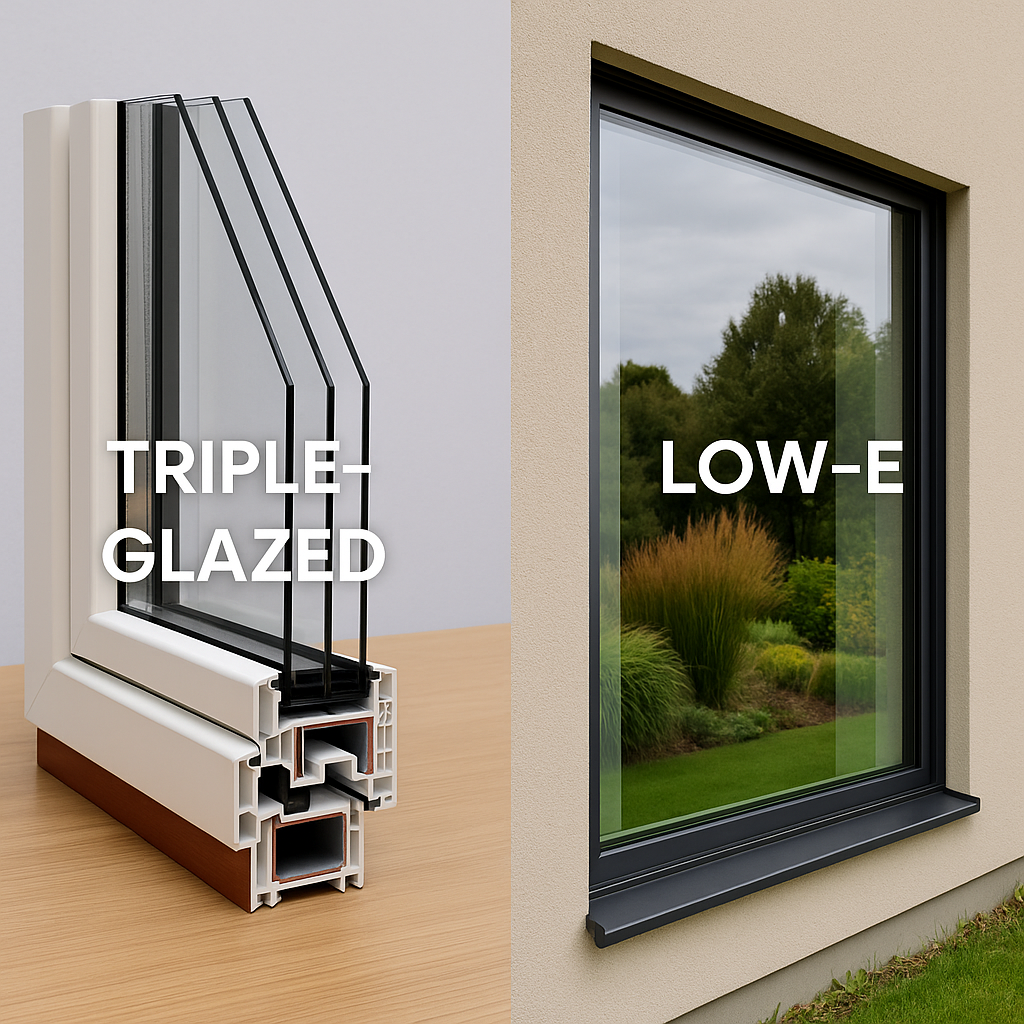
Triple-glazed windows are often seen as the “gold standard” for energy-efficient glazing. But the real star of the show isn’t just the extra pane of glass – it’s the low emissivity glass (Low-E) coatings working inside the unit.
When you combine Low-E coatings with a triple-glazed build-up, you get one of the most powerful tools available for reducing heat loss, controlling solar gain, cutting noise, and protecting interiors from UV damage. The key is understanding how each layer works and when the extra performance is worth the investment.
In this article, we’ll unpack how low emissivity glass performs in triple-glazed systems, how it compares to double glazing, and what you should consider when specifying it for your home or project.
What Is Low Emissivity Glass?
Low emissivity glass is standard float glass that has been upgraded with a microscopically thin metallic coating. This Low-E coating:
- Reduces how much radiant heat passes through the glass
- Reflects long-wave infrared energy (heat) back toward its source
- Allows visible daylight to pass through with minimal tinting
In winter, Low-E coatings reflect indoor heat back into the room instead of letting it escape outdoors. In summer, they help reflect a portion of the sun’s heat before it can build up inside. That’s why Low-E glazing is now the baseline for energy-efficient windows.
If you want a deeper background on the physics and benefits, see
How Can Low Emissivity Glass Reduce Heat Loss and UV Damage?
How Triple-Glazed Systems Are Built
A triple-glazed unit typically consists of:
- Three panes of glass
- Two insulating cavities filled with air or inert gas (often argon or krypton)
- Spacers and seals around the edges to create a hermetically sealed unit
On its own, triple glazing already offers more insulation than double glazing because you’re adding more thermal resistance and more surfaces for heat to cross.
But the real performance jump happens when one or more of those panes is low emissivity glass.
Where Low Emissivity Glass Sits in Triple Glazing
In a triple-glazed system, Low-E coatings are usually applied to specific surfaces inside the unit to control heat flow:
- Surface 2 and/or 3 (counted from outside to inside) for solar control and insulation
- Sometimes Surface 5 in cold climates, to reflect more room heat back inside
By carefully choosing which surfaces carry Low-E coatings, you can:
- Optimise U-values (overall insulation)
- Fine-tune Solar Heat Gain Coefficient (SHGC) for your climate
- Maintain high Visible Light Transmittance (VLT) for bright interiors
In other words, the triple-glazed unit becomes a layered system where Low-E coatings are “steering” heat while the gas cavities slow down conduction and convection.
Thermal Performance: Why Low-E in Triple Glazing Is So Effective
Lower U-Values
A basic single pane of clear glass has a very high U-value (poor insulation). Double glazing with Low-E improves this significantly. Triple glazing with multiple Low-E surfaces can push U-values even lower.
That translates into:
- Less heat escaping during cold nights
- Reduced drafts and cold-radiation effects near windows
- Smaller heating loads and lower energy bills
For many high-performance homes, triple-glazed Low-E systems are the key to meeting ambitious energy targets and comfort expectations.
Optimised Solar Gain
Triple glazing doesn’t automatically block solar heat – it depends on how you specify the Low-E coatings:
- In cold climates, you might choose higher-gain Low-E coatings on inner surfaces to let winter sun in while still limiting heat loss.
- In hot or mixed climates, you’d favour stronger solar-control Low-E coatings nearer the exterior to cut down on overheating.
The ability to tune SHGC is one of the biggest advantages of combining Low-E with triple glazing, especially on large façades and sun-exposed elevations.
UV Protection and Interior Preservation
Every additional pane and Low-E surface helps reduce ultraviolet transmission. With a triple-glazed Low-E unit, you get:
- Very high levels of UV blocking, dramatically slowing fading of floors, furniture and fabrics
- Better long-term protection for artwork, timber, and soft furnishings
- More freedom to use natural light without sacrificing interior finishes
If UV control and material longevity are priorities – for example in living rooms with full-height glazing – triple-glazed Low-E systems are a strong candidate.
For more on this protective side of the technology, revisit
How Can Low Emissivity Glass Reduce Heat Loss and UV Damage?
Noise Reduction: An Extra Bonus of Triple-Glazed Low-E
While low emissivity glass itself is about thermal performance, triple glazing brings extra benefits:
- Three panes mean more mass and more layers for sound waves to pass through.
- Varying glass thicknesses and cavity widths can further improve acoustic performance.
Combine that with stable indoor temperatures and you get a quieter, calmer interior – ideal for homes near busy roads, rail lines, or flight paths.
Hard-Coat vs Soft-Coat Low Emissivity Glass in Triple Glazing
Not all Low-E coatings are made the same way. There are two main types:
- Hard-coat (pyrolytic): applied while the glass is still hot on the float line. Tough and durable, can be exposed.
- Soft-coat (sputtered): applied later in vacuum chambers as ultra-thin layers. More delicate, but capable of much better U-values and solar control.
In triple-glazed systems:
- Soft-coat Low-E is far more common because it delivers the ultra-low U-values and tailored SHGC needed for high-performance envelopes.
- The coatings are protected inside the sealed unit, so their delicacy is no longer a practical issue.
Hard-coat Low-E may still appear in budget or exposed applications, but soft-coat dominates premium triple glazing.
For a detailed comparison of these coating technologies, see
Low Emissivity Glass Hard-Coat and Soft-Coat
How Triple-Glazed Low-E Compares to Double Glazing
You might be wondering whether triple glazing is always necessary when low emissivity glass already offers strong performance in double panes. The answer depends on your goals.
Triple-glazed Low-E makes sense when:
- You’re in a harsh climate with very cold winters or large temperature swings.
- You’re targeting very low energy use (net-zero, Passive House, or similar).
- Acoustic performance is important in addition to thermal performance.
- Large areas of glazing expose you to big heat losses if performance is weaker.
High-quality double glazing with Low-E is usually enough when:
- You live in a mild or moderate climate.
- Wall and roof insulation, airtightness, and shading are already well-designed.
- Budget and frame design make triple glazing impractical.
If you’re currently comparing Low-E to basic clear glass, it’s worth starting with
Why Is Low Emissivity Glass Better Than Clear Glass? – in most projects, that’s the first big jump in performance before you consider a third pane.
Design, Frames and Landscaping: Getting the Best From Triple-Glazed Low-E
Even the most advanced low emissivity glass needs the right context to shine:
- Frames and hardware must be strong enough to support the extra weight of triple glazing. Thermally broken aluminium, timber, or composite frames are ideal.
- Airtight installation is critical. There’s little point in paying for high-spec glass if gaps around the frame leak air.
- Shading and orientation still matter. Low-E helps manage heat, but overexposed west or north-west façades may still need eaves, fins, or screens to avoid glare and summer overheating.
Thoughtful landscaping is another underrated tool:
- Deciduous trees, pergolas, and garden structures can shade windows in summer while letting in winter sun.
- Greenery can soften the look of thicker triple-glazed frames and help merge indoor–outdoor spaces.
For ideas on how outdoor design can support indoor comfort and glazing performance, explore
Designers Define Landscape Trends in Modern Gardens
Cost, Value and Payback
Triple-glazed Low-E units are more expensive than double-glazed Low-E, both in:
- Glass costs (three panes, more gas, more coatings)
- Frames and installation (heavier units, stronger hardware, sometimes extra labour)
However, they can deliver:
- Lower heating and cooling bills over the life of the building
- Better comfort, which is hard to put a price on
- Easier compliance with demanding energy codes or certification schemes
- Potentially higher resale value for an obviously high-performance home
The payback period depends on local energy prices, climate, and how often you run heating and cooling systems. In cold climates with long heating seasons, triple-glazed Low-E will usually pay for itself faster than in mild coastal regions.
When Should You Choose Triple-Glazed Low-E?
Consider specifying triple-glazed low emissivity glass when:
- Your climate has very cold winters or very hot summers and you rely heavily on heating or cooling.
- You’re aiming for top-tier energy performance, such as Passive House or net-zero.
- Noise reduction is a high priority.
- You want maximum UV protection for valuable interiors.
- You’re already investing in premium insulation, airtightness and mechanical ventilation – and don’t want windows to be the weak link.
In milder climates or more budget-conscious projects, well-designed double glazing with Low-E may hit the sweet spot between performance and cost.
Final Thoughts
On its own, triple glazing is simply “more glass.” But when you combine it with carefully selected low emissivity glass coatings, you get a sophisticated thermal and acoustic system that can transform comfort, control UV, and significantly reduce energy use.
Soft-coat Low-E on two or even three surfaces inside a triple-glazed unit offers:
- Exceptional insulation and stable indoor temperatures
- Strong solar control tailored to climate and orientation
- Excellent UV protection and quieter interiors
If you’re already convinced about Low-E but wondering how far to push your glazing specification, triple-glazed systems are the natural next step for truly high-performance homes.