
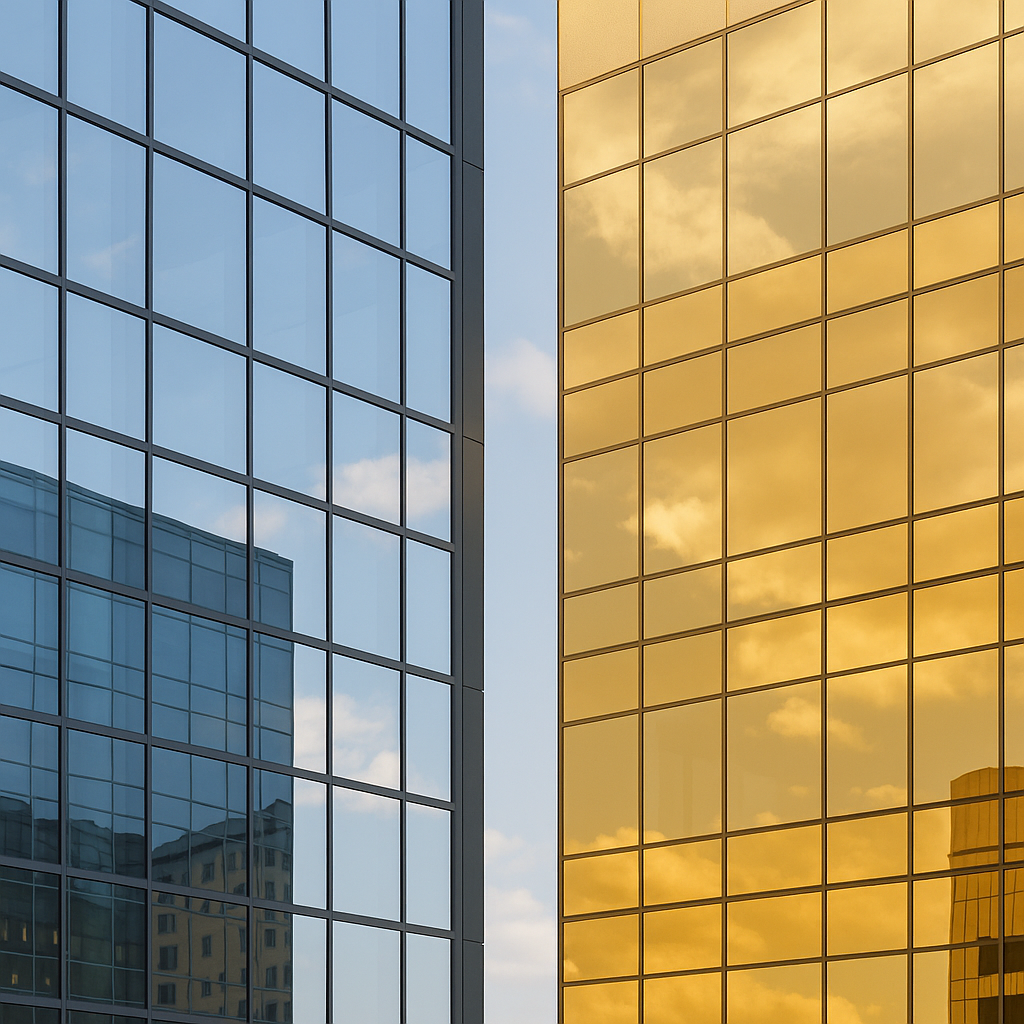
When architects, builders, or homeowners start comparing high-performance glazing, two phrases appear again and again: low e glass types and reflective coatings. Both promise better comfort and lower energy bills, both involve thin layers on glass, and both can dramatically change how a facade performs—so it’s easy to confuse them.
But they’re not the same thing.
This guide explains what truly distinguishes low E glass types from reflective coatings: how they’re made, how they work with heat and light, where each works best, and how to choose between them (or combine them) for your project.
1. Low E Glass Types vs Reflective Coatings: The Core Difference
The simplest way to think about it is this:
- Low-E (low emissivity) coatings are designed primarily as thermal managers.
- Reflective coatings are designed primarily as solar blockers and appearance modifiers.
Both involve ultra-thin metallic layers, but their optical targets and performance priorities are different.
What Are Low E Glass Types?
Low-E glass uses an almost invisible layer of metal or metal oxide (often silver-based) that:
- Reflects longwave infrared (heat) back toward its source
- Allows a high level of visible light to pass through
- Reduces U-value (heat transfer) and often improves solar performance
Different low e glass types are tuned for:
- Cold climates (higher solar gain, very low U-value)
- Hot climates (lower solar gain, strong solar control)
- Mixed climates (balanced SHGC and insulation)
What Are Reflective Coatings?
Reflective coatings (often called “mirror glass” or “solar control reflective glass”) use metallic layers to:
- Reflect a larger portion of solar radiation—both visible and infrared
- Give the facade a mirror-like appearance, especially from the outside
- Reduce daylight transmission and glare more aggressively
They can improve comfort and cut cooling loads, but they don’t usually offer the same fine-tuned thermal insulation as advanced low-E coatings.
2. How Each Coating Interacts With Heat and Light
To see what really distinguishes them, look at how they handle the three main parts of the solar spectrum.
Low E Glass Types: Spectrally Smart
Most modern low-E products are spectrally selective:
- Infrared / longwave heat: strongly reflected, limiting heat transfer
- UV radiation: largely blocked, protecting interiors from fading
- Visible light: allowed through as much as possible for bright interiors
Result:
You keep warmth indoors in winter, limit overheating in summer, and still enjoy clear views and natural light.
This is why low-E is the go-to glazing for:
- Energy-efficient homes and apartments
- High-performance commercial facades
- Projects chasing energy ratings and certifications
Reflective Coatings: Aggressive Solar Cut-Off
Reflective coatings take a blunter approach:
- Reflect a high portion of visible + infrared solar energy
- Strongly reduce daylight transmission
- Can create a harsh external reflection (shiny or mirrored look)
Result:
They cut solar heat efficiently in hot, sunny climates, but they also darken interiors and can limit outward visibility, especially under low light.
Reflective glass is common in:
- Hot desert or tropical regions where cooling loads dominate
- Buildings where privacy and a mirrored aesthetic are desired
- Older solar control designs before today’s advanced low-E options became widespread
3. Energy Performance: Insulation vs Solar Rejection
Both technologies help with energy, but in different ways.
Low E Glass Types: Insulation Champions
Low-E coatings are fundamentally about emissivity—how much heat a surface emits or radiates. By lowering emissivity, low E glass types:
- Improve U-value (reduce overall heat transfer through the glass)
- Keep interior glass surfaces warmer in winter, reducing drafts and condensation
- Help maintain more stable indoor temperatures year-round
They can be paired with double or triple glazing, gas fills, warm-edge spacers, and laminated layers to fine-tune performance across different climates.
If you’re working in a heating-dominated region, it’s worth studying which variants perform best in winter conditions:
👉 Which Low E Glass Types Work Best in Cold Climate Homes?
Reflective Coatings: Solar Load Reducers
Reflective coatings excel at reducing solar heat gain, which:
- Cuts cooling demand in very hot climates
- Limits glare and brightness in highly glazed facades
- Can improve occupant comfort near large south or west facades in the tropics
However, reflective glass doesn’t typically optimise U-value to the same level as advanced low-E products. It’s more about blocking incoming energy than controlling internal heat loss.
4. Visual Appearance and Daylight Experience
A major practical difference between low e glass types and reflective coatings is what they look like and how they make the space feel.
Low E Glass Types: Clear and Neutral
Well-designed low-E glass is almost indistinguishable from clear glass:
- Minimal color shift or mirror effect
- High Visible Light Transmission (VLT), depending on the specific type
- Suitable for homes, offices, schools, hospitals—anywhere natural light matters
This makes low-E particularly attractive for:
- Residential windows and sliding doors
- Daylit offices and learning environments
- Projects where connection to the outdoors is important
In noise-exposed homes, pairing clear views with quieter, better-insulated glazing can transform comfort. For that perspective, see:
👉 Benefits Low E Glass Types Bring to Noise-Exposed Homes
Reflective Coatings: Bold, Mirrored Facades
Reflective coatings are visually expressive:
- Strong exterior reflection—often silver, bronze, or colored
- Lower internal and external transparency during some lighting conditions
- Distinctive “mirror building” look
While they can give a striking skyline presence and privacy in daytime, they may:
- Reduce outward visibility, especially at dusk
- Make interiors feel darker if not carefully balanced with artificial lighting
5. Climate Suitability: Where Each Technology Makes Sense
Another way to distinguish them is by asking: where does each perform best?
Low E Glass Types in Mixed and Cold Climates
In climates with significant heating needs or strong seasonal swings, low-E is extremely valuable because it can:
- Capture or admit useful winter sun (depending on SHGC)
- Dramatically cut winter heat loss
- Still offer good summer performance when combined with shading and ventilation
To see how different low-E setups can be tuned for shoulder seasons and changing temperatures, explore:
👉 What Help Low E Glass Types Deliver Balance in Mixed Climates?
In these regions, reflective glass alone can overly darken interiors and throw away beneficial winter gains, whereas spectrally selective low e glass types strike a smarter seasonal balance.
Reflective Coatings in Harsh, Hot Climates
Reflective coatings are most at home in pure cooling climates:
- Desert cities with intense, year-round sun
- Tropical coastal towers where large glass areas face strong direct solar exposure
- Buildings that prioritise solar blocking and privacy over transparency
Even there, many newer projects now mix low-E and reflective strategies, or turn to advanced low-E solar control glass that achieves comparable SHGC with better daylight.
6. Safety, Acoustics and System Design
Neither low-E nor reflective coatings alone guarantee safety or sound insulation. Those roles are handled by:
- Lamination (for impact resistance, security, and better acoustics)
- Glass thickness combinations
- Frame design and installation quality
However, low-E is often used in high-performance laminated units, where:
- The coating manages heat and UV
- The lamination provides safety and noise reduction
If you’re deciding where lamination is essential—overhead glazing, barriers, storm-prone zones—this guide is helpful:
👉 Which Safety Needs Require Laminated Low E Glass Types?
Reflective coatings can also be laminated, but the primary driver in those cases is usually solar control plus security, not fine-tuned thermal performance.
7. Integration With Architecture and Landscape
Finally, your choice affects more than just the glass—it shapes the entire architectural and landscape experience.
- Highly reflective facades can alter urban microclimates, glare onto neighboring buildings, or heat surrounding pavements.
- Carefully selected low e glass types allow buildings to sit more gently in their context, balancing transparency, comfort, and environmental performance.
Good facade design should work hand-in-hand with:
- Shading devices, balconies, and overhangs
- Street trees, planting, and outdoor spaces
- Orientation and building form
This is where glazing strategy overlaps with broader design thinking. If you’re working at masterplan or streetscape scale, you might find it useful to explore:
👉 Define Landscape Architecture for Modern Design Work
8. When to Choose Low E Glass Types vs Reflective Coatings (or Both)
Choose primarily low-E glass types when:
- You want bright interiors and clear views.
- Energy efficiency and occupant comfort are top priorities.
- Your climate is mixed or heating-dominated.
- You’re targeting advanced building standards or certifications.
Choose strongly reflective coatings when:
- You are in a very hot, sun-exposed climate.
- Privacy and a mirrored aesthetic are desirable.
- You can accept lower interior daylight levels or compensate with artificial lighting.
Consider combining strategies when:
- You need extreme solar control but still want some insulation benefits.
- Different facades of the same building face very different conditions.
- A design calls for dramatic mirrored elements alongside more transparent zones.
Key Takeaways
So, what distinguish low e glass types from reflective coatings?
- Purpose:
- Low-E is about thermal insulation and balanced solar control.
- Reflective coatings are about strong solar rejection and visual privacy.
- Light Handling:
- Low-E lets plenty of daylight in while managing heat.
- Reflective glass cuts both light and heat more aggressively.
- Comfort and Efficiency:
- Low-E often delivers better overall energy efficiency and year-round comfort.
- Reflective glass excels at sheer solar blocking in harsh hot climates.
- Aesthetics:
- Low-E tends to look neutral and transparent.
- Reflective coatings give a bold, mirrored facade.
Understanding these distinctions helps you specify the right coating for the right facade, rather than treating all “high-performance glass” as the same. If you choose carefully—and coordinate with shading, frames, and landscape—you’ll end up with buildings that are not only striking to look at, but genuinely comfortable and efficient to live and work in.