
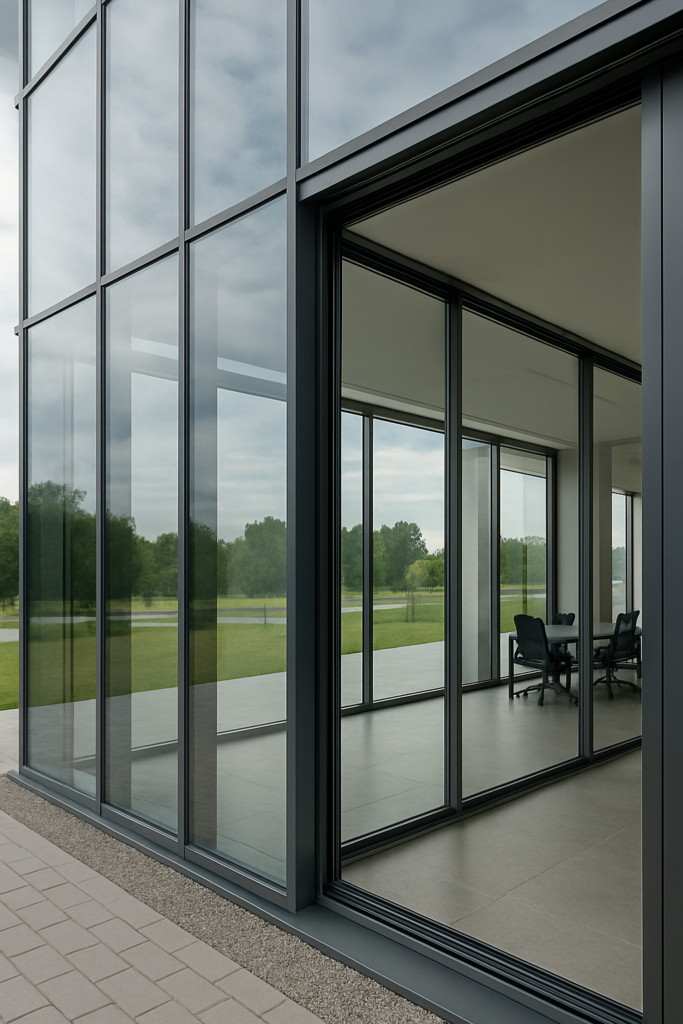
Modern offices are more transparent than ever. Glass curtain walls create bright, open workspaces, impressive street presence, and panoramic views. But behind the sleek look, there’s a lot of physics to manage: solar heat, glare, UV radiation, and energy loss. That’s exactly where low e glass types shine.
In this guide, you’ll see what make low e glass types ideal for office curtain walls, how they work in a facade system, and what to consider when choosing the right specification for your project.
Why Curtain Walls Need High-Performance Low E Glass Types
Office curtain walls are usually large, continuous areas of glass attached to the building structure. Unlike small punched windows, they:
- Expose a huge surface area to solar radiation
- Strongly influence heating and cooling loads
- Directly affect visual comfort, glare, and UV exposure
- Shape the building’s appearance from the street and the inside
If you use standard clear glass, curtain walls can easily become:
- Overheated in summer
- Cold and drafty in winter
- Uncomfortable to sit near
- Expensive to cool and heat
By switching to well-selected low e glass types, designers can:
- Keep the transparent aesthetic
- Reduce energy use dramatically
- Improve comfort for people working near the facade
- Reach tougher energy codes and green building targets
How Low E Glass Types Work in Curtain Wall Systems
Low-E (low-emissivity) glass uses an ultra-thin metallic coating—almost invisible to the eye—to manage how heat and light move through the glass.
In an office curtain wall:
- Shortwave solar energy (sunlight) hits the exterior glass.
- The low-E coating reflects a portion of the infrared and UV while letting useful visible light pass through.
- Longwave infrared heat from indoor sources is partially reflected back inside, improving insulation.
The result is a facade that:
- Lets in daylight and views
- Blocks a large share of unwanted heat and UV
- Helps maintain stable indoor temperatures closer to the core of the building
For curtain walls that cover multiple orientations and floor levels, the choice of coating and configuration is one of the most powerful design tools you have.
The Main Low E Glass Types Used in Office Curtain Walls
While there are many product names on the market, most curtain wall glazing falls into two broad low e glass types.
Hard-Coat Low-E (Passive Low-E)
Hard-coat low-E is fused onto the glass during the float manufacturing process.
Pros:
- Very durable and scratch resistant
- Often slightly cheaper
- Allows more solar gain, which may help in colder climates
Typical use in offices:
- Smaller commercial buildings in cold climates
- Facades where passive solar contribution is desired
However, for large, highly glazed curtain walls in city centers or warm climates, hard-coat products alone usually don’t provide enough solar control or spectral selectivity.
Soft-Coat Low-E (Solar Control Low-E)
Soft-coat low-E is applied in a vacuum chamber after the glass is formed, often using multiple layers of silver and metal oxides.
Pros:
- Excellent control over Solar Heat Gain Coefficient (SHGC)
- High Light-to-Solar Gain ratios: plenty of daylight with less heat
- Strong UV reduction and neutral color options
- Ideal for large glass facades where performance is critical
This is why most high-performance curtain walls rely on soft-coat low e glass types with one, two, or three silver layers.
To understand how different coatings, gas fills, and frames combine to improve performance, it’s worth exploring:
👉 Which Factors Make Low E Glass Types Perform Better?
Surface Location: Why Placement Matters Even More on Curtain Walls
In insulated glass units (IGUs), glass surfaces are numbered from outside to inside. For double glazing:
- Surface #1 – Exterior face of outer pane
- Surface #2 – Interior face of outer pane
- Surface #3 – Exterior face of inner pane
- Surface #4 – Interior face of inner pane
For curtain walls in warm or mixed climates, solar control low-E coatings are usually placed on surface #2, so they can reflect solar energy before it penetrates the cavity. In colder climates, insulation-focused coatings may sit on surface #3 to reflect indoor heat back inside.
Because curtain walls often cover multiple orientations and floors, misplacing the coating (for example installing the IGU flipped) can:
- Increase solar gain and cooling loads
- Change interior glass temperatures
- Alter color and reflection at street level
If you want a deeper explanation of how performance changes when you move the coating from one surface to another, see:
👉 Low E Glass Types Change Performance by Surface Location
Spectral Selectivity: Daylight Without Overheating
Offices need a lot of natural light—but not the heat that often comes with it. That’s where spectral selectivity of low e glass types becomes crucial.
Spectrally selective low-E coatings:
- Let a high percentage of visible light pass through
- Block much of the near-infrared heat
- Deliver a high Light-to-Solar Gain (LSG) ratio
For office curtain walls, high LSG means:
- Bright workplaces with fewer artificial lighting hours
- Lower cooling demand, especially on east and west facades
- Better comfort for employees seated near windows
Multi-silver soft-coat low e glass types are typically the leaders here, offering the best balance of brightness and heat rejection.
To dive deeper into this topic, you can read:
👉 Which Low E Glass Types Provide Strong Spectral Selectivity?
Key Benefits of Low E Glass Types in Office Curtain Walls
1. Significant Energy Savings
By reducing solar heat gain and improving insulation:
- Cooling loads drop in summer
- Heating loads drop in winter
- Chiller and boiler sizes can often be optimized
Over the life of the building, these savings can far outweigh the initial cost difference of high-performance glass.
2. Better Thermal Comfort for Occupants
Poorly specified curtain walls can create:
- Overheated zones near the facade
- Cold downdrafts in winter
- Temperature differences between perimeter and core areas
With the right low e glass types, surface temperatures stay closer to room temperature, which:
- Reduces complaints about “hot” or “cold” windows
- Makes perimeter desks more usable
- Supports flexible space planning as companies reconfigure floors
3. Reduced Glare and Improved Visual Comfort
Glare on computer screens is a major problem in open-plan offices. Spectrally selective low-E coatings:
- Cut down on harsh direct sunlight
- Control luminance contrast between window and interior surfaces
- Maintain good color rendering and “natural” daylight appearance
This supports healthier workspaces, reduces eye strain, and makes it easier to comply with ergonomic lighting standards.
4. Strong UV Protection for Interiors
Curtain walls expose carpets, furnishings, and branding elements to intense sunlight. Many low e glass types block up to 99% of UV radiation, which:
- Slows fading of fabrics and finishes
- Protects artwork and timber surfaces
- Helps maintain a professional look over time
5. Support for Sustainability and Certifications
Using high-performance low-E glazing helps projects:
- Meet or exceed energy codes and facade performance standards
- Contribute to LEED, BREEAM, and other green building rating credits
- Demonstrate lower operational carbon through reduced energy demand
Combined with efficient mechanical systems and good building orientation, curtain walls with advanced low e glass types become a strong sustainability asset.
Design Flexibility: Aesthetics and Branding
Curtain walls are also a major branding element for office buildings. Low-E technology has evolved to offer:
- Neutral, low-reflectance glass that looks “clear and modern”
- Slightly tinted options (blue, green, grey, bronze) for a specific signature look
- Different exterior reflectivity levels to suit urban or natural contexts
In other words, you don’t have to choose between performance and appearance. The right glazing can deliver both.
In larger developments and smart city districts, combining high-performance curtain walls with thoughtful greenery, shading devices, and public realm design creates more comfortable urban microclimates. That broader view is covered in:
👉 Define Landscape Solutions in Smart Cities
Choosing Low E Glass Types for Specific Curtain Wall Conditions
Because curtain walls wrap around the building, different orientations may need slightly different solutions.
South-Facing Facades (Northern Hemisphere)
- Receive more consistent sun at higher angles
- Often suited to spectrally selective low-E with moderate SHGC
- External shading devices (overhangs, fins) can work well
East and West Facades
- Experience intense low-angle sun in the morning and afternoon
- Benefit from stronger solar-control low e glass types with lower SHGC
- May need internal blinds or dynamic shading to handle glare
North-Facing Facades
- Receive less direct sun (in the Northern Hemisphere)
- Prioritize insulation and daylight rather than intense solar control
- Can sometimes use glass with slightly higher SHGC to gather diffuse light
For each orientation, facade engineers often simulate multiple low-E configurations to optimize energy use, comfort, and cost.
Integration With Frames, Spandrels, and Interior Design
Even the best low e glass types won’t perform properly if the rest of the curtain wall system is inefficient.
- Thermally broken aluminum mullions reduce heat transfer through the frame.
- Insulated spandrel panels help control overall facade U-values.
- Interior layouts should avoid placing highly heat-sensitive equipment directly in front of large glass areas without shading.
Coordinating glass choice with the full curtain wall assembly ensures performance gains show up in real measurements, not just in product brochures.
How Low E Glass Types Differ From Home Window Specifications
While some principles overlap, office curtain walls face different priorities than homes. If you’re familiar with residential glazing, you’ll recognize many of the same metrics—but applied at a larger scale.
For residential guidance, it’s helpful to compare how choices differ by facade and room type:
👉 What Suit Low E Glass Types Best for Home Windows and Doors?
In offices, the stakes are higher due to:
- Greater glass area
- Longer occupancy hours
- Higher equipment density and internal gains
- Tighter comfort expectations from multiple tenants or departments
That’s why office curtain walls almost always call for advanced, curtain-wall-specific low e glass types rather than simple residential glazing.
Final Thoughts: Why Low E Glass Types Are Ideal for Office Curtain Walls
To sum up, what make low e glass types ideal for office curtain walls is their ability to combine:
- Transparency and aesthetics – large glazed facades that look modern and inviting
- Energy efficiency – reduced heating and cooling loads, smaller systems, and lower operating costs
- Occupant comfort – stable temperatures, less glare, and improved visual comfort
- Durability and UV protection – interiors that stay attractive for longer
- Design flexibility – options for color, reflection, and spectral selectivity tuned to each project
By carefully selecting coating technology, spectral performance, and surface location—and integrating them with smart facade and urban design—office buildings can enjoy the architectural freedom of curtain walls without sacrificing performance or comfort.
In a world where energy codes are tightening and tenants expect healthier, brighter workplaces, high-performance low e glass types are no longer a premium extra. They’re the foundation of successful, future-ready curtain wall design.