
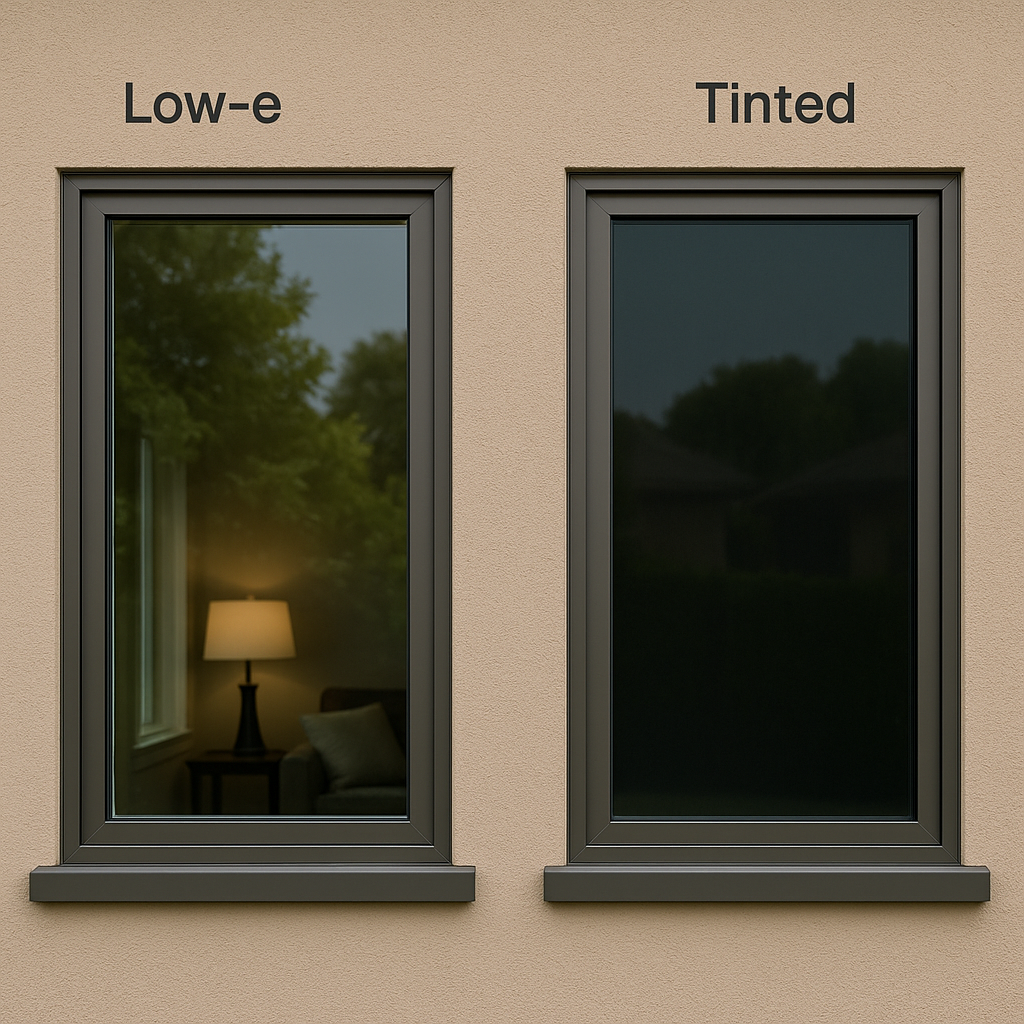
If you’re planning new windows, doors or a glass façade, you’ll quickly run into three common options: low emissivity glass, tinted glass, and reflective glass. At a glance they all look similar – just “glass with a bit of a tint” – but the way they’re made and how they perform are very different.
Understanding those differences is the key to choosing glazing that actually delivers comfort, energy savings and the look you want, instead of just “something darker”.
This guide explains what makes low emissivity glass different from tinted and reflective glass, how each type controls heat and light, and where each one works best in real buildings.
1. What Is Low Emissivity Glass?
Low emissivity glass (often shortened to Low-E) is a high-performance glazing that uses an almost invisible metal or metal-oxide coating to control heat transfer.
How it works
- The coating is microscopically thin, usually applied in the factory to one surface of the glass.
- It allows visible daylight to pass through much like clear glass.
- It reflects long-wave infrared energy (heat) back toward its source – either outside in summer, or inside in winter.
In practical terms:
- In winter, low emissivity glass reflects room heat back indoors, reducing heat loss through the glass.
- In summer, it helps reflect a significant portion of the sun’s radiant heat away, so rooms stay cooler.
Unlike darker tints or shiny reflective coatings, Low-E technology is about thermal control first, not changing the appearance of the glass.
If you’re still comparing it to basic glazing, it’s worth also reading
Is Low Emissivity Glass Superior to Standard Clear Glass?
2. What Is Tinted Glass?
Tinted glass is made by adding metal or mineral additives to the molten glass during production. The colour is built into the glass itself – it’s not a surface film – so it won’t peel or flake.
Common tints include:
- Grey
- Bronze
- Green
- Blue-grey
What tint actually does
- Reduces visible light entering the building.
- Absorbs a portion of solar energy, so less heat passes directly through.
- Gives glass a darker appearance that can help with privacy and aesthetics.
However, because tinted glass absorbs heat, the glass itself can become quite warm. Without additional coatings or insulated glass units (IGUs), that absorbed heat can still be re-radiated indoors.
Tint is therefore a simple, one-step way to reduce glare and some heat, but it doesn’t manage thermal performance as precisely as low emissivity glass.
3. What Is Reflective Glass?
Reflective glass is usually clear or tinted glass with a metallic reflective coating applied to one surface. This creates a mirror-like appearance when viewed from the brighter side.
How reflective glass behaves
- Reflects a portion of visible light and solar energy away from the façade.
- Strongly affects the external appearance, giving buildings that mirrored, high-rise look.
- Provides daytime privacy – people outside see reflections more than interiors.
However:
- At night, when the interior is brighter than the exterior, the privacy effect can reverse.
- Reflective coatings can increase external glare and light pollution if not carefully designed.
- Like tint, reflective glass is mainly about appearance and glare control, with thermal benefits as a side effect.
4. Low Emissivity Glass vs Tinted and Reflective: How They Handle Heat
Direction of heat flow
The key difference is how each type of glass deals with heat:
- Low emissivity glass
- Reflects infrared heat back toward its source.
- Greatly reduces radiant heat loss in winter and radiant heat gain in summer.
- Works best in double or triple-glazed IGUs where it can dramatically lower U-values and Solar Heat Gain Coefficients (SHGC).
- Tinted glass
- Absorbs solar energy; some is re-radiated outside, some inside.
- Glass temperature can rise significantly.
- Reduces heat and glare, but less efficiently per unit of daylight than Low-E.
- Reflective glass
- Reflects solar energy and visible light at the façade.
- Can reduce solar gain reasonably well, but also cuts daylight hard and alters building appearance.
In simple terms, low emissivity glass manages heat with a smart thermal coating, while tinted and reflective glass primarily manage visible light and appearance, with heat control as a secondary effect.
For hot-climate projects, how Low-E handles solar gain is explored in detail in
How Does Low Emissivity Glass Help Control Heat in Hot Climates?
5. Daylight, Glare and Views
Low emissivity glass
- Modern Low-E products are designed for high visible light transmittance (VLT).
- Views remain clear and neutral – often very similar to standard clear glass.
- Glare can be controlled using a combination of Low-E, orientation, shading and interior blinds rather than heavy tint.
Tinted glass
- Darker tints significantly reduce daylight, which can be good for glare but bad for natural lighting.
- Interior spaces can feel gloomy, especially on overcast days or in shaded orientations.
Reflective glass
- Can reduce both light and view clarity from the outside.
- From indoors, moderate reflectivity can be acceptable, but very reflective coatings may impact internal views and cause some internal reflections.
If your priority is bright interiors with efficient thermal control, low emissivity glass generally wins. Tinted and reflective options are better when glare reduction, privacy or a particular aesthetic is the top goal.
6. Privacy, Aesthetics and Architectural Expression
This is where tinted and reflective glass can sometimes be preferred—but Low-E can still play a role.
Low emissivity glass
- Usually has a subtle neutral appearance.
- Ideal when you want the building to look light, open and transparent.
- Can be combined with mild tints if a designer wants a specific colour tone while keeping high performance.
Tinted glass
- Offers strong visual character – bronze for warmth, grey for modern minimalism, etc.
- Provides passive privacy, especially with darker tints.
- Creates a more solid, “toned down” façade, which can suit residential streets or sunny façades.
Reflective glass
- Gives that distinctive mirrored, high-tech look.
- Can help large buildings visually blend with the sky or surroundings by reflecting them.
- Best for projects that want to make a bold architectural statement.
On complex developments, different glass types are often mixed. For example, a main façade may use low emissivity glass for performance, with tinted or reflective panels in selected areas for contrast.
How glazing ties into bigger urban and environmental strategies is part of the wider conversation about city design, including green infrastructure – touched on in
Define Landscape Solutions in Smart Cities
7. Comfort and Energy Bills: Why Low Emissivity Glass Usually Wins
When you look beyond appearance and focus on comfort and running cost, low emissivity glass almost always comes out ahead.
- Rooms with Low-E glazing have more stable temperatures from morning to night.
- You’re less likely to get “hot seats” near windows in summer and icy drafts in winter.
- HVAC systems don’t have to fight against large heat gains or losses, so energy use drops.
Tinted and reflective glass can reduce cooling needs in sunny climates, but:
- They don’t insulate as effectively in winter.
- They often require artificial lighting sooner due to reduced daylight.
- Their performance per square metre of glass is typically lower than a well-designed Low-E IGU.
That’s why in many modern designs, Low-E is used as the baseline performance glazing, and other glass types are added where specific aesthetics or privacy outcomes are needed.
8. Where Each Type Works Best
Best uses for low emissivity glass
- External windows and doors in almost any climate
- High-performance residential or commercial projects aiming for energy ratings
- Large glazed façades where comfort and efficiency matter
- Overhead applications (with the correct build-up), as discussed in
Does Low Emissivity Glass Work Best in Skylight Designs?
Best uses for tinted glass
- Rooms with persistent glare issues (e.g. strong afternoon sun)
- Spaces where daytime privacy and a darker, calmer feel are desired
- Projects where a specific exterior colour tone is a key part of the design
Best uses for reflective glass
- Landmark or corporate projects wanting a distinct mirrored aesthetic
- Situations where daytime privacy is crucial
- Large façades in very sunny climates, when carefully balanced with daylighting strategy
In many projects, the smartest solution is a hybrid approach: low emissivity glass as the performance workhorse, with selective use of tint or reflectivity to address specific design goals.
9. Making the Right Choice for Your Project
When deciding between low emissivity glass, tinted glass and reflective glass, ask:
- What is my primary goal?
- Energy efficiency and comfort → start with Low-E.
- Strong privacy or stylistic colour → add tint.
- Mirrored, iconic façade → consider reflective glass.
- What is the climate and orientation?
- Hot, sunny climate → solar-control Low-E is usually essential.
- Mixed climate → Low-E still helps year-round, possibly with selective tinting.
- How important is natural daylight?
- If you want bright interiors and views, avoid overly heavy tints or extremely reflective coatings, and prioritise Low-E.
- How does the glass interact with shading and landscape?
- Eaves, fins, external blinds and smart landscape design can all work alongside Low-E to fine-tune performance and comfort.
Conclusion: The Real Difference
So, what makes low emissivity glass different from tinted and reflective glass?
- Tinted and reflective glass primarily change how windows look and how much visible light they admit.
- Low emissivity glass fundamentally changes how glass behaves thermally, reflecting heat while keeping interiors bright and comfortable.
Tint and reflectivity absolutely have their place in design—but when comfort, energy efficiency and long-term performance are the priorities, low emissivity glass is the technology that truly upgrades a window from “just glass” to a smart thermal element of the building envelope.