
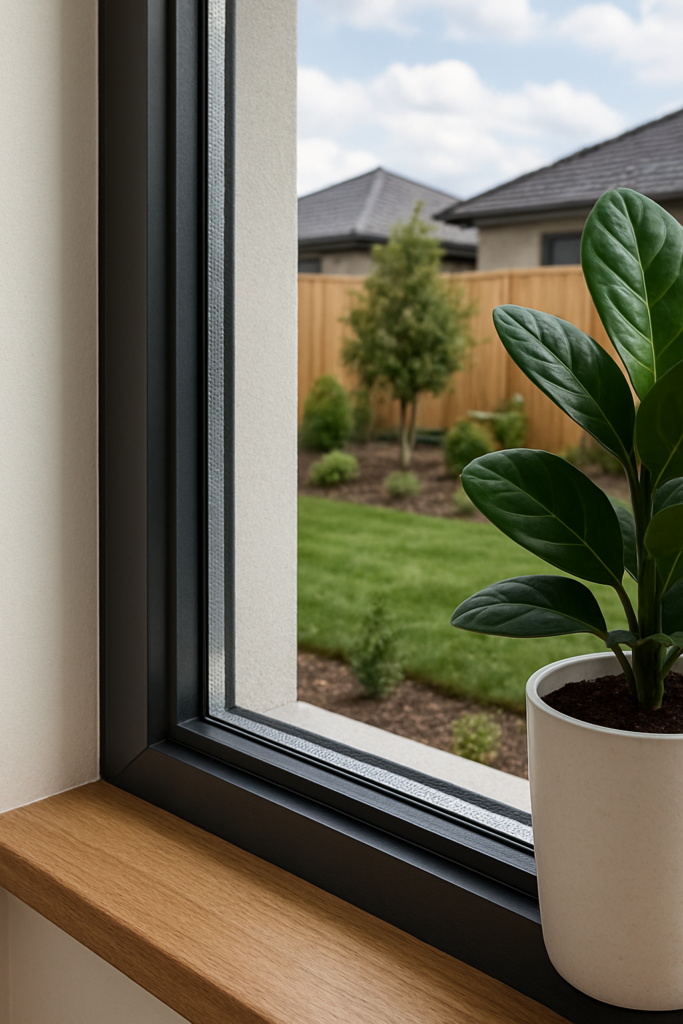
In the past, glass was basically a transparent barrier: keep the rain and insects out, let the light in, job done. Today, with energy costs rising and comfort expectations higher than ever, that’s not enough. Modern homes need windows that work with the climate, not against it. That’s exactly where low emissivity glass (often called low-E glass) has gone from “nice extra” to essential building material.
In this guide, we’ll break down why low emissivity glass matters so much right now, how it works, what types you can choose from, and what you can do to keep it performing at its best.
What Is Low Emissivity Glass, Really?
Think of low emissivity glass as a smart filter built into your windows.
Regular glass lets most light and heat pass through freely. Low-E glass, on the other hand, uses an ultra-thin, invisible metallic coating to control heat transfer without blocking the natural daylight you want.
Under the microscope, that coating is incredibly fine – many hundreds of times thinner than a human hair – but it completely changes how the window behaves.
- It reflects infrared (heat) energy instead of letting it flow straight through.
- It allows high levels of visible light, so rooms stay bright and inviting.
- It reduces UV transmission, helping to protect interiors from fading.
The result: your home feels more comfortable in both summer and winter, while using less energy to stay that way.
Why “Emissivity” Matters for Your Home
Every material has an emissivity rating – a measure of how effectively it emits (or radiates) heat.
- A high-emissivity surface (like a dark brick wall) absorbs and emits a lot of heat.
- A low-emissivity surface (like a polished metal) reflects more heat and emits less.
Low emissivity glass uses this principle to your advantage. The special coating creates a low-emissivity surface on the glass, so instead of acting like a warm brick radiating heat, your glass behaves more like a reflective shield:
- In summer, it helps reflect outdoor heat back outside and reduces solar heat gain.
- In winter, it reflects indoor heat back into the room instead of letting it escape through the glass.
This is why low-E windows are often described as having “built-in insulation for heat radiation” — they don’t replace traditional insulation, but they significantly boost the overall thermal performance of the building envelope.
The Three Light Wavelengths Your Windows Must Handle
To understand why low emissivity glass is so valuable, it helps to look at the three key types of light that hit your windows every day.
1. Ultraviolet (UV) Light – The Fader
- Wavelength: roughly 310–380 nanometres
- Invisible to the eye but very destructive over time
UV light is responsible for:
- Fading of flooring, curtains, furniture, artwork and fabrics
- Accelerated aging of materials
- Skin damage, even when you’re indoors near windows
Standard glass blocks some UV, but low-E coatings and specialized treatments can block up to 99% of harmful UV in the right configuration. That means your interior finishes look newer for longer, and your family gets an extra layer of protection.
2. Visible Light – The Mood Maker
- Wavelength: 380–780 nanometres
- This is the light you actually see
Natural light is essential for:
- Mood and wellbeing
- Productivity and focus
- Reducing the need for artificial lighting
High-quality low emissivity glass is engineered to maximize visible light transmission while controlling heat and UV. You get bright, clear views — without the cave-like feeling that comes from heavily tinted or reflective glass.
3. Infrared (IR) Light – The Heat
- Wavelength: 780+ nanometres
- Experienced as heat rather than visible brightness
This is the energy that:
- Warms your home naturally on sunny winter days
- Can make rooms uncomfortably hot in summer
- Drives up cooling bills when poorly controlled
Low-E coatings are specifically tuned to handle infrared. They selectively reflect heat energy while still allowing visible light through — the core reason low emissivity glass has become a must-have in modern energy-efficient homes.
Types of Low Emissivity Glass: Hard Coat vs Soft Coat
Not all low emissivity glass is created equal. There are two primary low-E technologies in use today, each with its own strengths.
Hard Coat Low-E Glass (Traditional Technology)
- The coating is applied during the glass manufacturing process at high temperature.
- The coating fuses to the glass surface, creating a durable “hard” layer.
- Often used in single glazing or basic double glazing.
Pros:
- Tough and resistant to handling
- Can be exposed to the atmosphere
Cons:
- Performance is generally lower than modern soft-coat low-E
- Metallic content can slowly oxidise, sometimes leading to a slightly hazy or tinted appearance
- Often reduces visible light more noticeably
Hard coat low-E is still used in some applications, but for high-performance residential windows, it’s largely being overtaken by the next generation.
Soft Coat Low-E Glass (Modern High-Performance Technology)
- The coating is applied in a vacuum chamber (sputter-coated) after the glass is manufactured.
- It’s placed inside a sealed double- or triple-glazed unit, so it’s never exposed to the air.
- Delivers excellent thermal performance with very high clarity.
Pros:
- Superior U-values and solar control options
- Extremely clear — it doesn’t noticeably tint or darken the glass
- Protected between panes, so no oxidation
Cons:
- Must be used inside an insulated glazing unit (IGU)
- Requires careful handling during manufacturing
Within soft-coat technology, you’ll also find different solar control profiles:
- High Solar Heat Gain Low-E: ideal for cold climates where winter sun is valuable.
- Low Solar Heat Gain Low-E: perfect for hot climates where reducing overheating is the priority.
Choosing the right version for your climate is crucial to getting the full benefit of your low emissivity glass.
How Low Emissivity Glass Performance Is Measured
When comparing window options, you’ll come across three key performance metrics. Understanding these helps you see why low-E glass is so important.
U-Value – Insulation Performance
The U-value describes how easily heat passes through the glass and frame assembly.
- Lower U-value = better insulation
- A high-performance low-E glazed unit will typically have a significantly lower U-value than standard clear double glazing.
For homeowners, this translates to less heat loss in winter, less heat gain in summer, and quieter, more stable indoor temperatures.
Solar Heat Gain Coefficient (SHGC) – Solar Control
SHGC measures how much solar radiation (heat from the sun) passes through the window, including both directly transmitted and absorbed/re-radiated heat.
- Lower SHGC = less solar heat entering the home
- In hot climates or on west-facing facades, a lower SHGC is usually preferable.
- In cold climates, a moderate SHGC can help harness winter sun for passive heating.
Modern low-E glass solutions allow you to tune SHGC to your climate and orientation.
Visible Light Transmission (VLT) – Daylight Quality
VLT is the percentage of visible light that passes through the window.
- Higher VLT = brighter interiors
- Well-designed low-E glass offers high VLT with improved thermal control, so you get the best of both worlds: clear views and efficient performance.
The low-E units used in premium systems (like high-performance IGUs) are engineered to maintain a balanced combination of low U-value, optimized SHGC, and high VLT — exactly what you want for modern homes.
Why Low Emissivity Glass Is Essential for Homes Today
So why has low emissivity glass become a “must-have” rather than a luxury? Several big trends converge here.
1. Rising Energy Costs and Bills
Heating and cooling can account for a large portion of household energy use. Poorly performing windows act as weak spots in the building envelope, leaking heat in winter and cooking rooms in summer.
Upgrading to modern low-E windows:
- Cuts heat loss through glass
- Reduces summer cooling loads
- Helps stabilise indoor temperatures
Over time, the energy savings can significantly offset the upfront cost, especially in climates with extreme hot or cold seasons.
2. Comfort Expectations Are Higher
People are less willing to tolerate:
- Cold drafts near windows
- “Hot zones” where the sun beats in
- Glare that forces blinds down all day
Low emissivity glass improves radiant comfort — the way your body feels heat from nearby surfaces. Sitting next to a low-E window on a winter evening feels far more comfortable than sitting beside old, single-pane glass, even at the same air temperature.
3. Protection of Furnishings and Finishes
Flooring, sofas, timber, artwork, and curtains all fade over time when exposed to UV light. Low-E glass with good UV control:
- Slows fading dramatically
- Extends the life of interior finishes
- Protects your investment in furnishings and design
4. Sustainability and Regulations
Building codes and homeowner expectations are increasingly focused on sustainability, carbon reduction, and better envelope performance. Low-E glass is a simple, proven way to:
- Reduce operational energy consumption
- Improve compliance with modern energy standards
- Support green building targets
When combined with well-designed insulation, efficient HVAC, and considered architecture, low-E glazing is a cornerstone of a truly energy-efficient home.
Getting the Most from Low Emissivity Glass: Care and Maintenance
Even though the coating is invisible, low emissivity glass is not “fit and forget”. Like any high-performance building component, it needs proper care and maintenance to keep performing over decades.
If you’re specifying, installing, or living with low-E windows, these resources are especially useful:
- When Does Glass Low E Fail If Not Well Maintained? – Understand the common causes of coating and unit failure, from moisture ingress to seal breakdown.
- Which Ways Ensure Glass Low E Lasts After Fitting? – Practical steps that installers and homeowners can take to protect the performance of low-E units over time.
- Why Should Glass Low E Coatings Be Cleaned Safely? – Why the wrong cleaning methods or chemicals can damage coatings, and how to clean safely.
For homeowners, the big takeaways are:
- Follow the manufacturer’s cleaning guidelines carefully.
- Avoid abrasive tools and harsh chemicals.
- Ensure your window seals and frames are checked periodically so moisture doesn’t damage the IGU.
With sensible care, high-quality low-E glass can perform exceptionally well for many years.
Beyond the Glass: Integrating Windows into the Whole Home Design
Windows don’t exist in isolation. The way you design your façade, outdoor spaces, and garden will all influence how much heat and light enters your home.
For example, smart landscaping can:
- Provide seasonal shading
- Filter harsh western light
- Enhance natural cooling and privacy around glazed areas
If you’re planning a renovation or new build, it’s worth exploring broader design trends too, such as those discussed in Designers Define Landscape Trends in Modern Gardens. Thoughtful garden design, shading structures, and planting can complement low emissivity glass to create a home that feels comfortable, connected to the outdoors, and energy efficient all year round.
Is Low Emissivity Glass Worth It?
For most modern homes, the answer is a strong yes. Low emissivity glass is no longer an exotic technology — it’s a mature, proven solution that quietly:
- Lowers energy bills
- Improves year-round comfort
- Protects interiors from fading
- Supports a more sustainable, future-ready home
When you combine the right type of low-E coating with good window frames, professional installation, and smart maintenance, your windows stop being a weak point and start becoming a key part of your home’s performance strategy.
If you’re planning a renovation or building new, putting low emissivity glass high on your specification list is one of the simplest, most effective ways to make your home more comfortable and efficient — not just for today, but for many years to come.