
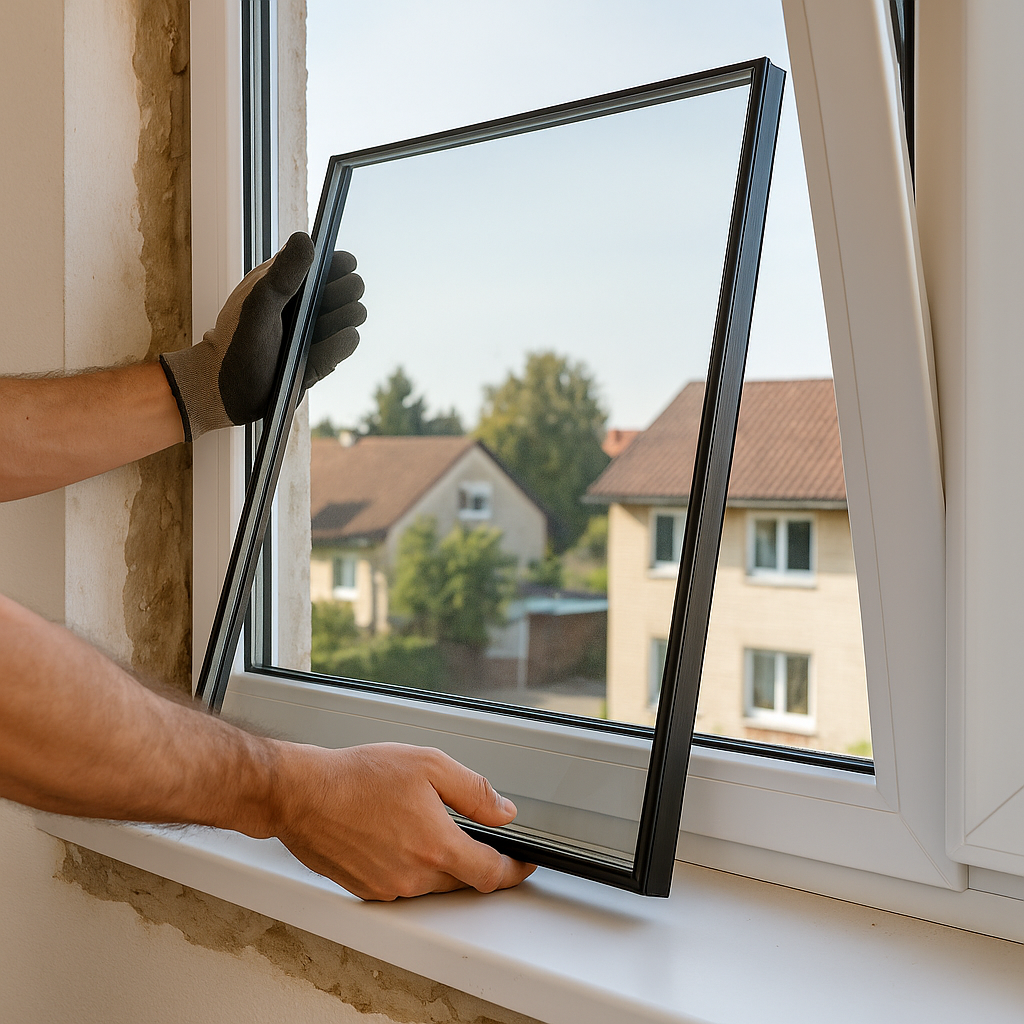
Low emissivity glass is only as good as its installation. You can specify the most advanced coated unit on the market, but if the pane is the wrong way around, poorly sealed, or dropped into a twisted frame, you’ll lose much of the performance you paid for—sometimes even voiding the warranty.
This guide walks through the key steps that ensure low emissivity glass is installed correctly in doors, windows, and facade systems, from pre-design decisions through post-installation checks.
1. Start at Design Stage, Not on Installation Day
Correct installation actually begins long before a contractor shows up on site.
1.1 Confirm the right low emissivity glass for the project
Different coatings are optimised for different conditions:
- Passive low-E – higher solar heat gain, ideal for colder climates where you want to keep winter sun.
- Solar-control low-E – lower solar heat gain, better for hot or mixed climates where overheating is a risk.
- Hard-coat vs soft-coat – hard coat is tougher and can be exposed on single glazing; soft coat gives better performance but must be sealed inside an IGU.
Your specification should document:
- Coating type (passive or solar-control)
- Manufacturing type (hard-coat or soft-coat)
- Intended coated surface number (e.g. surface #2 in a double-glazed unit)
- Target U-value, SHGC and visible light transmittance
For a deeper look at how to make those design-stage choices, link out from your installation guide to How to Specify Low Emissivity Glass in Architecture.
1.2 Make sure the frame is up to the job
Low emissivity glass often comes in heavier double- or triple-glazed units. Before ordering, confirm:
- Frame material and profile are rated for IGU thickness and weight
- Fixings and anchors suit the additional load
- Thermal breaks in aluminium systems align correctly with the IGU edge
If the frame flexes or twists, the unit can be put under stress, causing premature seal failure or cracking.
2. Handle and Store Low Emissivity Glass Correctly
Even before installation, mishandling can damage coatings or edge seals.
2.1 Keep units dry, upright and protected
- Store IGUs vertically on padded racks at a slight angle (about 5–7°).
- Keep them in a dry, ventilated area, off bare concrete that can hold moisture.
- Protect edges from impact; they are the most vulnerable part of an IGU.
2.2 Avoid scratching the low-E coating
With soft-coat products especially, the coating must never be exposed or rubbed.
- Don’t slide panes across each other. Lift, don’t drag.
- Use clean gloves and suction lifters instead of bare hands.
- Never use blades or abrasive pads on the coated surface.
If the coating gets scratched, that area will lose its low emissivity and may show as a visual defect.
3. Identify the Coated Surface Before Installation
One of the most common installation mistakes is installing low emissivity glass backwards, putting the coating on the wrong surface.
3.1 Use manufacturer markings and tools
Most IGUs come with:
- A corner label identifying which surface is coated
- A low-E detector or simple test pen available from the manufacturer
Always verify which surface is coated and compare to the drawings:
- For solar-control low-E in double glazing, the coating usually belongs on surface #2 (counting from the exterior).
- For passive low-E optimised for heating climates, it may be on surface #3.
Your site QA checklist should include “coated surface confirmed against specification” for every window line.
4. Prepare the Opening and Frame
Even perfect glass won’t perform well in a poorly prepared frame.
4.1 Check frame plumb, level and square
Before any glass goes in:
- Confirm frame diagonals match (no racking).
- Check sill level and head alignment.
- Correct twist or bow using packers and shims, not foam alone.
4.2 Clean glazing channels thoroughly
Dirt or debris in the channel can:
- Cut into the IGU edge seal
- Prevent setting blocks from supporting the unit evenly
- Create air gaps that compromise airtightness
Vacuum or brush out channels and wipe with a clean, lint-free cloth before setting blocks.
5. Set the Low Emissivity Glass Correctly in the Frame
The way the unit sits in the frame directly affects its lifespan and performance.
5.1 Use proper setting blocks and location blocks
- Setting blocks support the weight of the IGU at the sill. They must:
- Be compatible with the sealant and frame material
- Match manufacturer-recommended hardness and size
- Be placed at the correct locations (typically at the quarter points)
- Location blocks keep the unit centred and prevent lateral movement, especially in sliding or large facade systems.
Incorrect or missing blocks can stress the IGU and lead to edge seal failure.
5.2 Avoid metal-to-glass contact
All contact points should be via:
- EPDM or silicone-compatible rubber gaskets
- Non-reactive tapes or setting blocks
Direct contact with metal or incompatible plastics can damage coatings or cause sealant failure over time.
6. Seal and Glaze With Compatible Materials
The performance of low emissivity glass depends heavily on the quality of the perimeter seal.
6.1 Use tested sealant systems
Check that your:
- Structural silicone
- Weather sealant
- Glazing tapes and gaskets
are all certified as compatible with the IGU edge seal and frame finish. Incompatible sealants can leach chemicals that break down polysulfide, polyurethane or hot-melt butyl seals.
6.2 Apply even pressure, not over-tightening
With gasketed systems:
- Use a glazing bead or pressure plate to compress seals evenly around the perimeter.
- Avoid over-compression, which can bow the glass or squeeze out too much sealant.
On wet-glazed systems:
- Tool sealant to a smooth, continuous bead, with no voids or pinholes.
- Ensure sealant overlaps the edge of the glass and the frame face to maintain weather integrity.
7. Check Thermal and Optical Performance After Installation
Once the low emissivity glass is installed, a quick commissioning check can catch errors early.
7.1 Visual inspection
From both inside and outside:
- Look for racked units, uneven reveals or glass not centred in the frame.
- Check for visible damage to coatings, chips or cracks.
- View reflections to spot distortion that might suggest frame twist or uneven pressure.
7.2 Confirm coating orientation on site
Use a low-E detector, flame test or manufacturer’s tool to confirm the coating is on the specified surface. This is especially important when multiple glass types are used across a facade.
7.3 Thermal imaging (optional but powerful)
A simple thermal camera survey at night can reveal:
- Warm streaks at poorly sealed joints
- Cold bridges at mullions and transoms
- Panels that don’t match expected performance, suggesting a specification or installation error
These checks back up the comfort claims you make in marketing content like Why Does Low Emissivity Glass Improve Indoor Comfort?.
8. Plan for Acoustics, Colour and Reflection at the Same Time
Today, low emissivity glass rarely works alone. Many projects combine thermal, acoustic and aesthetic performance in a single IGU.
8.1 Integrate with acoustic interlayers
If you’re targeting quieter interiors as well as energy savings, you may specify:
- Laminated glass with PVB or acoustic interlayers
- Asymmetric pane thicknesses combined with low-E coatings
Installation tolerances are tighter for heavier acoustic units, and frame fixings must be verified for added weight. For more on the benefits and design considerations, link to How Low Emissivity Glass Improves Indoor Acoustics?.
8.2 Consider colour and reflectivity upfront
The choice of coating stack can subtly change:
- External reflection (how mirror-like the facade appears)
- Internal reflection at night
- Neutral, blue-green or bronze tones in transmitted light
These factors affect both planning approvals and occupant comfort. Your technical guide can cross-reference What Low Emissivity Glass Colors and Reflective Options Exist? so specifiers understand how their aesthetic choices impact installation (for example, needing specific sealant colours or frit bands).
8.3 Coordinate with urban and landscape design
In dense or “smart city” contexts, glare and reflectivity can impact neighbouring buildings, public realm and landscape features. Coordinating low-E glass choices with broader urban strategies—like those discussed in Define Landscape Solutions in Smart Cities—helps avoid issues such as reflected heat on planting or adjacent facades.
9. Educate Owners on Cleaning and Maintenance
Even the best installation will underperform if the glass is maintained incorrectly.
9.1 Cleaning guidelines
Provide clear instructions:
- Use soft cloths or squeegees with non-abrasive, pH-neutral cleaners.
- Avoid metal scrapers, scouring pads or strong solvents on the glass.
- Never attack “weld spatter” or construction debris with blades on coated surfaces.
9.2 Regular inspection schedule
Recommend that building managers:
- Inspect seals and gaskets annually for cracking, shrinkage or disbonding.
- Check for condensation between panes, which indicates IGU seal failure.
- Monitor for isolated hot or cold spots that suggest air leakage around frames.
Early intervention can often be limited to re-sealing, rather than wholesale glass replacement.
10. Summary: A Checklist for Correct Low Emissivity Glass Installation
To ensure low emissivity glass delivers its full energy-saving and comfort potential, every project team should:
- Specify correctly – choose the right coating type, surface location and performance values.
- Verify frames and structure – confirm they can support IGU weight and thickness.
- Store and handle carefully – protect edges and coatings from damage.
- Identify the coated surface – and confirm it matches the design intent.
- Prepare openings thoroughly – frames must be square, clean and properly shimmed.
- Use correct blocks and gaskets – avoid metal-to-glass contact and uneven loading.
- Seal with compatible products – and ensure continuous, well-tooled joints.
- Commission on site – visual checks, coating orientation and, where possible, thermal imaging.
- Integrate acoustics and aesthetics – coordinate with acoustic, colour and reflectivity goals.
- Educate for maintenance – so performance is preserved for decades.
Follow these steps and low emissivity glass stops being just a line in the specification—it becomes a reliable, high-performance envelope component that genuinely improves comfort, cuts operational carbon and supports more intelligent, climate-responsive architecture.