
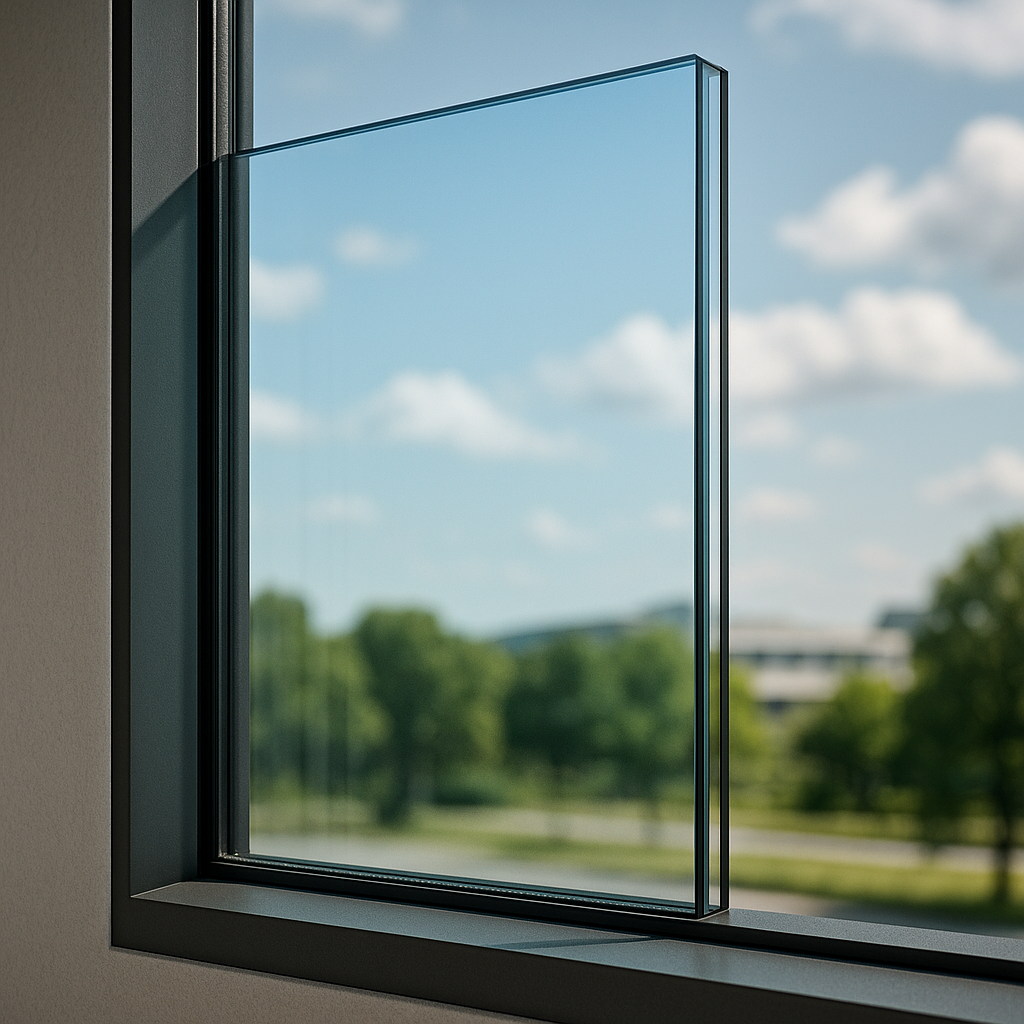
When you’re designing or upgrading a building in a hot climate, choosing the right low e glass types can make the difference between a cool, efficient interior and a space that constantly fights against the sun. Not all low-E glass is created equal, and not every type is optimized for warm or tropical regions.
In this guide, we’ll break down which factors make low e glass types perform better in hot areas, how they work, and what you should look for when specifying glazing for homes, offices, or commercial facades in high solar gain zones.
What Are Low E Glass Types – And Why Are They Critical in Hot Climates?
Low-E (low-emissivity) glass is standard clear or tinted glass with a microscopically thin coating applied to one of the internal surfaces of the glazing. This coating is engineered to:
- Reduce heat transfer (especially longwave infrared radiation / heat)
- Control how much solar energy enters the building
- Allow useful daylight in while limiting unwanted heat and glare
In hot climates, the priority is usually blocking excess solar heat while keeping interiors bright and visually comfortable. That’s where carefully selected low e glass types become a core part of the building’s thermal strategy, often working alongside insulation, shading devices, and efficient HVAC systems.
Key Performance Metrics That Define Better Low E Glass Types in Hot Areas
Before we dive into specific factors, it helps to understand the performance values you’ll see on low-E glass data sheets. These metrics are what really separate generic products from high-performance low e glass types optimized for hot areas:
- Solar Heat Gain Coefficient (SHGC) or g-value
Measures how much of the sun’s solar energy passes through the glass (directly and indirectly).- Lower SHGC = less unwanted solar heat gain
For hot climates, low SHGC is usually a top priority.
- Lower SHGC = less unwanted solar heat gain
- U-value
Indicates how easily heat passes through the glazing due to temperature difference (independent of the sun).- Lower U-value = better insulation
In hot regions, U-value still matters, especially for night-time heat retention and overall energy balance.
- Lower U-value = better insulation
- Visible Light Transmission (VLT)
How much daylight gets inside.- Too low, and spaces feel dim and may need more artificial lighting.
- Too high, and glare can become an issue.
- Spectral Selectivity / Light-to-Solar Gain (LSG)
Ratio of VLT to SHGC.- Higher LSG = more light with less heat
This is exactly what you want from high-performance low e glass types in hot areas.
- Higher LSG = more light with less heat
Factor 1: Solar Control – Prioritizing Low SHGC for Hot Regions
In warm and tropical climates, solar control is usually the main design goal. High sun exposure means more radiant energy hitting the glass all day. If your glass lets that energy in, interiors heat up quickly, forcing air conditioning systems to work harder.
High-performing low e glass types for hot climates typically:
- Have a low SHGC to limit solar heat gain
- Are engineered to reflect a large portion of solar energy away from the building
- Still allow comfortable levels of daylight for a pleasant indoor environment
For facades facing east, west or large skylights and roofs, choosing low-E glass with strong solar control can dramatically reduce cooling loads and energy bills.
If you want a deeper dive into how coating structure, silver layers, and glass makeup impact efficiency, this article is a good companion read:
👉 What Help Low E Glass Types Achieve Higher Efficiency?
Factor 2: Spectral Selectivity – Letting in Light Without the Heat
One of the most important strengths of modern low e glass types is spectral selectivity: the ability to treat different parts of the solar spectrum differently.
- Visible light: we generally want this for illumination and views.
- Infrared (near and longwave): we mostly don’t want this in hot climates because it’s perceived as heat.
The best-performing solar control low-E coatings for warm regions:
- Allow plenty of visible light to enter (good VLT)
- Block or reflect a significant part of the infrared energy
- Deliver a high LSG ratio – often >1.25 for “spectrally selective glazing”
This combination is what allows glass facades to look bright and open from the inside while still delivering serious cooling energy savings.
Factor 3: Low E Coating Type – Soft-Coat vs Hard-Coat
There are two main categories of low-E coatings, and the choice impacts performance in hot areas:
Hard-Coat (Pyrolytic) Low-E
- Applied during the float glass manufacturing process at high temperature
- Very durable and robust for processing
- Typically simpler structure and less flexible in terms of tuned performance
- Historically better suited to cooler climates or applications where durability is more critical than advanced solar control
Soft-Coat (Sputter) Low-E
- Applied offline in a magnetron sputter vacuum process
- Multilayered coatings, often including silver, metal oxides, and dielectric layers
- Can be precisely engineered to:
- Lower SHGC
- Improve LSG
- Reduce visible reflectivity
- Fine-tune color and aesthetics
For hot climates, soft-coat low e glass types are generally preferred where high solar control and superior spectral selectivity are needed. The use of multiple silver layers is particularly influential in achieving top-tier energy performance.
Factor 4: Coating Placement in the Insulating Glass Unit
In double or triple glazing, the low-E coating can be applied on different internal surfaces of the glass panes. These surfaces are typically numbered from outside to inside.
For a double-glazed unit:
- Surface #1 – Exterior face of the outer pane (exposed to outside air)
- Surface #2 – Inside face of the outer pane (facing cavity)
- Surface #3 – Inside face of the inner pane (facing cavity)
- Surface #4 – Interior face of the inner pane (exposed to interior air)
In hot climates, solar control low e glass types often perform best with the coating on surface #2, because:
- The coating reflects a large part of solar energy before it penetrates deeply into the IGU
- Less solar energy is absorbed by internal layers, which helps manage interior comfort and reduces cooling loads
Thermal insulation-focused low-E (for colder climates) is often placed on surface #3 to better reflect heat back inside. For hot regions, ask specifically for configurations that place the solar control low-E where it can block the sun most effectively.
Factor 5: Gas Fill, Spacer Technology, and Frame Design
Even the best low e glass types need the right supporting components to perform at their full potential.
Gas Fill (Argon or Krypton)
Inside the IGU, the cavity is often filled with argon gas:
- Argon has lower thermal conductivity than air
- Improves overall insulation and reduces conductive heat transfer
- Helps lower the U-value, which is still important in hot climates (especially for nighttime and shoulder seasons)
Warm-Edge Spacers
The spacer at the perimeter of the glass can:
- Reduce conductive heat transfer at the edge
- Minimize condensation risk
- Improve overall comfort near the window
High-Performance Frames
If the frame is highly conductive (e.g., bare aluminum without thermal breaks), it can become a thermal bridge and undermine the benefits of your low-E glass. For hot climates, pair low e glass types with:
- Thermally broken aluminum
- uPVC or composite frames
- Well-engineered sealants and gaskets
Together, glass, gas, spacer, and frame form a system. The better each component is matched to the climate, the higher the real-world performance.
Factor 6: Glass Color, Tint, and Aesthetic Choices
Hot-climate projects often use tinted or solar control glass. The choice of color and appearance is not just about looks – it directly affects performance.
Well-designed low e glass types for hot climates can:
- Feature subtle tints (blue, green, neutral grey, etc.) to reduce glare and manage solar gain
- Combine tint with a low-E coating to provide an extra layer of solar control
- Offer different exterior reflectivity options, from very neutral/low reflection to more mirror-like finishes that visually integrate the building with its surroundings
From a design perspective, it’s important to balance:
- Comfort (glare control, heat management)
- Transparency and views (especially in residential projects)
- Architectural expression (how the façade looks during the day and at night)
Factor 7: Correct Installation – Making Sure Performance Becomes Reality
Even the most advanced low e glass types will underperform if they are not fabricated and installed correctly. In hot climates where buildings heavily rely on glazing performance, poor installation can mean:
- Air leaks and infiltration
- Thermal bridges around frames and sills
- Condensation or seal failure in IGUs
- Reduced energy savings and occupant comfort
To ensure that low-E glass delivers its promised performance:
- Follow manufacturer guidelines for handling and edge protection
- Use experienced glaziers familiar with coated glass
- Ensure correct orientation of the coated surface (surface #2 vs #3 makes a big difference)
- Check sealants, spacers, and frame interfaces carefully
For a more detailed look at proper procedures, testing, and best practices, see:
👉 What Steps Ensure Low Emissivity Glass Is Installed Correctly?
Factor 8: Building Orientation, Shading, and Urban Context
The performance of low e glass types is also heavily influenced by how and where they’re used:
- Orientation:
- East and west façades experience low-angle sun and often need more aggressive solar control.
- South-facing (in the Northern Hemisphere) often benefits from well-tuned shading plus high-performance low-E.
- Shading Devices:
External shading (louvers, fins, canopies) can dramatically reduce direct sun exposure, allowing you to choose glass with slightly higher VLT and still maintain comfort. - Surrounding Environment:
Urban canyons, reflective neighboring buildings, and nearby vegetation all change how much solar energy hits the façade. In modern urban planning and smart cities, glass performance and landscape design are often considered together to create more comfortable microclimates around buildings.
If you’re interested in how outdoor design, green spaces, and smart planning work with glazing strategies, this is a useful conceptual read:
👉 Define Landscape Solutions in Smart Cities
Factor 9: Matching Low E Glass Types to High Solar Gain Homes
Not every project needs the most extreme solar control. Some homes and buildings in hot regions might still want controlled levels of passive solar gain in certain seasons or at specific times of day. This is especially true in locations with:
- Cooler nights
- Seasonal temperature swings
- Mixed-mode ventilation strategies
Choosing the right low e glass types means balancing:
- SHGC (how much sun you allow)
- U-value (how much general heat flows through)
- VLT (how bright interiors will feel)
- Aesthetics (tint, reflectivity, color)
High solar gain homes may need carefully tuned low-E options that:
- Maintain a moderate SHGC rather than the absolute lowest
- Provide strong glare control and UV protection
- Still support a comfortable sense of brightness inside
For more detail on pairing glass specifications with high solar gain strategies, see:
👉 Which Low E Glass Types Work Best for High Solar Gain Homes?
Putting It All Together: How to Choose Low E Glass Types for Hot Areas
When you’re selecting low e glass types for hot climates, keep these main points in mind:
- Prioritize Solar Control
Look for low SHGC values and high LSG ratios to block heat while keeping useful daylight. - Prefer Advanced Soft-Coat Low-E for High Performance
Multilayer sputter coatings, often with silver, offer better fine-tuning of energy and optical properties. - Check Coating Position in the IGU
For hot climates, solar control low-E on surface #2 is often ideal for reflecting heat before it enters the system. - Consider Gas Fill, Spacer, and Frame Together
Argon fill, warm-edge spacers, and thermally broken frames ensure the overall window system performs at a high level. - Balance Aesthetics With Performance
Tint, reflectivity, and color should support both visual comfort and architectural goals. - Don’t Ignore Orientation and Shading
The same low-E product can behave very differently on different façades; design shading and glass specification together. - Ensure Proper Fabrication and Installation
Even the best glass can’t overcome poor detailing; correct installation is essential for real-world efficiency.
By paying attention to these factors, you can choose low e glass types that truly perform in hot areas – reducing cooling loads, improving comfort, and enhancing the appearance of the building for years to come.