
Low-E glass is marketed as a small upgrade with big payoffs: lower bills, more comfort, less glare, and better protection for interiors. Those low e glass benefits are real – but they only show up if the glass and any associated films are installed correctly.
When the coating is on the wrong surface, the units aren’t sealed properly, or window film is badly applied and starts to peel, many of the promised advantages quietly disappear. In some cases, performance can even be worse than with standard glass.
This article breaks down which low e glass benefits fail when installation is poor, how to spot the warning signs, and what architects, contractors and homeowners should insist on to protect performance long-term.
Quick refresher: how Low-E glass delivers its benefits
Low-E (low emissivity) glass uses a microscopically thin, transparent metal or metal-oxide coating (often silver-based) to manage radiant heat:
- In winter: the coating reflects long-wave infrared heat from inside back into the room.
- In summer: it reflects a portion of solar infrared heat away, reducing overheating.
- All year: it blocks a large share of UV rays while still letting in visible daylight.
From that physics you get the familiar low e glass benefits:
- Lower heating and cooling demand
- More stable indoor temperatures near glazing
- UV protection for furnishings and finishes
- Reduced condensation on interior glass surfaces
- Better daylight with less harsh glare
But every one of these depends on:
- The coating being on the correct surface of the unit
- The IGU (insulated glass unit) being properly sealed and supported
- Any Low-E or solar films being correctly applied and maintained
If those steps are botched, the benefits unravel fast.
1. Energy efficiency: the first benefit to vanish
Wrong coating surface = wrong thermal behavior
In a double- or triple-glazed unit, the Low-E layer is intentionally placed on a specific “surface number” (#2, #3 or #4) depending on whether the design goal is:
- Maximise winter heat retention
- Minimise solar gain
- Or balance both
If the coating ends up on the wrong surface due to poor specification or factory error, the glass can:
- Trap heat when you want to reject it (overheating in warm climates)
- Let heat escape when you want to retain it (cold, draughty rooms in winter)
Result: the low e glass benefits for U-factor and Solar Heat Gain Coefficient (SHGC) are compromised, and HVAC loads increase instead of falling.
Failed edge seals destroy insulation
Another common installation failure is damage to spacers or seals during handling and setting the IGU into the frame. If the edge seal fails:
- Moisture penetrates the cavity
- Argon or krypton gas (if used) escapes
- Condensation or fog appears between panes
Once this happens, the insulating value of the unit collapses and heat loss or heat gain jumps back toward standard glass levels. At that point, whatever you paid for advanced Low-E performance is essentially wasted.
2. Indoor comfort: cold spots and hot zones return
One of the most noticeable low e glass benefits for occupants is improved comfort near windows:
- Warmer interior glass surfaces in winter
- Fewer cold downdraughts
- Less radiant chill when sitting next to large glazing
- Cooler, less “baked” feel next to sun-exposed glass in summer
Poor installation undermines all of this.
Misaligned frames and air leakage
Even if the IGU is technically correct, sloppy frame installation can leave:
- Gaps between frame and wall
- Poorly installed or missing weatherstripping
- Out-of-square or racked frames that never fully seal
Outcome:
- Cold or hot air leaks around the unit
- Localised draughts near the glazing
- Temperature bands you can literally feel as you walk past
People experience this as “these windows aren’t any better than the old ones,” even though the Low-E coating itself might be fine. The comfort benefit is lost because the overall system is leaky.
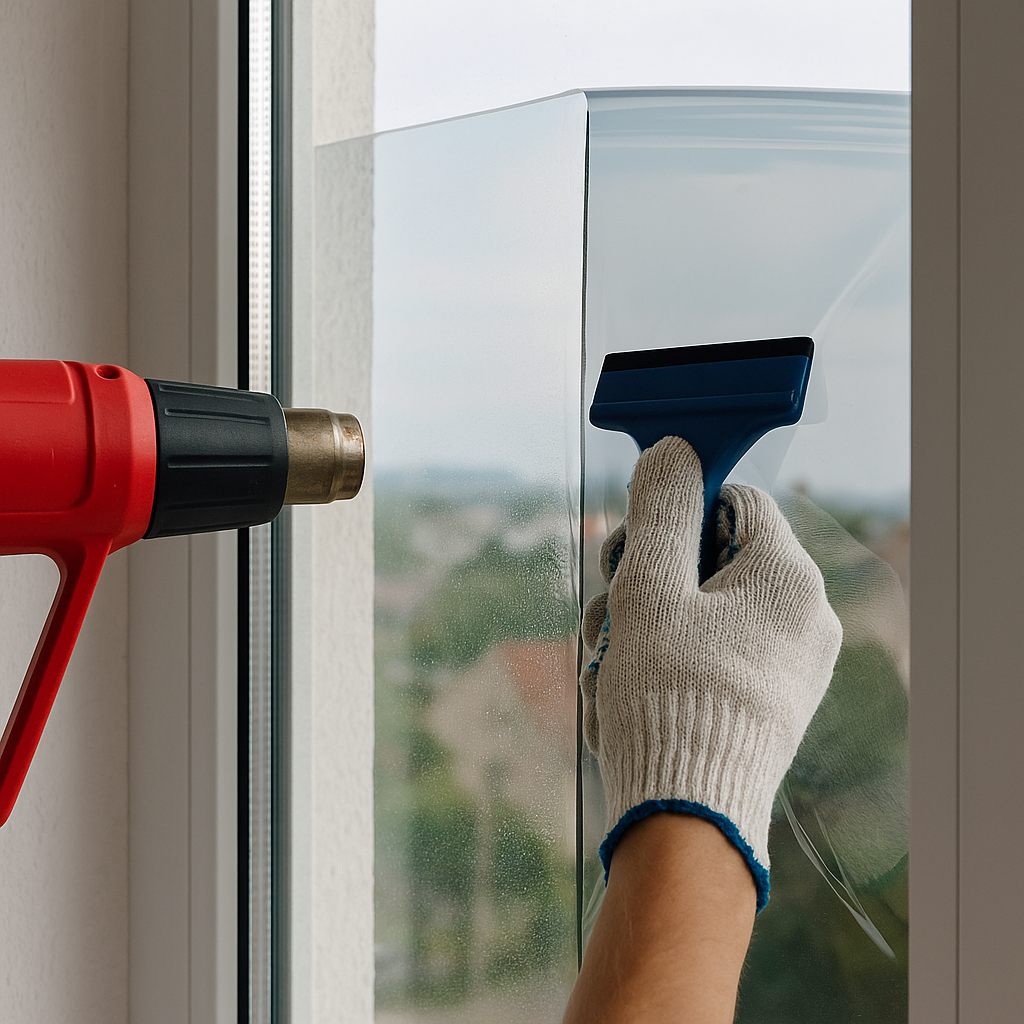
Film peeling and bubbling
Where Low-E performance is provided or enhanced by applied film (e.g. retrofits), bad prep or cheap adhesive can lead to:
- Edge lifting and peeling
- Bubbles and ripples
- Areas where the film no longer adheres to the glass
Where the film has lifted, heat and UV are no longer being reflected or filtered properly, so the comfort advantage becomes patchy or disappears entirely.
3. UV and fade protection: patchy or gone
A major selling point of Low-E glazing and films is UV protection for:
- Timber floors and furniture
- Artwork and textiles
- Hotel, retail and office interiors
But UV blocking relies on an intact, continuous coating or film layer.
Installation problems that break that continuity include:
- Scratches from razor blades, metal squeegees, or abrasive cleaners
- Overheating the film during application
- Contaminants (dust, plaster, adhesive residue) trapped under the film
These defects create “weak points” where:
- UV leaks through more easily
- The coating degrades faster, causing local discolouration
- Fade protection becomes inconsistent – some areas deteriorate noticeably faster than others
So while the spec might promise 70–99% UV reduction, poor installation means real-world performance can be far lower.
4. Glare control and clear views: ruined by bubbles and distortion
Low-E glass is often chosen because it can:
- Maintain high visible light transmission (good daylight)
- Reduce uncomfortable glare from low sun angles
- Avoid a dark, tinted look that some reflective or body-tinted glasses create
However, bad detailing and application can ruin this visual quality.
Bubbles, creases and optical distortion
Common installation errors with films and some coatings:
- Trapped air or dust causing visible bubbles
- Inadequate squeegeeing, leaving waves and ripples
- Stretching the film, creating long-term distortion
These defects:
- Scatter light, creating haze rather than clean daylight
- Reduce clarity of views to the outside
- Introduce “sparkle” or visual noise that is tiring for occupants
In spaces where visual performance really matters – studios, offices, showrooms – this means the perceived low e glass benefits are the exact opposite: more eye strain and dissatisfaction.
For a deeper design-led perspective on visual performance and facades, see how glazing strategies are discussed in Which Low E Glass Benefits Reduce Interior Glare? and Why Low E Glass Benefits Influence Architectural Models.
5. Moisture, condensation and mould: when “better” glass makes things worse
Correctly specified and installed Low-E units often reduce interior condensation by keeping inner glass surfaces warmer. But poor installation can flip that benefit.
When edge conditions are ignored
If:
- Frames have thermal bridges
- Insulation around the opening is missing or poorly packed
- Warm, moist interior air can track behind frame liners
…you’ll see:
- Condensation banding around the edges of the glass
- Black mould on seals and frame corners
- Damage to finishes and even structural elements over time
Building occupants don’t care that the centre-of-glass performance meets the datasheet – they see mould and damp and assume “these new Low-E windows don’t work.” In practice, the low e glass benefits have been undermined by poor junction detailing, not by the glass itself.
6. Acoustic and privacy benefits: weakened by bad assemblies
Although Low-E coatings are primarily about thermal and solar performance, modern IGUs often combine:
- Low-E
- Laminated panes
- Asymmetrical thicknesses
- Wider cavities
…to deliver better sound insulation and sometimes improved visual privacy.
When units are:
- Set in flimsy frames
- Poorly sealed at perimeters
- Installed into lightweight, under-insulated walls
…the acoustic path simply “goes around” the glass. Noise from traffic, aircraft or adjacent spaces still gets through, and the perceived benefit drops.
Architects weighing these trade-offs should look at the glass as part of a system – something explored further in What Low E Glass Benefits Should Architects Prioritize Most?.
7. Which specific Low E glass benefits fail first with poor installation?
Let’s map typical installation errors to the benefits they undermine:
| Installation issue | Primary failed benefits | Secondary impacts |
|---|---|---|
| Wrong coating surface (#2 vs #3/#4) | Heating/cooling efficiency, seasonal comfort | Glare, appearance |
| Damaged edge seal / IGU fogging | U-factor, SHGC, comfort near glass | Daylight quality, aesthetics, UV protection consistency |
| Film peeling and bubbling | UV blocking, solar control, glare control | Visual quality, occupant trust |
| Gaps and poor perimeter sealing | Draught comfort, actual energy savings | Condensation risk at reveals |
| Scratched coating or film | UV protection, solar performance | Patchy fading, visible defects |
| Poor frame thermal detailing | Condensation control, comfort | Mould risk, durability |
In other words, almost every headline Low-E benefit is vulnerable to bad workmanship:
- Energy savings
- Comfort
- UV protection
- Daylight quality
- Condensation management
That’s why installation guidance and quality control matter just as much as the specification.
8. How to protect Low E performance: best-practice checklist
To make sure you actually get the low e glass benefits you’re paying for, focus on three stages: design, installation, and aftercare.
1) Design & specification
- Confirm coating type and surface location based on climate and orientation.
- Co-ordinate frame U-values and wall junctions so the opening performs as a system.
- Check manufacturer compatibility if adding aftermarket films to factory Low-E.
- Use guidance such as Why Low E Glass Benefits Depend on Correct Installation to align design intent with site reality.
2) Installation quality
- Use trained installers certified by the glass or film manufacturer.
- Inspect units on arrival for edge damage, scratches, or fogging.
- Protect coatings and films from blades, grinders, plaster splatter and harsh chemicals.
- Ensure:
- Correct packers and setting blocks
- Continuous perimeter air and vapour seals
- Proper edge clearances and drainage paths
- For films, insist on:
- Clean, dust-free working conditions
- Correct application solutions and squeegees
- Proper edge sealing where required
3) Maintenance and inspection
- Provide clear cleaning and maintenance instructions to end users.
- Prohibit ammonia-based cleaners or abrasives that damage films and coatings.
- Schedule periodic inspections for:
- Edge seal failure and fogging
- Peeling or bubbling films
- Condensation patterns or mould growth
Early intervention is far cheaper than full replacement and keeps performance close to the design intent.
9. Connecting glass performance with wider design goals
Finally, it helps to remember that low e glass benefits don’t exist in a vacuum. They can support broader sustainable and aesthetic goals:
- Daylight-rich interiors with controlled glare – explored in Which Low E Glass Benefits Enhance Daylight-Driven Designs
- Calm, minimal facades and slim profiles – see Where Low E Glass Benefits Support Minimalist Window Designs
- Coherent exterior and landscape design strategies that tie architecture to its site – for broader context, Define Landscape Architecture for Modern Design Work
But those ambitions only become reality when the glass is specified correctly, installed carefully and maintained intelligently.
Takeaway
Low-E technology is not the problem when buildings underperform – bad detailing and poor installation are. When coatings are mis-located, seals fail, or films peel, the core low e glass benefits rapidly erode:
- Energy savings shrink
- Comfort suffers
- UV and glare control become inconsistent
- Condensation and visual defects appear
Treat Low-E glazing as a high-performance system rather than a commodity, and insist on quality at every step. Do that, and the promised benefits don’t just look good on a datasheet – they show up in real comfort, real savings, and real design value for decades.