
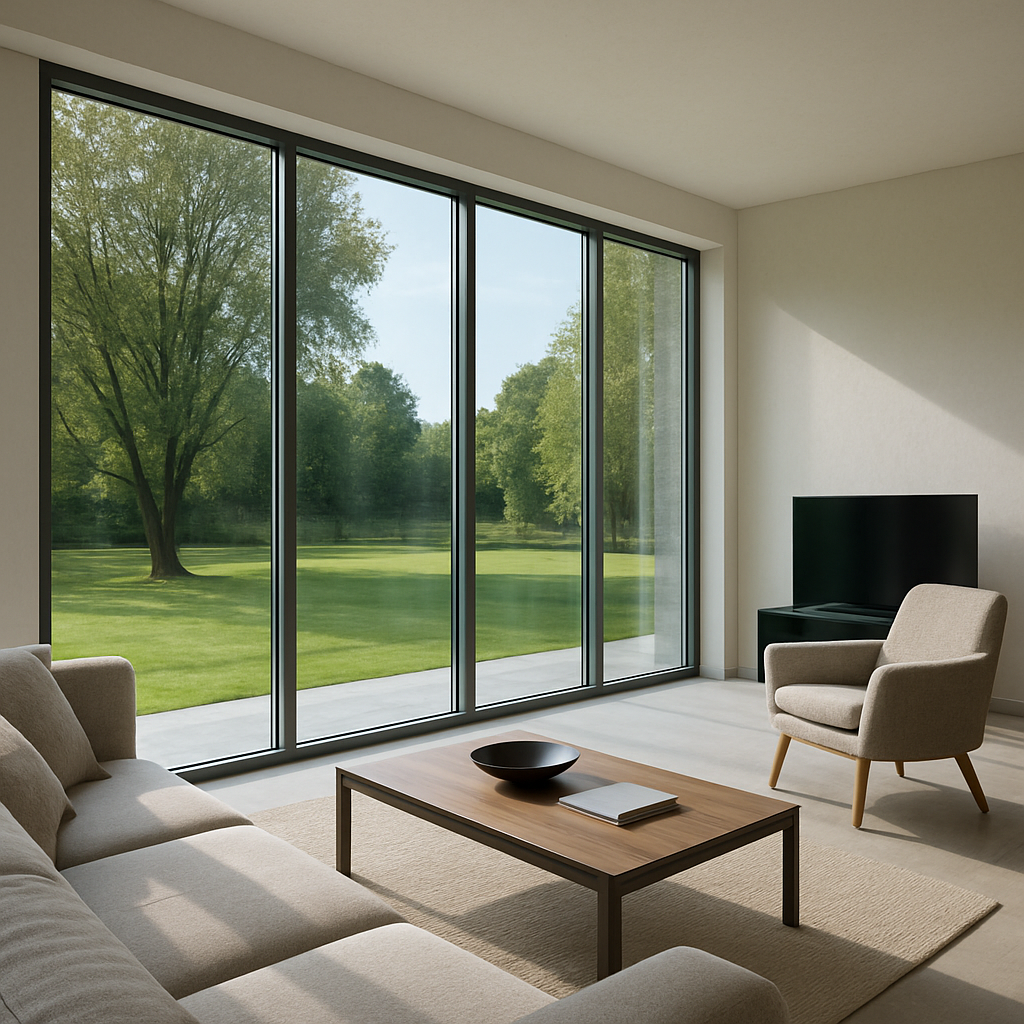
Designers, homeowners, and hoteliers all want the same thing from modern glazing: bright interiors without harsh glare. That balance is hard to achieve with ordinary clear glass, especially when you add large windows, open-plan layouts, and lots of reflective surfaces.
This is exactly where low e glass benefits become a powerful design tool. Low-emissivity coatings don’t just improve energy performance—they also help shape how light behaves inside a space, reducing glare while keeping interiors naturally bright.
In this article, we’ll look at which low E glass benefits support low-glare interior designs, how they work in practice, and what to consider when specifying glass for homes, offices, and hospitality projects.
Understanding Glare in Modern Interiors
Before diving into the glazing, it’s worth clarifying what makes glare such a problem:
- Direct glare – sunlight shining straight into eyes or across a screen.
- Reflected glare – light bouncing off glossy floors, worktops, TVs, laptops, and white walls.
- High contrast – a very bright window next to a relatively dark interior, which strains vision even if the absolute light level is acceptable.
Minimalist and daylight-driven interiors often make these issues worse: big windows, pale finishes, and shiny surfaces amplify reflections. So the goal isn’t just “more daylight” but controlled daylight—and that’s where low e glass benefits really matter.
For a broader look at daylight strategies with Low-E, you can explore
👉 Which Low E Glass Benefits Enhance Daylight-Driven Designs.
Key Low E Glass Benefits That Reduce Glare
1. Controlling Solar Heat Gain Without Heavy Tinting
Traditional glare control often meant dark tints or reflective mirror glass. Those reduce brightness and can make interiors feel gloomy.
With modern Low-E coatings, you can:
- Maintain high visible light transmittance (VT) so rooms stay bright.
- Fine-tune the Solar Heat Gain Coefficient (SHGC) or g-value to limit intense sun patches that lead to contrast and eye strain.
By cutting the “punch” of direct solar energy while still admitting plenty of light, Low-E glass reduces the high-contrast hotspots that trigger discomfort, especially in living rooms, open-plan offices, and classrooms.
2. Smoother Light Levels Across the Interior
Another important low e glass benefit is the way it supports more stable indoor temperatures and surface conditions. When glass surfaces don’t become extreme hot spots, you’re less likely to see:
- Bright, overexposed zones near the window
- People clustering away from glazed areas
- Blinds staying permanently shut “because it’s too intense there”
By moderating solar gain and reducing cold downdrafts in winter, Low-E helps keep window-adjacent zones usable and visually comfortable, which is crucial in low-glare interior strategies.
3. Supporting Neutral Color and True Material Rendering
Harsh glare doesn’t just affect comfort—it also washes out colors and textures. Many designers want:
- Natural wood tones to read correctly
- Artwork, fabrics, and finishes to look consistent throughout the day
- Minimal color cast from the glazing itself
Modern Low-E products can be engineered with neutral color profiles, so they don’t introduce an obvious green or bronze tint. You still get:
- High clarity
- Accurate color rendering
- Reduced light intensity where it matters
This neutrality is especially important in projects that already rely on subtle palettes and clean lines. For more on the aesthetic side of performance glass, see
👉 Why Low E Glass Benefits Matter in Neutral Glass Designs.
4. Reducing Reflected Glare From Interior Surfaces
While Low-E coatings are mostly discussed in terms of energy ratings (U-factor, SHGC, emissivity), they also influence reflectance:
- Exterior reflectance affects how bright the glass appears from the street.
- Interior reflectance influences how much light bounces off the glass back into the room.
Choosing Low-E products with balanced reflectance helps avoid harsh mirror-like reflections inside—particularly in spaces with glossy floors, polished stone, or large TV/monitor arrays. The result is a softer, more diffused light environment that still feels crisp and daylight-rich.
Low E Glass Benefits in Different Low-Glare Design Scenarios
1. Home Offices and Media Rooms
Home offices, gaming rooms, and TV rooms are especially sensitive to glare because of screens. Here, Low-E glazing helps by:
- Lowering solar gain so you don’t need blackout blinds all afternoon.
- Maintaining good VT so you can work in natural light instead of relying on artificial lighting.
- Reducing reflections on monitors when combined with thoughtful orientation and matte interior finishes.
By pairing performance glass with strategic furniture placement, you can keep screens readable without sacrificing the window’s role in the design.
2. Open-Plan Living and Kitchen Spaces
In open-plan homes with large sliding doors or window walls, glare often shows up:
- On polished countertops
- Across dining tables
- On TV screens in the living area
Using appropriately tuned Low-E glass:
- Softens bright patches on floors and worktops
- Keeps light “broad and even” rather than in a few overpowering beams
- Lets occupants enjoy the view without needing sunglasses inside
When combined with layered lighting and occasional blinds, the space stays bright but comfortable through more hours of the day.
3. Minimalist Window Designs With Clean Lines
Minimalist buildings favor:
- Slim frames
- Large, uninterrupted panes
- Very little internal shading or fuss
That aesthetic can easily produce glare if the glazing isn’t carefully chosen. Low-E glass supports these interiors by:
- Delivering high performance without heavy tints or bulky shading systems
- Keeping perimeter zones comfortable, so furniture can sit closer to windows
- Preserving the clean, uninterrupted look even as it quietly manages solar gain
If your project leans into this style, it’s worth reading
👉 Where Low E Glass Benefits Support Minimalist Window Designs.
4. Commercial and Educational Spaces
In offices, libraries, and classrooms, glare directly affects productivity:
- Too much contrast makes reading and screen work tiring.
- People lower blinds and switch on lights, undermining the daylighting strategy.
Low-E glazing with the right balance of VT and SHGC helps maintain:
- Comfortable daylight levels near workstations
- Reduced hotspots on desks and boards
- A more consistent visual environment throughout the day
Paired with task lighting and adaptive shading, it forms a key part of low-glare, high-performance interior concepts.
How Low-E Works With Landscape and Exterior Design
Glare isn’t just created by the glass—it’s influenced by what’s outside as well:
- Light-colored paving can bounce sunlight up into windows.
- Water features create shimmering reflections.
- Bare courtyards intensify brightness in front of glazed facades.
Good landscape architecture works hand-in-hand with Low-E glazing to control glare:
- Trees and planting provide dappled shade and softer reflections.
- Darker, matte paving reduces upward glare into lower windows.
- Thoughtful placement of seating and pathways respects sun angles and reflection paths.
If you’re treating a project holistically, it’s worth exploring the bigger design picture in
👉 Define Landscape Architecture for Modern Design Work.
Practical Specification Tips for Low-Glare, Low-E Designs
To make sure you actually get the low e glass benefits you’re aiming for, consider the following when specifying:
1. Look Beyond the “Low-E” Label
Not all Low-E products behave the same. Always check:
- U-factor – lower is better for insulation.
- SHGC / g-value – indicates how much solar heat enters.
- Visible Transmittance (VT) – aim for enough daylight without over-brightening.
- Reflectance and color – ask for sample data and full-size mockups.
Balancing VT and SHGC is especially important in low-glare projects: too much VT with high SHGC can still cause glare; too low VT darkens the space.
2. Match Glass to Climate and Orientation
- In hot climates, prioritize lower SHGC to cut peak sun intensity.
- In cold or mixed climates, use coatings that provide insulation while still managing summer peaks.
- Consider using different Low-E specs on different ades if your project allows.
3. Coordinate With Shading and Interior Finishes
Low-E glass is a major piece of the puzzle, but not the only one. Combine it with:
- External shading (overhangs, fins, screens) on the most exposed facades.
- Interior surfaces with matte or low-sheen finishes to reduce secondary reflections.
- Flexible blinds or shades in sensitive zones (media rooms, high-screen-density offices).
4. Ensure Correct Installation
Finally, even the best glass won’t perform if it’s installed incorrectly. Pay attention to:
- Coating orientation (which surface in the IGU the Low-E layer sits on)
- Edge quality and frame compatibility
- Avoiding damage to sealed units during handling and fit-out
Installation quality is critical to delivering the modeled performance—and to avoiding visual issues like fogging or uneven reflection.
Conclusion: Low-Glare Comfort Powered by Low-E Technology
Glare is one of the biggest real-world threats to daylight-driven, visually open design. When interiors look great on paper but feel harsh in reality, people reach for blinds, dim the natural light, and defeat the whole strategy.
By understanding and leveraging low e glass benefits, you can:
- Maintain bright, daylit interiors with fewer hotspots and less eye strain.
- Support neutral, minimalist aesthetics without resorting to heavy tints.
- Protect finishes and improve comfort right at the window wall.
- Coordinate glazing, facade, and landscape design into a single, coherent low-glare concept.
Used thoughtfully, Low-E glass becomes not just an energy upgrade, but a central tool for crafting beautiful, comfortable, and glare-controlled spaces that truly work for the people inside them.