
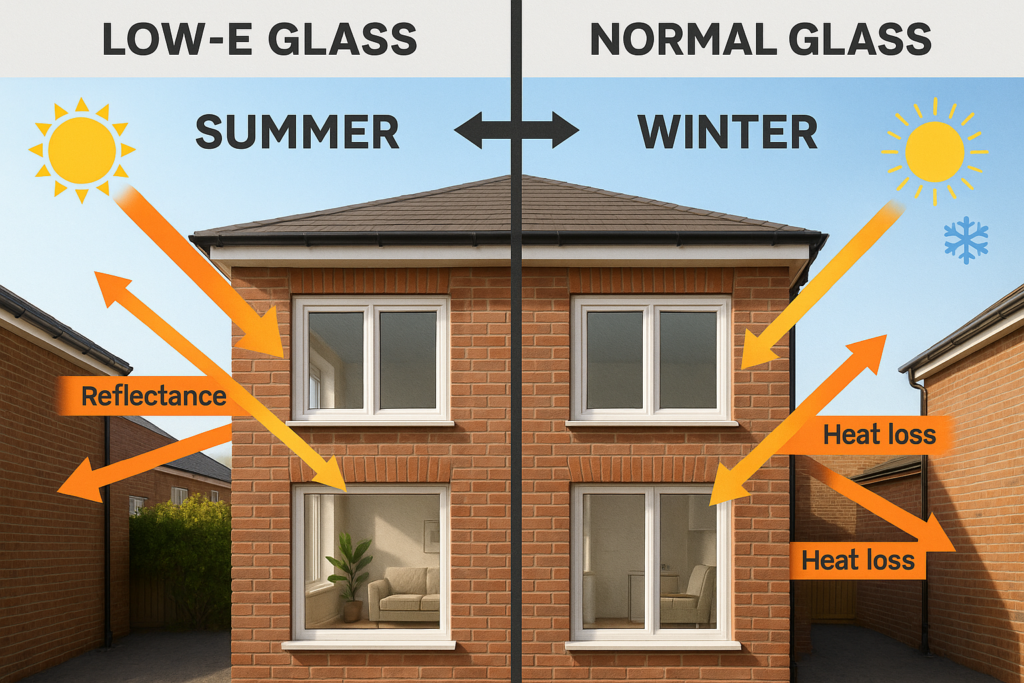
Energy efficiency has become a priority for modern homeowners and commercial property owners alike. Windows and doors—often overlooked in energy planning—can account for significant heating and cooling losses. This is where glass low E comes in. By incorporating a microscopic, transparent coating that reduces emissivity, Low-E glass offers powerful insulation while maintaining natural light indoors. In this article, we’ll explore how glass Low E works, the science behind its performance, and the practical ways it helps cut heating and cooling costs year-round.
What Is Glass Low E?
“Low-E” stands for Low Emissivity. Emissivity refers to how much heat or energy a material emits compared to how much it absorbs. Standard clear glass has an emissivity rating of around 0.9, meaning it lets 90% of heat escape and reflects only 10%. By contrast, Low-E glass contains a microscopically thin metallic coating—often silver—that reduces emissivity dramatically.
The coating reflects indoor heat back inside during winter while blocking excess solar heat from entering during summer. The result is year-round comfort with less reliance on HVAC systems.
How Glass Low E Reduces Heating Costs
1. Reflecting Heat Back Indoors
In colder climates, heat generated from radiators, furnaces, or space heaters often escapes through conventional glass. Low-E glass reflects this infrared heat back into the home, reducing the need for constant heating.
- Impact: A double-glazed IGU with Low-E coating and argon gas can achieve U-values as low as 0.9, translating into measurable heating bill reductions.
- Example: Families in Northern Europe or Canada report warmer interiors without having to crank up thermostats.
2. Reducing Drafts and Cold Spots
By stabilizing the indoor glass surface temperature, Low-E glazing minimizes the cold drafts that typically occur near windows. This makes living areas more comfortable without extra heating.
How Glass Low E Cuts Cooling Costs
1. Limiting Solar Heat Gain
During hot summer months, Low-E glass reflects the sun’s infrared rays before they enter your home. This reduces solar gain, meaning air conditioners work less to maintain a comfortable temperature.
- Solar Gain Coefficient: Low-E coatings can bring the SHGC down to 0.14, meaning 86% of solar thermal radiation is blocked.
- Outcome: Indoor temperatures remain steady even when outside conditions soar.
2. Controlling Humidity and Condensation
Traditional glass often builds up condensation in summer, which can increase indoor humidity and strain cooling systems. Low-E coatings reduce condensation by maintaining warmer surface temperatures, leading to improved cooling efficiency.
Secondary Benefits That Support Cooling and Heating Efficiency
UV Protection
Low-E glass blocks nearly 100% of harmful UV radiation. This prevents fading of carpets, furniture, and artwork while keeping interior heat levels consistent.
Noise Reduction
When used as part of an insulating glazing unit (IGU), Low-E glass also dampens external noise, creating a quieter indoor environment while improving insulation.
Durability
Because Low-E coatings are applied on internal glass surfaces in sealed IGUs, they are resistant to scratching and last for decades, ensuring energy efficiency over the long term.
Practical Applications of Glass Low E
To install or replace windows with Low-E glazing, proper material handling tools are essential.
- For transporting large glazed units safely, an Transport Frame provides secure handling during delivery and installation.
- For lifting heavy glass panels into place, the Slab Lifter ensures stability and safety on job sites.
These tools not only improve efficiency but also reduce workplace accidents during glazing projects.
Cost Considerations: Short-Term vs. Long-Term Savings
While Low-E glass can cost more upfront than standard glazing, its return on investment is significant:
- Reduced heating bills in winter.
- Lower air conditioning expenses in summer.
- Longer lifespan of furnishings and flooring due to UV protection.
Factoring in energy savings, Low-E windows often pay for themselves within 5–7 years, especially in climates with temperature extremes.
Related Insights on Low-E and IGUs
If you’re researching more about Low-E coatings and their integration into IGUs, these resources provide further guidance:
- What Benefits Can Glass Low-E Bring to Home Comfort?
- When Does Glass Low E Reduce UV and Fading Damage?
- Why Does Glass Low E Improve Energy Efficiency Most?
For sustainability enthusiasts, even exterior choices matter. Learn how landscapes contribute to energy efficiency in BrightView Landscape | Smart Gardening & Waste Reduction.
Conclusion
So, which ways does glass Low E cut cooling and heating? By reflecting interior heat back into the home during winter, reducing solar gain in summer, blocking harmful UV rays, and minimizing condensation, Low-E glazing provides a comprehensive energy-saving solution.
Though the initial investment is higher than standard glazing, the long-term comfort, savings, and protection it provides make glass low E one of the most valuable upgrades for modern buildings. With the right installation tools and proper planning, Low-E glass transforms homes into energy-efficient, comfortable, and sustainable spaces.