
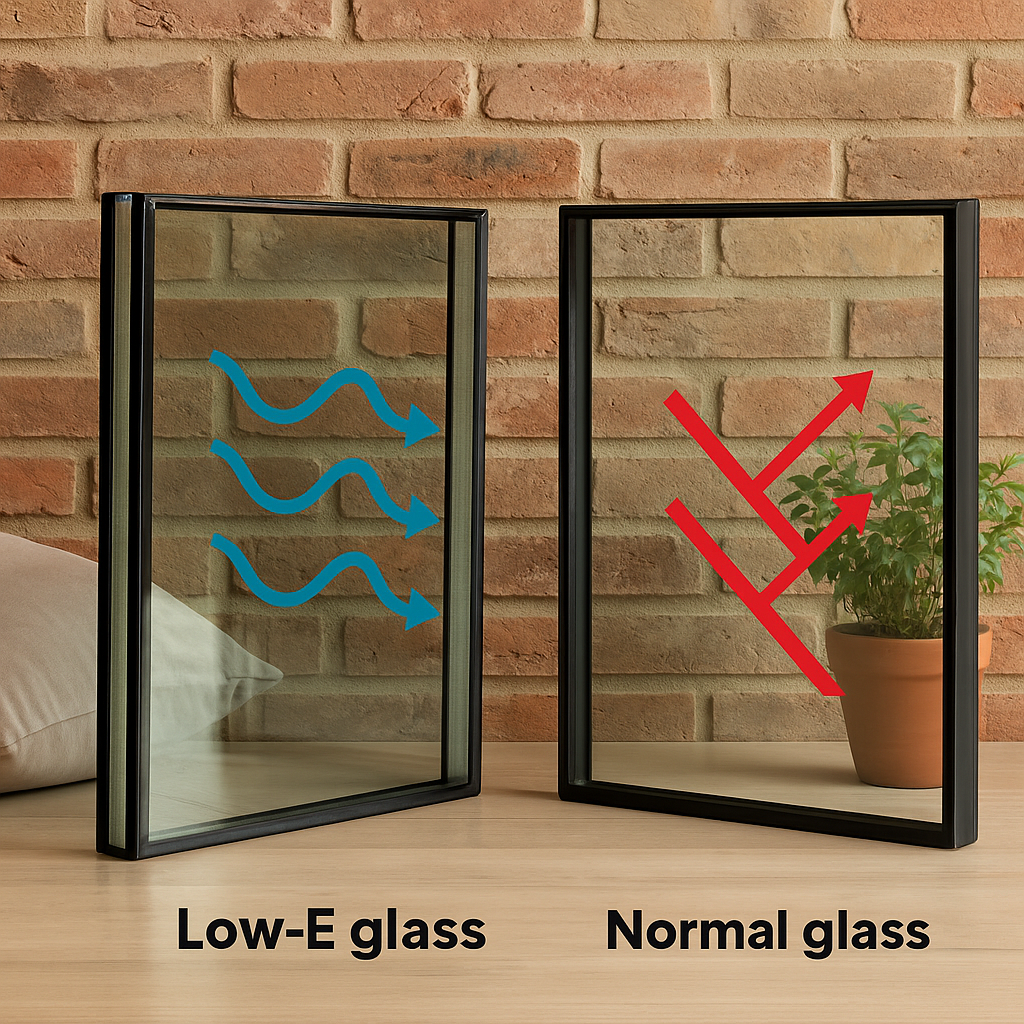
When evaluating modern glazing solutions, glass low E (low-emissivity glass) stands out as one of the most powerful technologies for improving a building’s energy performance. Windows and doors are responsible for up to 30–50% of household energy loss, with glass alone accounting for as much as 90% of that leakage. Low-E glass was developed to combat this inefficiency by adding a nearly invisible coating that optimizes how heat, light, and UV radiation pass through glass.
In this article, we’ll break down how glass low E works, why it improves energy efficiency more than standard glazing, and the added benefits it brings. We’ll also discuss its pros, potential drawbacks, and how to determine if it’s the right investment for your home or business.
What Is Glass Low-E?
The “E” in low-E stands for emissivity, a measure of how much energy a material emits. Standard clear glass has a high emissivity rating of around 0.9, meaning it allows 90% of thermal energy to pass through. Low-E glass, by contrast, uses a microscopically thin metallic coating (often silver or aluminum oxide) that dramatically lowers emissivity.
- Hard-Coat Low-E: Applied during the glass manufacturing process, making it durable and scratch-resistant.
- Soft-Coat Low-E: Applied in a vacuum chamber after production, sealed inside an IGU (insulating glazing unit). This type achieves the lowest emissivity ratings and provides the best energy efficiency.
By reflecting infrared radiation while still allowing visible light to pass, glass low E effectively keeps heat inside during winter and reflects solar heat away during summer.
How Glass Low-E Improves Energy Efficiency
1. Superior Insulating Power
Low-E coatings help glass achieve emissivity values as low as 0.05. Combined with argon-filled cavities and warm-edge spacers, double-glazed low-E windows can achieve U-values as low as 0.9 W/m²K. That means less heat escapes in winter, so your heating system works less to maintain indoor comfort.
2. Solar Heat Reflection
During hot months, low-E coatings reflect a large portion of solar infrared energy. With solar heat gain coefficients (SHGC) as low as 0.14, up to 86% of solar thermal energy is reflected away. This reduces cooling demand, lowering air conditioning costs.
3. Reduced Energy Bills
Because heating and cooling systems don’t have to work as hard, homeowners with low-E windows report significant annual energy savings. While upfront costs are higher, the return on investment (ROI) is usually recovered within a few years through lower utility bills.
4. Year-Round Comfort
Low-E glass balances interior temperatures, reducing hot and cold spots near windows. This improves comfort in both residential and commercial buildings.
Additional Advantages of Glass Low-E
UV Protection
Low-E coatings block nearly 100% of harmful UV rays, which prevents furniture, carpets, and artwork from fading over time.
Lower Carbon Footprint
Reduced energy demand means fewer greenhouse gas emissions. Choosing low-E glass supports sustainability initiatives and aligns with green building certifications.
Long-Term Durability
Because the coating is sealed inside the insulated unit, it resists scratching or degradation, maintaining performance for decades.
Versatility
Low-E coatings can be combined with other glazing technologies, such as laminated glass for safety, acoustic layers for sound reduction, or self-cleaning coatings for convenience.
Disadvantages of Low-E Glass
While the advantages far outweigh the downsides, it’s worth noting two potential drawbacks:
- Reduced Natural Light Transmission
Depending on the coating, visible transmittance may be reduced by 25–85%. Some users notice a slight blue-green tint. - Higher Initial Cost
Low-E windows cost more upfront than standard glazing. However, when paired with energy savings, the long-term ROI justifies the expense.
Real-World Example: Low-E Glass in IGUs
Low-E coatings are almost always paired with insulating glazing units (IGUs). A typical IGU consists of:
- Two panes of glass
- A spacer filled with argon or krypton gas
- Low-E coating applied on the interior-facing surface
Together, these elements reduce emissivity, improve insulation, and deliver impressive thermal and solar performance unmatched by standard double glazing.
To dive deeper, explore resources like:
- Which Types of Glass Low-E Coating Work Best Indoors?
- What Science Explains How Glass Low E Reflects Heat?
Applications of Low-E Glass
Residential Homes
Ideal for windows, skylights, and glass doors, low-E glass enhances comfort and cuts down on monthly utility bills.
Commercial Buildings
Businesses benefit from reduced cooling loads in summer and consistent interior climate control for employees and customers.
Conservatories & Sunrooms
Because they rely heavily on glass, low-E coatings are essential to prevent overheating and excessive UV exposure.
Tools and Equipment in Glass Installation
Handling low-E IGUs requires specialized material handling equipment to ensure safety and precision. For example:
- Scissor lifter – Used for safe lifting and placement of glass panels during installation.
- Slab lifter – Ideal for transporting heavy glass slabs securely.
Additionally, cranes such as gantry cranes are commonly used in large-scale glazing projects to position heavy insulated units with precision.
Cost vs. Long-Term Value
While low-E windows cost more initially, they:
- Reduce annual energy bills
- Extend the life of interior furnishings by blocking UV rays
- Increase property resale value through energy efficiency certifications
- Lower maintenance costs thanks to reduced condensation
For new builds or renovations, investing in glass low E almost always pays off within 5–7 years.
For more, also see:
Conclusion
So, why does glass low E improve energy efficiency most? It all comes down to emissivity control. By reflecting infrared heat, reducing solar gain, and blocking UV rays, low-E glass significantly enhances insulation while maintaining natural light. This makes it one of the smartest investments in modern glazing.
Whether you’re a homeowner seeking comfort and savings or a contractor managing large-scale projects, glass low E offers superior performance, sustainability, and long-term value.
To learn more about related eco-friendly upgrades, explore Bright View Landscape | Smart Gardening & Waste Reduction.