
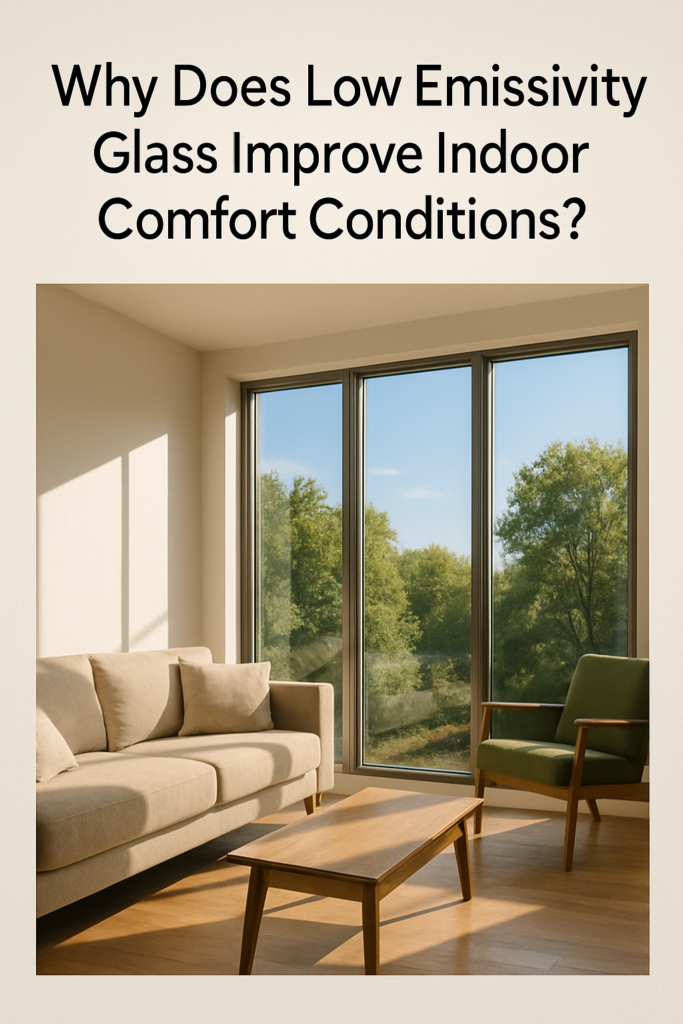
Indoor comfort is about far more than just air temperature. It’s the mix of stable room temperatures, soft daylight, low glare, no cold draughts near windows, and healthy interior air and surfaces. One of the quiet heroes that helps deliver all of this is low emissivity glass.
Modern façades and windows increasingly rely on low emissivity glass to keep interiors comfortable in both homes and commercial buildings. Its ultra-thin metallic coating doesn’t change the look of the glass much, but it radically changes how the glass handles heat and light – and that’s where the comfort benefits begin.
In this guide, we’ll look at why low emissivity glass improves indoor comfort conditions, how it works, and what to consider when specifying it.
1. How Low Emissivity Glass Works – In Comfort Terms
Low emissivity glass is standard float glass with a microscopically thin metal or metal-oxide coating applied to one surface. This layer is almost invisible, but it is highly selective in the way it interacts with the solar spectrum:
- It lets visible light in, so spaces stay bright and connected to the outdoors.
- It reflects long-wave infrared (heat) radiation back toward its source.
- It blocks a large portion of UV radiation, which is responsible for fading and material damage.
“Emissivity” describes how readily a surface emits radiant heat. Clear glass has high emissivity; low emissivity glass has a much lower emissivity value. Lower emissivity means:
- Less heat is radiated into the room from a hot pane in summer.
- Less heat is lost from the room via a cold pane in winter.
From a comfort point of view, this directly influences surface temperatures, radiant comfort, and temperature stability – all of which are just as important as the thermostat setting.
2. Thermal Comfort: Fewer Hot and Cold Spots
2.1 Warmer interior surfaces in winter
With standard clear glass, winter sun and outdoor cold can turn window areas into “cold walls”. Even if the air temperature is acceptable, sitting near a cold pane can feel uncomfortable because your body radiates heat toward that surface.
Low emissivity glass tackles this in two ways:
- The coating reflects indoor heat back into the room instead of letting it escape.
- The inner glass surface runs warmer, so you don’t feel a cold “draft” or radiant chill when you sit nearby.
The result is:
- More usable floor area near windows (you can place desks, sofas and dining tables right by the glass).
- Reduced radiant asymmetry — the difference between body temperature and nearby surface temperatures — which is a key factor in perceived comfort.
- Fewer complaints about “cold spots” even in highly glazed spaces.
2.2 Cooler interiors and glass surfaces in summer
In hot weather, large areas of clear glazing can make a room feel like a greenhouse. Solar radiation heats up the glass, which then radiates heat inward and drives room temperatures up.
Low emissivity glass, especially in solar-control versions, significantly reduces this by:
- Reflecting a large portion of the solar infrared before it can enter.
- Lowering the Solar Heat Gain Coefficient (SHGC) to cut cooling loads.
- Keeping the interior glass surface cooler, so people feel less “baked” near windows.
That translates into:
- Less reliance on air-conditioning.
- Smaller temperature swings over the day.
- More comfortable conditions in perimeter zones and sun-exposed rooms.
For a deeper dive into how coated units compare to conventional insulated glass, see
How Does Low Emissivity Glass Outperform Non-Coated Double Glazing?
3. Visual Comfort: Daylight Without Harsh Glare
Comfort isn’t only about thermal sensation. Glare, reflections and contrast also determine how pleasant a space is to live or work in.
Low emissivity glass supports visual comfort by:
- Providing high visible light transmittance (VLT) so rooms remain well-daylit.
- Reducing harsh solar intensity at certain angles, which can mitigate glare.
- Allowing architects to use larger glazed areas without the need for very dark tints that make interiors gloomy.
Because low emissivity coatings are designed to be spectrally selective, they can maintain good daylight levels while cutting far more heat than an equivalent tint. Occupants enjoy:
- Bright, evenly lit interiors.
- Clear outward views with natural colours.
- Less need to keep blinds closed during the best daylight hours.
If you want to explore the performance balance between daylight, heat gain and comfort in more detail, it’s worth reading
Low Emissivity Glass and Its Daylight–Solar Control Balance
4. Health, UV Protection and Surface Conditions
4.1 Blocking UV to protect people and materials
Standard clear glass allows a considerable portion of UV radiation to pass through. Over time this can:
- Fade fabrics, timber floors and artworks.
- Degrade plastics and sealants.
- Contribute to skin damage for people who spend long periods near sun-exposed windows.
Low emissivity glass typically blocks a much higher percentage of UV. That improves comfort in less obvious but important ways:
- Interiors look newer for longer, so occupants feel better about their environment.
- Sensitive areas like galleries, retail displays and home offices suffer less from colour shift and material damage.
- There is an additional layer of health protection alongside shading and sunscreen.
4.2 Less condensation and a drier, healthier indoor environment
Because low emissivity glass keeps interior surfaces warmer in winter, condensation is less likely to form on the inside of windows. Reduced condensation helps:
- Lower the risk of mould growth and damp smells around sills and frames.
- Protect timber, paints and sealants from moisture damage.
- Maintain clearer views and cleaner surfaces with less frequent wiping.
That combination of warmer surfaces, drier frames and better air quality makes rooms feel fresher and more comfortable, especially in bedrooms and living spaces.
5. Comfort Through Stability: Less Cycling, Less Noise
Building services also affect comfort. Over-glazed façades with poor thermal performance force HVAC systems to cycle on and off aggressively as the sun moves and outdoor conditions change. That leads to:
- Noticeable shifts in air temperature.
- Fans and compressors repeatedly starting and stopping.
- Drafts from supply diffusers as systems ramp up.
By cutting heat gains and losses, low emissivity glass helps:
- Flatten out temperature swings, so HVAC can run steadily instead of constantly catching up.
- Reduce fan speeds and equipment noise, which improves acoustic comfort.
- Make it easier to maintain consistent setpoints that suit most occupants.
The experience on the ground is simple: rooms feel more “even” and calm, right through the day and across seasons.
6. Comfort, Sustainability and the Bigger Picture
Indoor comfort and environmental performance are closely linked. A building that wastes energy through its glazing has to work harder to stay comfortable, which often means higher emissions.
Low emissivity glass supports both comfort and sustainability by:
- Cutting heating and cooling energy use.
- Lowering operational carbon over the whole life of the building.
- Making high-performance envelopes feasible even with large glazed areas.
A broader overview of these lifecycle benefits is covered in
How Does Low Emissivity Glass Reduce Environmental Impact?
At neighbourhood and city scale, comfortable, efficient buildings contribute to cooler urban microclimates, less strain on power networks and a better quality of life. Those ideas link naturally to integrated strategies such as green roofs, shade trees and climate-sensitive street design, as explored in
Define Landscape Solutions in Smart Cities
7. Cost, Specification and Managing Expectations
Of course, comfort upgrades need to fit real budgets. Low emissivity glass:
- Costs more upfront than plain clear glass.
- May require insulated glass units, gas fills or specific frames to reach its full potential.
- Delivers savings through reduced energy bills, smaller plant sizes and improved occupant satisfaction.
Factors that affect the final cost – including coating type, glazing build-up, frame systems and project scale – are explored in
What Affects Low Emissivity Glass Pricing Across Projects Today?
From a comfort perspective, it’s often smart to:
- Prioritise low emissivity glass on sun-exposed façades, skylights and large glazed areas, where comfort issues are worst.
- Combine Low-E glazing with good insulation, airtightness and shading for a holistic solution.
- Use orientation-specific glass types (for example, stronger solar control on west façades, higher daylight on north façades) to fine-tune comfort.
8. Where Low Emissivity Glass Makes the Biggest Comfort Difference
Low emissivity glass improves indoor comfort in many building types, but its impact is particularly strong in:
- Living rooms and open-plan spaces with large sliding or folding doors.
- Home offices where glare and overheating degrade productivity.
- Bedrooms where stable temperatures, low noise and minimal condensation matter for sleep.
- High-rise apartments and offices with significant façade exposure.
- Atriums, conservatories, and sunrooms, where people expect a bright space that is still usable in summer and winter.
In all of these situations, the combination of better thermal stability, softer daylight, less glare and drier surfaces makes spaces feel more comfortable, more of the time.
Conclusion: Comfort You Can Feel, Not See
From the street, low emissivity glass looks almost identical to standard glazing. The difference is in what you feel:
- Fewer hot zones near windows on summer afternoons.
- No icy chill sitting by the glass in winter.
- Less glare on screens and surfaces.
- Brighter, more even daylight without the blinds permanently down.
- Cleaner, drier frames with less condensation and mould risk.
By re-thinking how glass handles heat and light, low emissivity glass helps buildings deliver the kind of indoor comfort people actually notice – and enjoy – every day, while quietly driving down energy use and emissions in the background.
It’s not just a technical upgrade for the façade; it’s a long-term investment in better, healthier indoor conditions for the people who live and work inside.