
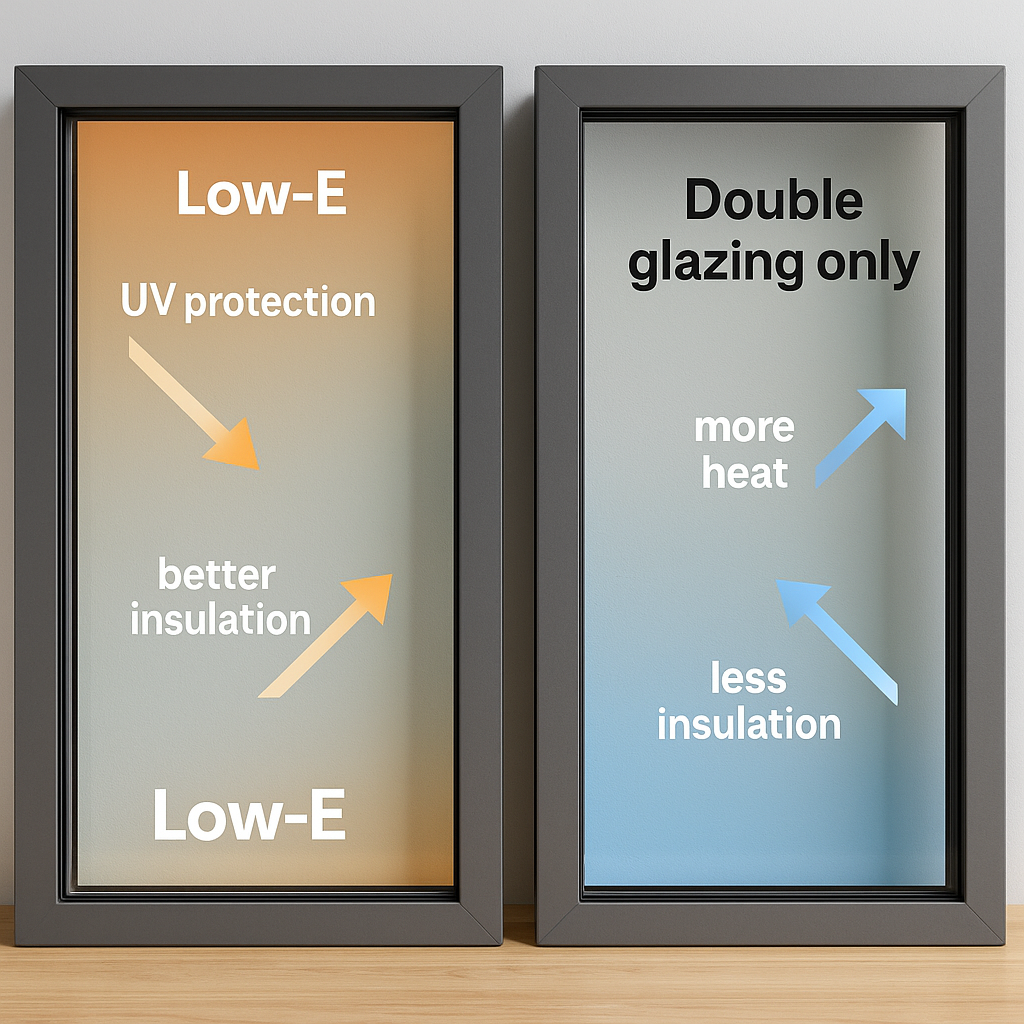
When it comes to designing energy-efficient homes and buildings, glazing choices play one of the most significant roles in determining thermal comfort, energy savings, and sustainability. For years, double glazing has been promoted as the gold standard for insulation, but advancements in glass technology have introduced a new and often superior option: glass low E.
This raises an important question for homeowners, builders, and architects alike: Why is glass low E better than double glazing only?
The answer lies in performance, versatility, and sustainability. While double glazing is effective at creating an insulating barrier, glass low E (low-emissivity glass) adds an extra layer of intelligence to window design by reflecting heat, blocking harmful UV rays, and improving comfort year-round.
In this article, we will explore how glass low E compares to standard double glazing, the technical ratings that prove its efficiency, and the practical applications where low-E coatings outperform other glazing solutions.
What Is Double Glazing?
Double glazing refers to an Insulated Glazing Unit (IGU) made up of two panes of glass separated by a spacer filled with air or an inert gas like argon. This construction reduces conductive and convective heat transfer, making homes warmer in winter and cooler in summer.
Benefits of Double Glazing:
- Provides thermal insulation by trapping air or gas between two panes.
- Reduces outside noise with certain laminated glass combinations.
- Improves comfort by reducing temperature fluctuations.
However, double glazing without a Low-E coating is limited. It insulates but does not effectively reflect infrared radiation or block ultraviolet (UV) rays. This is where glass low E stands out.
What Is Glass Low E?
Glass low E is a glazing product with a microscopically thin, transparent metallic oxide coating applied to its surface. This coating manages the way the glass interacts with heat and light:
- Infrared radiation (heat): Reflected back into the room in winter or deflected outside in summer.
- Ultraviolet rays: Blocked to reduce furniture fading and skin exposure.
- Visible light: Allowed to pass through, ensuring bright and natural interiors.
Unlike double glazing alone, glass low E actively controls solar gain and heat loss.
Why Glass Low E Is Better Than Double Glazing Only
1. Superior Energy Performance
While double glazing slows down heat transfer, glass low E actively reflects and controls it. The result is a significantly better thermal performance with lower U-values (measure of insulation) and improved Solar Heat Gain Coefficient (SHGC) (measure of solar control).
- Double glazing alone: Moderate insulation, limited solar control.
- Glass low E: Insulation + solar control + UV protection.
See more details in Which Ratings Define Glass Low E Energy Efficiency?.
2. Year-Round Comfort
- In winter, glass low E reflects interior heat back inside, keeping living spaces warm.
- In summer, it deflects solar radiation, preventing overheating.
Standard double glazing cannot match this dual-direction performance.
3. UV Protection
Double glazing does not inherently block UV rays. Glass low E, however, prevents up to 99% of harmful UV light from entering a building. This not only protects residents but also extends the lifespan of furniture, carpets, and artworks.
4. Sustainability Certifications
Using glass low E helps buildings achieve higher sustainability ratings under programs such as:
- LEED (Leadership in Energy and Environmental Design)
- BREEAM (Building Research Establishment Environmental Assessment Method)
- Energy Star
Explore how these certifications apply in What Certifications Prove Glass Low E Is Sustainable?.
5. Passive House Compliance
For projects aiming to meet Passive House standards, low U-values and superior SHGC performance are essential. Double glazing alone rarely meets these benchmarks.
Glass low E is often a requirement for Passive House design, ensuring buildings achieve ultra-low energy consumption while maintaining thermal comfort.
For deeper insights, read When Is Glass Low E Needed for Passive House Goals?.
6. Cost Efficiency Over Time
While double glazing may be cheaper initially, glass low E offers faster payback periods through:
- Reduced energy bills.
- Lower HVAC loads.
- Extended durability of furnishings.
Over the lifespan of a building, this translates to significant savings.
The Role of Glass Ratings in the Comparison
U-Value
- Double glazing: ~2.5 W/m²K.
- Glass low E with double glazing: As low as 1.0 W/m²K.
SHGC
- Double glazing: ~0.7.
- Glass low E: Can be reduced to 0.25–0.40, making it better for solar control.
VLT (Visible Light Transmission)
- Glass low E maintains high natural daylight while controlling heat gain.
These metrics prove why glass low E outperforms double glazing alone.
Practical Applications Where Glass Low E Wins
Homes in Extreme Climates
From cold Canadian winters to hot Australian summers, glass low E ensures year-round performance.
Skylights and Roof Glazing
For overhead glass, Low-E coatings prevent overheating without sacrificing daylight.
Tall Façades and Curtain Walls
Commercial buildings benefit from spectral selectivity, allowing natural daylight while reducing solar loads.
Sliding Doors
Glass low E ensures large glass doors remain energy-efficient, unlike standard double glazing.
Installation and Handling Considerations
Large glass panels with advanced coatings require careful handling to preserve their performance. Contractors rely on specialized tools such as:
- Lifting equipment: Ensures safe movement of oversized glazing units.
- Block lifting: Provides secure handling of glass and stone materials.
Proper installation ensures that glass low E delivers on its energy efficiency promise.
Glass Low E and Sustainable Architecture
In modern architectural practice, glass isn’t only about energy performance—it’s also about environmental integration. Low-E coatings enable:
- Daylighting strategies: Reduced artificial lighting needs.
- Aesthetic flexibility: Available in clear, tinted, or reflective finishes.
- Eco-friendly outcomes: Lower carbon footprint and greener design.
For broader inspiration, see Define Landscape Concepts in Modern Architecture.
Conclusion
While double glazing remains a reliable option for insulation, it is no longer enough on its own to meet the energy and comfort demands of modern buildings. Glass low E takes performance to the next level, offering superior insulation, solar control, UV protection, and compliance with sustainability certifications and Passive House standards.
By combining affordability with high-tech performance, glass low E is better than double glazing only for homeowners and architects committed to comfort, efficiency, and sustainability.