
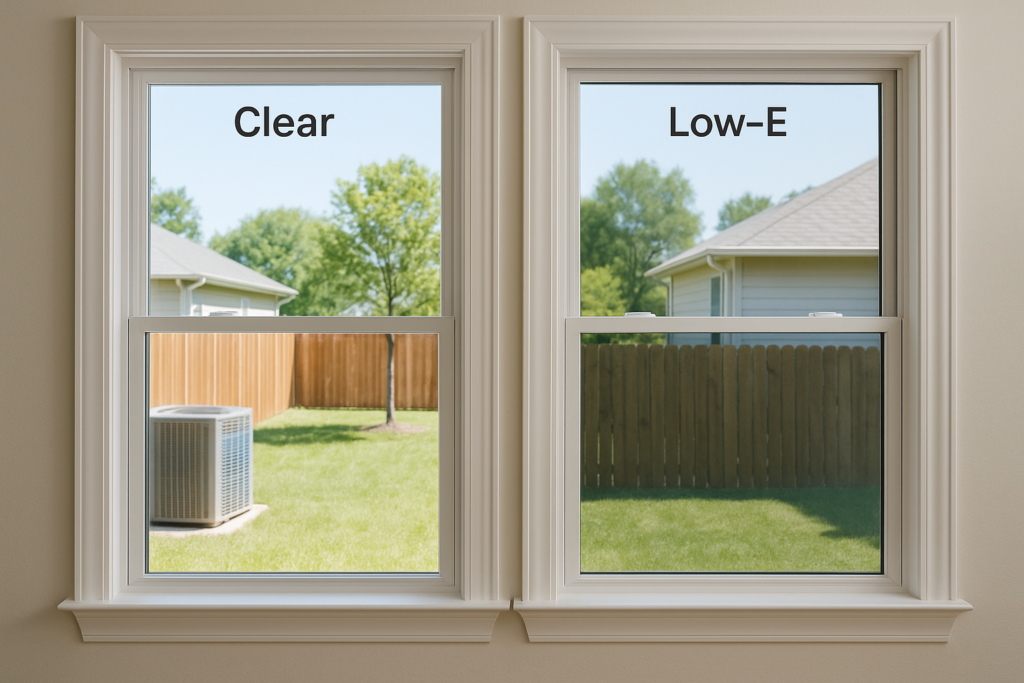
Walk up to a modern window and you’ll probably see a clean, clear pane of glass. But behind that simplicity, there’s often some very smart technology at work. Today, the real performance difference isn’t in the frame colour or handle style – it’s in the glass itself.
That’s where low emissivity glass (low-E glass) leaves standard clear glazing behind. It looks almost the same, but it behaves completely differently when it comes to heat, light and long-term comfort.
In this guide, we’ll break down why low emissivity glass is better than standard clear glazing, where each option still makes sense, and how to choose the right one for your project.
Clear Float Glass: Beautiful, But Inefficient
Standard clear glazing – often called clear float glass – is the simplest form of glass:
- Made by floating molten glass on a bath of tin for a perfectly flat surface
- Completely uncoated and highly transparent
- Lets in most visible light and most heat
From a visual point of view, it’s great. You get maximum clarity and brightness. But thermally, clear glass is a problem:
- In summer, it behaves like a greenhouse — solar heat streams in, raising indoor temperatures.
- In winter, warm indoor air radiates its heat straight through the glass to the cold outdoors.
- It allows most UV radiation to pass, slowly fading carpets, timber floors and furnishings.
Clear glass is inexpensive to buy, but expensive to live with. That’s the key reason low emissivity glass has become the new standard for exterior windows and doors.
What Is Low Emissivity Glass?
Low emissivity glass starts with the same float glass, but adds a microscopically thin metallic coating – often involving silver or other metal oxides.
This low-E coating:
- Is about hundreds of times thinner than a human hair
- Is invisible in normal use
- Reflects long-wave infrared energy (heat) while allowing visible light through
“Emissivity” is a measure of how efficiently a surface radiates heat. Clear glass has a high emissivity – it absorbs and releases heat quite readily. Low-E coatings give the glass a very low emissivity, meaning it reflects heat instead of absorbing and re-radiating it.
In practice, that means:
- In winter, low-E glass reflects indoor heat back into the room, reducing heat loss.
- In summer, it reflects much of the sun’s infrared heat away before it can warm your interior.
Same view, similar brightness – far better control over temperature.
Low Emissivity Glass vs Clear Glass: How They Handle Heat
Heat Loss and Insulation
A key measure of window performance is the U-value – the lower the number, the better the insulation.
- Standard clear single glazing has a very high U-value (poor insulation).
- Clear double glazing improves this somewhat but still allows significant heat flow.
- Double or triple glazing with low emissivity glass can cut U-values to a fraction of clear glass, providing three to four times better insulation.
Because low-E glass reflects radiant heat back where it came from, your heating and cooling systems don’t need to work nearly as hard. For a deeper dive into this side of performance, see How Does Low Emissivity Glass Improve Energy Efficiency in Homes?.
Solar Heat Gain and Summer Comfort
Clear glass has a high Solar Heat Gain Coefficient (SHGC) – it lets in most of the sun’s infrared heat.
Low emissivity glass, especially solar-control variants, is engineered to:
- Maintain good visible light transmission
- Reduce SHGC, sometimes by half compared with clear glass
That directly translates to:
- Less overheating in rooms with large windows
- Reduced reliance on air conditioning
- Smaller, more efficient HVAC systems in new builds
UV Protection: Safeguarding Interiors
One of the biggest hidden advantages of low emissivity glass is how it handles UV radiation:
- Clear glass allows the majority of UV rays to pass through.
- Low-E glass can block up to around 95–99% of UV, depending on the coating and unit design.
The benefit? Your interior finishes last longer:
- Timber floors keep their colour
- Fabrics and rugs fade much more slowly
- Artwork and cabinetry retain their original appearance
If you want a focused explanation of this protective effect, you can explore How Can Low Emissivity Glass Reduce Heat Loss and UV Damage?.
Comfort: The Difference You Can Actually Feel
On paper, low-E performance looks impressive. In daily life, it feels even better:
Less Cold Radiance in Winter
With clear glass, the inner surface of the pane becomes very cold on winter nights. Even if the room’s air temperature is comfortable, you feel chilled sitting near that cold surface because your body is radiating heat toward it.
Low emissivity glass keeps the inner pane much warmer, so:
- Sitting by a window feels more comfortable
- Cold drafts and “cold wall” effects are reduced
- You can use window seats and reading nooks year-round
Fewer Hot Spots in Summer
On hot days, clear glass allows intense solar heat patches to form on floors and furniture. Low-E coatings cut that radiant load, meaning:
- More even temperatures across your living spaces
- Less glare and eye strain in sun-exposed rooms
- Window blinds can stay open longer without sacrificing comfort
Aesthetics: Does Low-E Look Different?
Many people worry that low emissivity glass might look tinted or mirror-like. In reality, modern coatings are designed to be as neutral as possible:
- Clear glass: completely uncoated, very high visible light transmission.
- Low-E glass: almost as clear; in many cases, only a very subtle bluish or greenish tint or slight exterior reflectivity is visible in certain lighting.
From inside a well-lit room, most occupants would never know whether they’re looking through low-E or clear glass unless someone told them. You get the performance upgrade without losing the clean, modern look.
Cost vs Value: Is Low Emissivity Glass Worth It?
Yes, low-E glass generally costs more upfront than standard clear glazing – often in the range of 10–20% extra for the glass component.
However:
- Clear glass costs more to own, because it continually leaks heating and cooling energy.
- Low-E glass reduces those ongoing costs, often paying back the price difference within a few years through lower bills.
- It also adds value through improved comfort, better compliance with energy codes, and a higher-performing building envelope.
Over the lifetime of a home or commercial property, low emissivity glass is almost always the more economical choice.
Where Clear Glazing Still Makes Sense
Standard clear glass isn’t obsolete – it still has roles where thermal performance isn’t critical:
- Interior partitions and balustrades where heat transfer isn’t an issue
- Outbuildings like garages or sheds that aren’t conditioned spaces
- Some heritage applications, where matching an original appearance is more important than efficiency
But for exterior windows, curtain walls, and glazed doors in any conditioned space, clear glass is now the exception rather than the rule.
Why Low Emissivity Glass Is the Better Default Choice
Putting it all together, low emissivity glass is better than standard clear glazing because it:
- Reduces heat loss in winter by reflecting indoor heat back into the room
- Lowers solar heat gain in summer, easing air-conditioning loads
- Blocks most UV radiation, protecting interiors from fading
- Improves comfort, with warmer inner glass surfaces in winter and fewer hot spots in summer
- Cuts energy use, helping you meet modern building codes and sustainability targets
- Offers these benefits with minimal change in appearance compared with clear glass
For an overview of why this technology has become non-negotiable in modern residential design, see What Makes Low Emissivity Glass Essential for Homes Today?.
Designing with Low-E: Thinking Beyond the Window
Windows are just one part of a bigger thermal picture. To get the most from low emissivity glass, combine it with:
- Well-insulated walls and roofs
- Airtight construction and quality frames
- Thoughtful orientation and shading
- Smart landscaping and outdoor design
Trees, pergolas, and garden structures can complement low-E glazing by providing seasonal shade and cooling around your building envelope. If you’re planning a new home or renovation, Designers Define Landscape Trends in Modern Gardens is a helpful source of inspiration for how outdoor design can support indoor comfort.
How to Decide for Your Project
When choosing between low emissivity glass and standard clear glazing, ask:
- Is the space heated or cooled?
- If yes, low-E should be your default for external glazing.
- What climate are you in?
- Cold climates: favour passive low-E setups that capture winter sun while limiting heat loss.
- Hot/mixed climates: use solar-control low-E coatings to minimise overheating.
- How much glass area is there?
- The more glazing you have, the more critical low-E becomes for comfort and compliance.
- Are you aiming for energy-efficient or sustainable design?
- Low-E glazing is essential for most high-performance home standards and green certifications.
For another angle on these decisions – particularly how they tie into heating and cooling loads – revisit How Does Low Emissivity Glass Improve Energy Efficiency in Homes?.
Conclusion: Low-E as the New Standard, Clear Glass as the Exception
Standard clear glazing gave us the modern facade and the open, light-filled interiors we love. But on its own, it can’t meet today’s expectations for comfort, energy performance and long-term durability of interiors.
Low emissivity glass takes everything we like about glass – light, views, transparency – and adds the insulation and protection we now need. It’s not just a premium upgrade; in most exterior applications, it’s the smarter, more future-proof default.
Use clear glass where performance doesn’t matter. For everything else, choose low-E and let your windows work as hard as the rest of your building to keep you comfortable, efficient, and protected for decades to come.