
Low-E glass is one of the smartest upgrades you can make to a home or commercial building. The ultra-thin metallic coating improves insulation, reduces UV damage and helps keep interiors comfortable all year round. But there’s one thing many specifiers and homeowners overlook: low e glass benefits are not “fit and forget.”
With the right routine care, Low-E units can deliver peak performance for decades. With the wrong cleaning methods or neglected seals, that performance can fade long before the glass itself wears out.
This guide explains why maintenance matters, which tasks truly protect the coating, and how to build a simple care routine that keeps your Low-E investment paying you back over the long term.
1. Quick refresher: what low-E glass benefits are you protecting?
Before talking about maintenance, it helps to recap what’s at stake. Modern Low-E glass includes a microscopically thin, transparent metal or metal-oxide coating that manages heat and light:
- Improved insulation – reflects long-wave infrared heat back toward its source, reducing winter heat loss and summer heat gain.
- Lower energy bills – less demand on heating and cooling systems, often cutting energy use at windows by 30–50% compared with standard glass.
- Better comfort – fewer cold drafts and hot zones near glazing, more even room temperatures.
- UV control – blocks much of the UV that fades fabrics, timber flooring and artwork.
- Clear views and daylight – allows visible light through while controlling the less-welcome parts of the spectrum.
All of those low e glass benefits rely on the integrity of the coating, the seals around the insulated glass unit (IGU) and the condition of the frames that hold everything in place. Routine care treats those as a system, not isolated parts.
2. Why maintenance matters more for Low-E glass than standard glazing
Standard clear glass is forgiving: you can scrub it with almost anything and the worst outcome is a few scratches. Low-E glass is more sophisticated:
- Coatings are thin and specialised
The Low-E layer is hundreds of times thinner than a human hair. It’s durable when protected inside a sealed unit, but harsh chemicals or abrasives can still damage it at the edges or on exposed surfaces (for example on retrofit films). - IGU seals and frames affect performance
If perimeter seals fail, moisture can enter the cavity, leading to fogging, staining and reduced insulation. Warped or poorly sealed frames create drafts that wipe out thermal advantages, no matter how good the glass is. - Dirty glass performs differently
Heavy deposits of dust, pollution or mineral staining can increase solar absorption and slightly alter how the glass handles heat. Clean glass performs closer to its tested ratings. - Small issues get expensive when ignored
A tiny nick in a frame gasket or a patch of peeling film can grow into full seal failure or coating damage. Routine checks catch faults while they are cheap to fix.
In other words, routine care is how you protect the performance specification you paid for.
3. The core routine: cleaning that protects Low-E coatings
A good cleaning routine is simple but specific. Done right, it keeps the glass clear and the Low-E layer safe.
3.1 What to use
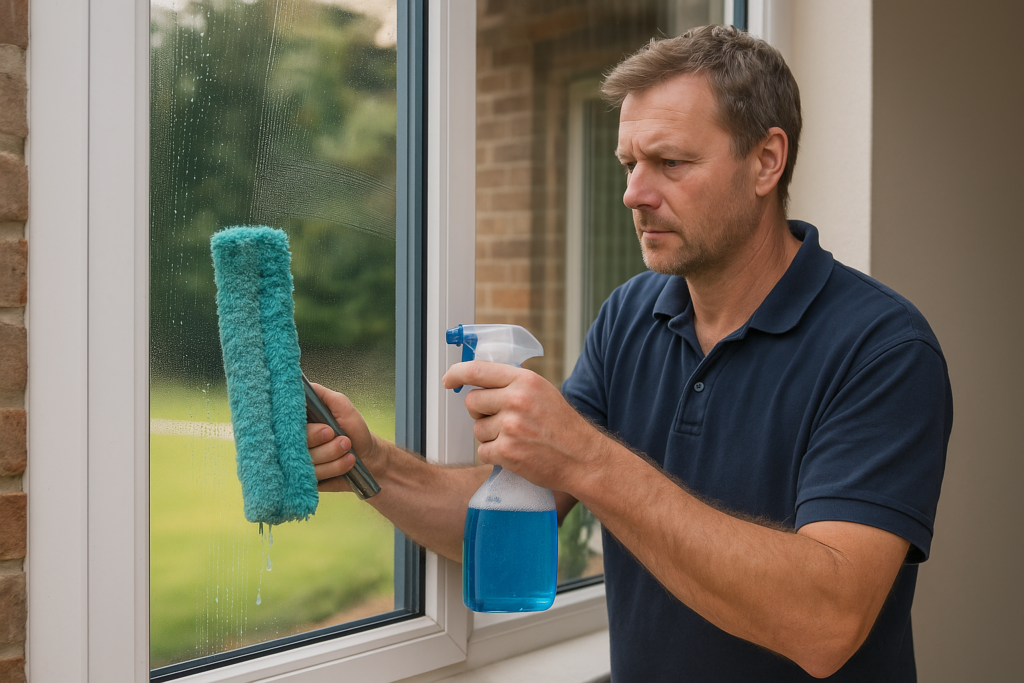
- Soft tools only – microfibre cloths, soft sponges or squeegees with clean rubber blades.
- Mild detergent solution – a few drops of pH-neutral dish soap in lukewarm water works well.
- Plenty of clean water – to rinse away grit that could scratch the surface.
3.2 What to avoid
- Abrasive pads, steel wool, scrapers or gritty powders
- Strong solvents such as acetone or thinners
- Ammonia-based glass cleaners that can attack certain sealants and films
- High-pressure washing aimed directly at edge seals or frame joints
These rules apply to both factory Low-E coatings sealed inside IGUs and aftermarket Low-E films. Films can be even more sensitive, so gentle care is essential.
3.3 Step-by-step safe cleaning
- Dust first – lightly brush or vacuum frames and glass to remove loose grit.
- Wash small areas at a time – apply your mild detergent solution with a soft cloth or sponge.
- Loosen, don’t scrub – allow the solution to soften dirt; wipe gently rather than grinding.
- Rinse thoroughly – use clean water so no detergent residue dries on the glass.
- Dry with microfibre – wipe in one direction to avoid streaks and keep an eye on seals while you work.
A couple of gentle cleans per year is usually enough for typical homes; coastal or polluted urban sites may need quarterly cleaning to prevent salt or grime buildup.
4. Beyond the glass: frame and seal care that extends performance
Low-E units are only as good as the frames and seals around them. Good news: these checks are easy to build into your seasonal maintenance.
4.1 Inspecting seals and gaskets
At least once a year:
- Look for cracked, shrunken or missing gaskets around the IGU.
- Check for fogging, misting or streaks between panes – classic signs of seal failure.
- Gently press around frame corners to detect movement that might open gaps.
If you see persistent internal condensation or visible deterioration between panes, the unit may need professional evaluation or replacement—because once an IGU loses its seal, many low e glass benefits (especially insulation and clarity) start to disappear.
4.2 Maintaining frames
Different frame materials need different care:
- uPVC – clean with mild detergent, check drainage holes are clear, and ensure hardware operates smoothly.
- Aluminium – keep weep holes clear and touch up damaged powder-coat to prevent corrosion.
- Timber – re-seal or re-paint on schedule so moisture cannot reach glazing rebates or seals.
Sound frames help ensure Where Low E Glass Benefits Improve If Frames Install Well really holds true in practice: a tight, well-aligned frame keeps drafts out, reduces condensation risks and preserves thermal performance over time.
(For more on this structural side, see Where Low E Glass Benefits Improve If Frames Install Well.)
5. Orientation, handling and installation: maintenance starts on day one
Many long-term issues trace back to the day the glass was installed rather than how it was cleaned. Routine care works best when the glass starts with the right setup.
5.1 Handling and storage
During construction or renovation, Low-E units should be:
- Stored vertically on padded racks
- Protected from mortar splashes, grinding dust and welding sparks
- Kept dry to avoid staining on edges and films
These precautions are exactly what’s covered in What Low E Glass Benefits Require Careful Jobsite Handling – best practice that prevents damage before the building is even occupied.
5.2 Orientation and surface location
For IGUs, the Low-E coating normally sits on an inside surface (#2, #3 or #4), not exposed to the weather. Which surface is chosen depends on whether the coating is passive or solar-control and the climate.
If the coated surface faces the wrong direction, you can see:
- Unwanted solar gain or, conversely, too little free winter heat
- Increased risk of condensation
- Under-performance vs the specified U-value and SHGC
That’s why Low E Glass Benefits Change When Installed Indoors vs Out and why specifiers need to be clear on coating position. You can dive deeper into this in Low E Glass Benefits Change When Installed Indoors vs Out and Why Low E Glass Benefits Need Right Orientation at Install.
5.3 Installation quality
Even the best glass underperforms if the installation is sloppy. Routine care can’t fix:
- Poorly packed units that sag in the frame
- Missing or compressed setting blocks
- Gaps in air- and water-seals around the perimeter
That’s why it’s worth understanding How Proper Installation Protects Low E Glass Benefits and choosing installers who follow manufacturer guidance.
6. Simple maintenance schedule to extend Low-E performance
Here’s a practical schedule that keeps low e glass benefits working for the long haul:
Twice a year
- Gently clean all Low-E glazing, inside and out.
- Check frames and seals for gaps, cracks, or loose hardware.
- Look for early signs of condensation between panes.
Once a year
- Lubricate window and door hardware to ensure tight closing and good compression on seals.
- Inspect exterior sealant lines; re-seal any cracked or failed beads.
- Rinse away accumulated dirt or organic debris on sills and frame junctions.
Every 5–10 years
- Re-coat or repaint timber joins and nearby framing.
- Have a professional energy-efficiency or window specialist walk through the property and flag any IGUs starting to fail.
This level of care is light compared with many other building systems, but it can add many years of effective service to your Low-E glazing.
7. How routine care extends ROI and sustainability
From a financial perspective, Low-E windows already offer strong payback through lower energy bills. Routine care multiplies that return:
- Longer service life – keeping coatings, seals and frames in good condition means you avoid premature replacement costs.
- Stable performance – energy savings stay close to the original specification instead of slowly eroding.
- Protected interiors – furniture, floors and artworks last longer when UV protection remains effective.
- Higher property value – well-maintained, high-performance glazing is a selling point in energy-conscious markets.
Environmentally, longer-lasting windows mean fewer materials used over the building’s life cycle and less energy wasted through degraded performance. Combined with good envelope design and thoughtful landscape planning – such as shading trees and outdoor spaces that respect What Defines a Natural Landscape and Its Core Features – you get a resilient, low-impact building that still feels bright and comfortable.
8. Key takeaways: make Low-E benefits last
To wrap up, here’s what really keeps low e glass benefits working year after year:
- Clean gently and regularly – mild detergent, soft cloths, no harsh chemicals or abrasives.
- Watch the edges and frames – most failures start where seals, gaskets and frames meet.
- Respect handling and orientation – correct surface location and careful jobsite practices set the stage for long life.
- Schedule inspections – quick yearly checks catch problems when they’re still easy to fix.
Low-E glass is a high-performance component; routine care is how you protect that performance. With a little ongoing attention, your windows will keep cutting bills, improving comfort and guarding interiors for decades—delivering the long-term value the technology was designed for.