
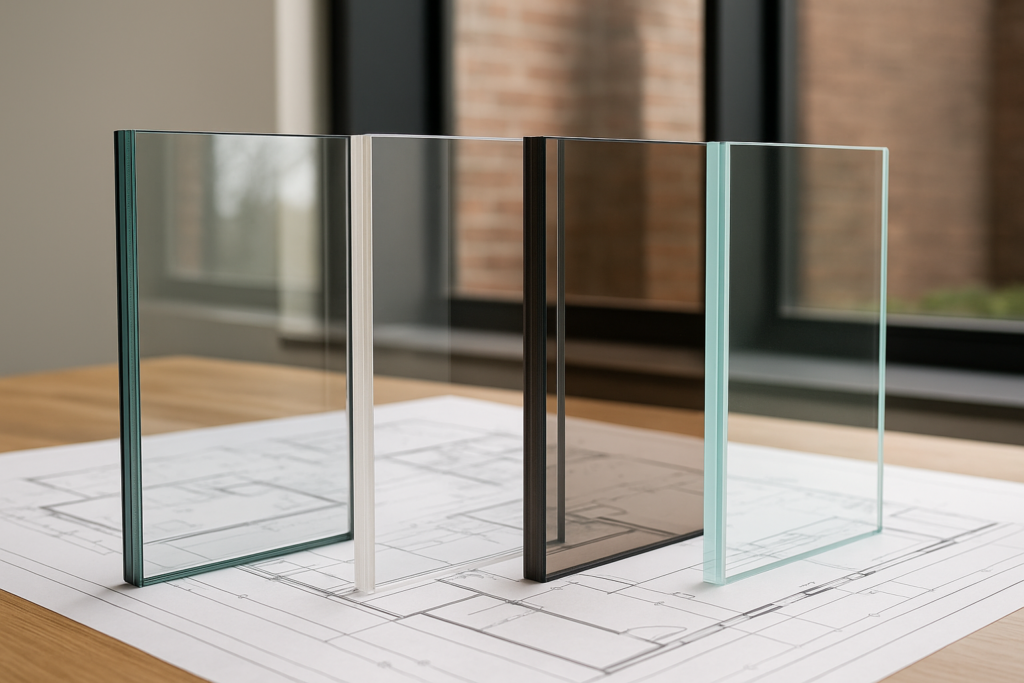
When you sketch a facade or window wall, lines on paper look simple. In reality, every line of glass represents dozens of performance decisions—especially when you’re working with low e glass types. The coating you select, the substrate behind it, and the way it’s assembled in the glazing system all have a huge impact on comfort, energy use, aesthetics and even how the building interacts with its surroundings.
That’s why low-E can’t be treated as a generic checkbox: “energy-efficient glass – yes/no.” For architects, careful specification of low e glass types is one of the most powerful tools for delivering high-quality buildings that perform as well as they look.
What Are Low E Glass Types in Architectural Practice?
Low-E (low emissivity) glass uses an ultra-thin metallic or metal-oxide coating to control how heat and light pass through glass. In architecture, you’ll typically work with two broad low e glass types:
- Passive (or hard-coat) low-E – Allows more solar heat in while improving insulation. Often used in heating-dominated climates.
- Solar-control (soft-coat) low-E – Provides stronger control of solar gain with very low U-values. Common in cooling-dominated or mixed climates and on large glazed facades.
Both are usually applied to clear, tinted, or low-iron glass substrates, and often combined in insulating glass units (IGUs) with gas fill and warm-edge spacers. From an architect’s perspective, they’re not just “energy glass”—they are a core part of the facade system and building physics.
Why “Just Say Low-E” Is Not Enough
Writing “provide low-E glazing” in a spec leaves too much to chance. Different low e glass types can vary dramatically in:
- Solar heat gain coefficient (SHGC)
- U-value (thermal transmittance)
- Visible light transmission (VLT)
- External reflectance and color
- Cost, processing options and availability
If these aren’t controlled, you can end up with:
- Overheated interiors or underperforming winter insulation
- Unwanted mirrored facades or mismatched glass color
- Unhappy occupants complaining about glare, drafts or noise
- Energy models that don’t match real-world performance
Architects need to be precise about which low-E family, on what substrate, in which position in the unit, and why.
If you’re also comparing low-E with mirror-like solar control options, this explainer is helpful:
👉 What Distinguish Low E Glass Types From Reflective Coatings?
Key Performance Metrics Architects Must Control
When specifying low-E, three performance metrics should always be considered together—not in isolation.
1. U-Value (Thermal Transmittance)
- Measures the rate of heat transfer through the glazing.
- Lower U-values mean better insulation and more stable indoor temperatures.
- Critical for heating-dominated climates and for comfort near large windows.
2. Solar Heat Gain Coefficient (SHGC)
- Indicates what fraction of solar energy passes into the building.
- Too high → risk of overheating and higher cooling loads.
- Too low → missed opportunities for passive solar gain in cooler seasons.
Different low e glass types are tuned to deliver the right SHGC for the climate and facade orientation.
3. Visible Light Transmission (VLT)
- Defines how much daylight enters the space.
- High VLT reduces the need for artificial lighting, but can increase glare if not paired with shading or interior design strategies.
- Low-E can maintain high VLT while still providing strong thermal control—if specified correctly.
Together, these three values determine whether your glass will support or undermine the building’s energy concept.
Coordinating Low E Glass Types With Other Glass Families
Low-E is only one of four major glass families architects commonly specify:
- Low-E coated glass – For energy and thermal performance
- Clear glass – Standard substrate with a slight green hue
- Low-iron glass – Ultra-clear, high light transmission and color fidelity
- Tinted glass – Colored substrates for aesthetic and basic solar control
Careful specification means deciding which substrate best matches the design intent, then pairing it with the appropriate low e glass types:
- Low-E on clear glass – Balanced performance for many facades and IGUs.
- Low-E on low-iron glass – Ideal when color fidelity and maximum clarity are critical (museums, luxury retail, high-end residential).
- Low-E on tinted glass – Adds color and glare reduction while enhancing solar control.
If you leave substrate decisions open, you risk visible color variation between glass lots or neighbouring panels, especially in highly glazed facades.
Climate Responsiveness: Cold, Hot and Mixed Conditions
One of the biggest reasons architects must specify low-E carefully is climate. A product that works beautifully in one location may be a problem in another.
Low E Glass Types in Cold Climates
In heating-dominated regions, the priority is:
- Very low U-values to minimise heat loss
- SHGC that allows useful winter sun where appropriate
- Warm interior glass surfaces to reduce condensation and cold-window downdrafts
Certain low e glass types are specifically optimized for these conditions. For a deep dive:
👉 Which Low E Glass Types Work Best in Cold Climate Homes?
Low E Glass Types in Mixed Climates
In climates with hot summers and cold winters, balance is everything:
- You need insulation and solar control, but not at the expense of daylight.
- Orientation matters—south facades may justify higher SHGC than east/west.
- Roof glazing and skylights demand special attention due to higher solar exposure.
Choosing the wrong low-E coating can mean comfortable winters but overheated summers—or vice versa. Strategies for this kind of seasonal balancing act are explored here:
👉 What Help Low E Glass Types Deliver Balance in Mixed Climates?
Cooling-Dominated and High-Solar Regions
In hot, sunny climates, architects typically favour solar-control low-E with:
- Lower SHGC to cut cooling loads
- Still-reasonable VLT, so interiors don’t feel like caves
- Possibly tinted substrates to further reduce glare and gain
Again, specifying the exact coating type and performance range is essential—otherwise “low-E” may not deliver the solar control the scheme requires.
Comfort, Productivity and Acoustic Considerations
Energy performance isn’t the only reason to be precise about low e glass types. Glass choice directly affects human comfort.
Thermal Comfort
Poorly specified glass can:
- Create cold spots near windows in winter
- Lead to hot zones near glazing in summer
- Trigger drafts from convection at cold glass surfaces
Well-chosen low-E helps maintain more uniform temperatures, supporting comfort and productivity—especially important in offices, schools and healthcare buildings.
Noise Exposure
Many noise-exposed projects (near highways, rail or flight paths) use laminated IGUs with low-E:
- The laminated interlayer adds acoustic damping.
- Low-E maintains strong thermal performance and UV protection.
Coordinating glass thickness, lamination, and coating type lets architects deliver facades that are quiet, warm and bright. For a noise-first perspective, see:
👉 Benefits Low E Glass Types Bring to Noise-Exposed Homes
Aesthetics, Daylight and Visual Intent
Architects don’t specify glass just for numbers—they specify it for how it looks and feels.
Key aesthetic questions low-E affects:
- Color and neutrality: Does the facade read cool, warm, or neutral from the street?
- Reflectivity: Is a subtle sheen desired, or is a strong mirrored look a problem?
- Transparency vs privacy: How clearly should occupants see out and passers-by see in?
- Daylight quality: Does the interior feel open and daylit or dim and inward-looking?
Because various low e glass types can differ in color rendering and exterior reflectance, you should always:
- Request mock-ups early in design
- Review panels under real sky conditions
- Coordinate glass color with spandrel, metalwork and surrounding context
Context, Facade and Landscape: The Bigger Design Picture
Glass doesn’t float in a vacuum—it’s part of a broader architectural and environmental system. Thoughtful specification of low-E glass connects with:
- Facade articulation – depth, fins and shading devices that complement the glazing’s solar properties.
- Building massing – orientation and form that work with daylight paths and prevailing winds.
- Outdoor spaces and landscape – trees, pergolas, water, and paving all influence reflected light, heat and comfort.
Integrating glazing choices into the landscape and public realm is central to contemporary practice. For inspiration on how facade and site design work together, see:
👉 Define Landscape Architecture for Modern Design Work
When low-E specification is aligned with landscape and urban design, the result is not just an efficient envelope, but a coherent environmental experience inside and out.
Practical Specification Tips for Architects
To avoid generic or underperforming glazing, consider building the following into your specs:
- Name the exact product family or performance range
- Specify SHGC, U-value, and VLT targets, not just “low-E”.
- Control the glass substrate
- State whether glass is clear, tinted (and which tint), or low-iron.
- Indicate coating position and IGU build-up
- For example: “Soft-coat low-E on surface #2 of a 6/16/6 argon-filled IGU with warm-edge spacer.”
- Address safety and acoustic needs explicitly
- Call out lamination where required for impact resistance or noise reduction.
- Require visual and performance mock-ups
- Approve color, reflection and clarity on site before mass production.
- Coordinate with energy modelling and daylight studies
- Ensure glass choice aligns with mechanical design and daylighting strategy, not against it.
- Consider maintenance and longevity
- Recognise that some coatings must be placed within the IGU to avoid damage.
Conclusion
Low-E coatings have moved from a niche technology to the default expectation in modern facades—but that doesn’t make them simple. Different low e glass types vary widely in performance, appearance and suitability for specific climates and building uses.
For architects, careful specification is essential because glass affects:
- Energy use and carbon footprint
- Thermal and acoustic comfort
- Daylight quality and visual connection
- Facade character and urban impact
By treating low-E glazing as a design tool rather than a generic label—and by coordinating it with climate, structure, landscape and user needs—you can deliver buildings that feel as good to occupy as they look in the renderings.