
Introduction to Z-1 Glass and Traditional Glass Types
As design and safety standards evolve, the materials chosen for architectural glazing must meet a complex set of requirements. Among the innovations leading this transformation is Z-1 glass, a new generation of laminated safety glass. Built for superior performance in both aesthetics and function, Z-1 glass differs significantly in composition from traditional float, tempered, and basic laminated glass.
Understanding the differences between Z-1 glass and traditional glass types is critical for architects, specifiers, and developers. This comparison goes beyond surface-level features and explores the structural innovations that make Z-1 glass a premium choice for contemporary design and high-performance applications. For a foundational breakdown, see What Is Z-1 Glass? Basic Things You Need to Know.
Understanding the Composition of Z-1 Glass
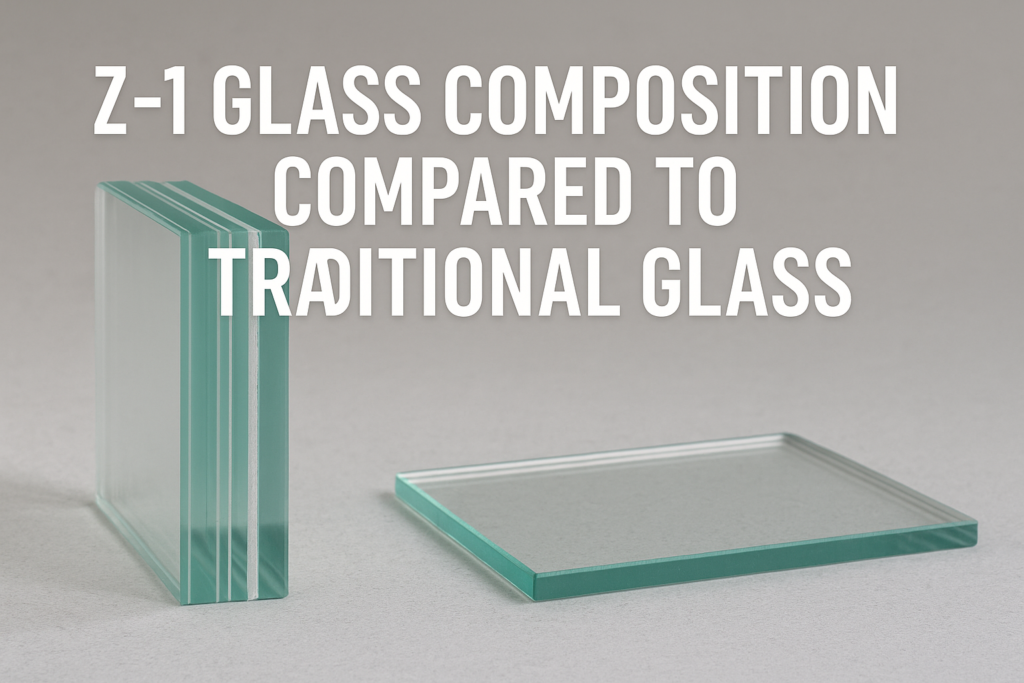
Z-1 glass is a laminated glass made by bonding two or more layers of glass with a high-performance interlayer—typically SGP laminated glass or PVB laminated glass. What makes Z-1 glass distinct is the enhanced thickness, the quality of its interlayer materials, and its engineered configuration to meet advanced safety and load-bearing demands.
The basic Z-1 glass structure includes:
- Two heat-strengthened or fully tempered glass sheets
- A central interlayer made from SGP (SentryGlas®) or PVB
- Optional low-E or UV-blocking coatings
- Precision edge sealing and polishing
SGP laminated glass provides outstanding strength—up to five times the tear resistance of PVB—making it ideal for safety Z-1 glass used in high-rise façades, glass railings, and structural glazing systems. Meanwhile, PVB laminated glass offers excellent acoustic insulation and UV protection, more suitable for interior glazing or noise-sensitive environments.
The result is a laminated glass product with better post-breakage behavior, durability, and design versatility compared to traditional options.
Traditional Glass Types: What Are We Comparing To?
To appreciate the innovation behind Z-1 glass, it’s important to understand the characteristics of conventional glass products commonly used in construction:
- Float Glass: A basic, non-tempered glass made by floating molten glass on tin. It’s inexpensive but extremely fragile and unsafe for most applications.
- Tempered Glass: Heat-treated to improve strength and break into small, dull shards. It’s safer than float glass but still vulnerable to sudden failure.
- Basic Laminated Glass: Two glass layers bonded with a PVB interlayer. It holds together upon breakage but may suffer from delamination or discoloration over time.
Unlike these materials, Z-1 glass integrates advancements in interlayer materials, multi-ply lamination, and surface treatment that make it significantly more durable and versatile.
Performance Differences: Z-1 Glass vs Traditional Glass
The real-world performance of Z-1 glass far surpasses that of traditional glass types. Here’s how they compare across core categories:
1. Safety and Impact Resistance
Z-1 glass is engineered to remain intact under extreme conditions—high wind loads, seismic activity, accidental impact, or even blast exposure. Its SGP interlayer allows it to continue bearing structural load even after breakage. Traditional tempered or PVB laminated glass lacks this post-failure performance.
2. Longevity and Environmental Resistance
Z-1 glass offers superior resistance to UV rays, moisture infiltration, and delamination. SGP does not absorb water like PVB, making it ideal for exterior use. Over time, traditional laminated glass may show fogging, yellowing, or edge defects, especially in coastal environments.
3. Optical Clarity and Design Aesthetics
Thanks to its refined composition and optional coatings, Z-1 glass in design allows larger panel sizes without distortion or bowing. It supports sleek, frameless designs often unachievable with conventional laminated or tempered systems.
4. Load-Bearing Capacity
Z-1 glass can be used in point-supported glass systems, stair treads, structural balustrades, and even overhead glazing, where traditional materials would fail or require additional framing. Its stiffness and strength reduce deflection under heavy load or wind pressure.
5. Acoustics and Thermal Insulation
Depending on the interlayer, Z-1 glass can deliver strong sound reduction and thermal insulation. PVB-enhanced Z-1 glass configurations are especially beneficial for projects near airports, rail stations, or highways.
Z-1 Glass Installation vs Traditional Systems
Z-1 glass installation requires precision due to its weight, thickness, and the structural implications of its application. Installers must:
- Use reinforced framing or spider fittings for structural installations
- Prevent edge damage during transport and installation
- Apply compatible sealants, particularly when using SGP
- Account for thermal expansion with proper spacing and gaskets
In contrast, traditional laminated or tempered glass systems often require more supporting hardware or framing, limiting the visual openness of the space.
To better understand professional handling requirements, see Z-1 Glass Overview for Architects and Specifiers.
Z-1 Glass Maintenance and Care Guidelines
Proper Z-1 glass care is essential for preserving its integrity and aesthetics over time. Fortunately, maintenance is straightforward:
- Clean using non-abrasive, neutral-pH solutions
- Avoid ammonia-based or highly acidic cleaners
- Inspect edge seals annually for signs of deterioration
- Schedule professional inspections for structural panels
Z-1 glass maintenance is notably simpler than that of PVB-based laminated systems in outdoor settings. The inert properties of SGP make it resistant to UV degradation and chemical attack, which helps avoid common issues like bubbling or edge yellowing.
Cost Comparison: Is Z-1 Glass Worth the Price?
While the price of Z-1 glass is higher than traditional options, it reflects its advanced performance profile. Average prices range from $100 to $300 per square meter depending on size, interlayer type, and surface treatments.
Factors influencing cost include:
- SGP vs. PVB interlayer
- Glass thickness and panel size
- Edge finishing, drilling, or CNC shaping
- Application-specific treatments (anti-reflective, low-E, etc.)
Though the upfront Z-1 glass price is premium, the long-term value—reduced maintenance, fewer replacements, enhanced safety—makes it a strategic investment for high-traffic, exposed, or design-forward environments.
Manufacturer Insights: Who Makes Z-1 Glass?
Reputable Z-1 glass manufacturers typically offer:
- Custom lamination with SGP or PVB interlayers
- Compliance with ASTM, EN, and ISO standards
- Tempering, heat soaking, and quality testing
- Technical documentation and engineering support
Working with certified manufacturers is essential for ensuring safety code compliance and installation success. For insights into the engineering behind the product, read Z-1 Glass Technology: A New Standard in Safety Glass.
Conclusion: Z-1 Glass as a Modern Upgrade
Z-1 glass represents a modern upgrade to traditional glass products in every category—from performance and safety to durability and design potential. Its innovative laminated structure offers clarity, security, and structural confidence, making it ideal for forward-thinking architecture.
Whether you’re specifying glass for a curtain wall, atrium, glass staircase, or storefront, Z-1 glass provides the long-term performance that traditional laminated or tempered glass simply can’t match.
To recap the fundamentals or explore more technical depth, visit:
👉 What Is Z-1 Glass? Basic Things You Need to Know
👉 Z-1 Glass Explained: Structure, Origins, and Core Benefits
👉 Z-1 Glass Overview for Architects and Specifiers
👉 Z-1 Glass Technology: A New Standard in Safety Glass